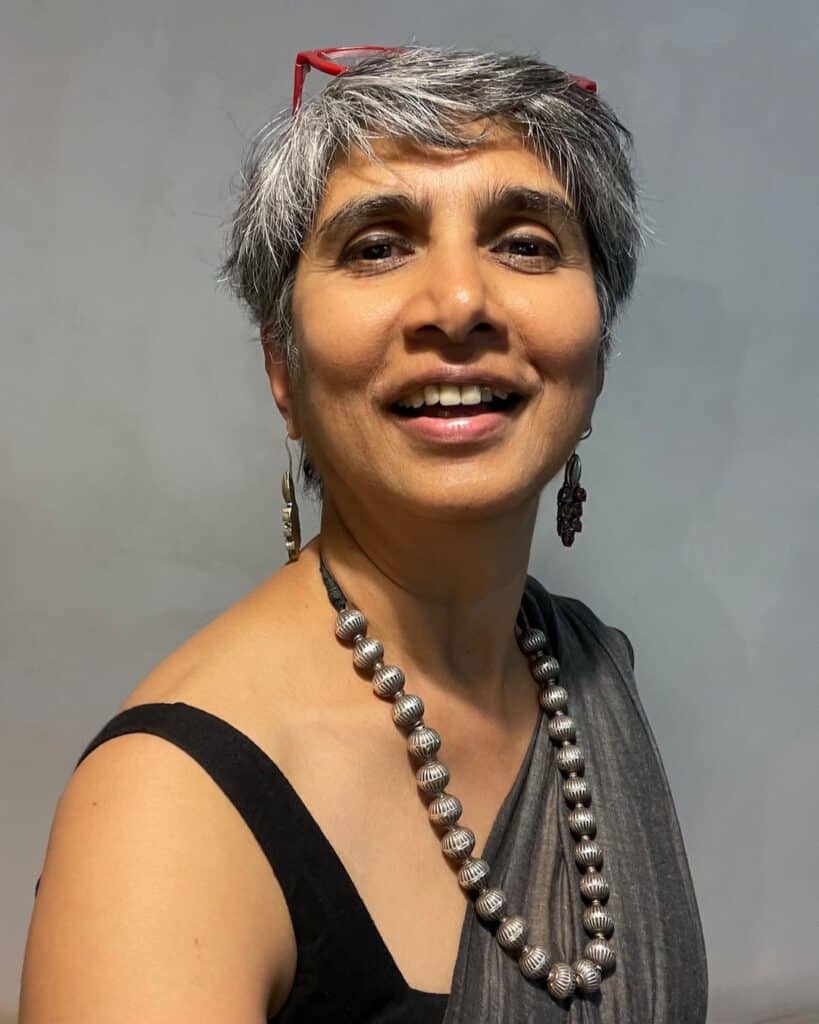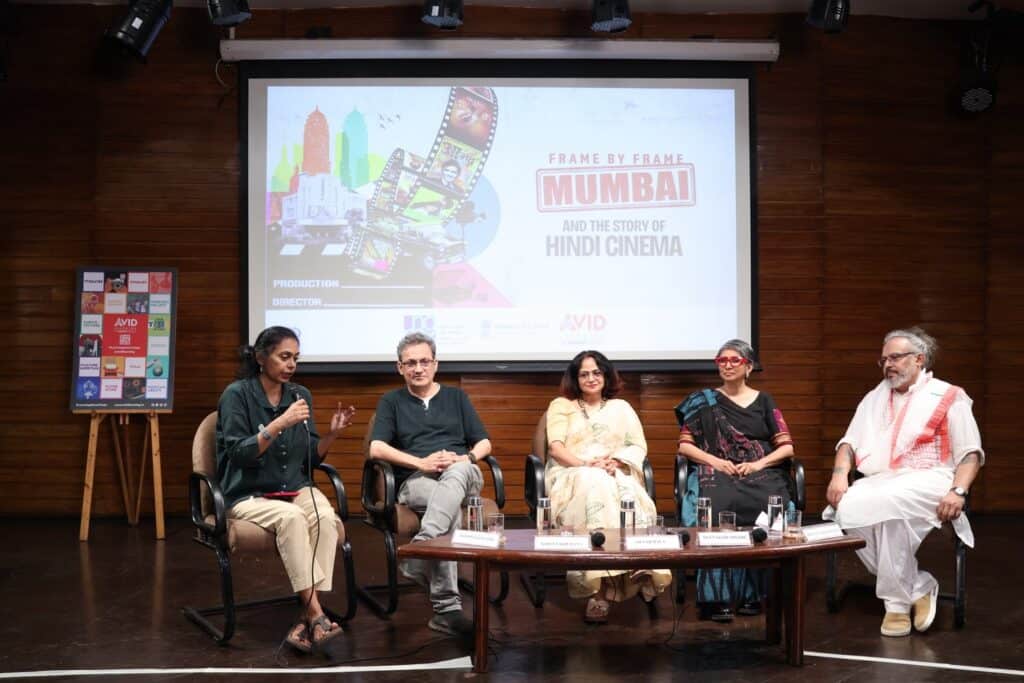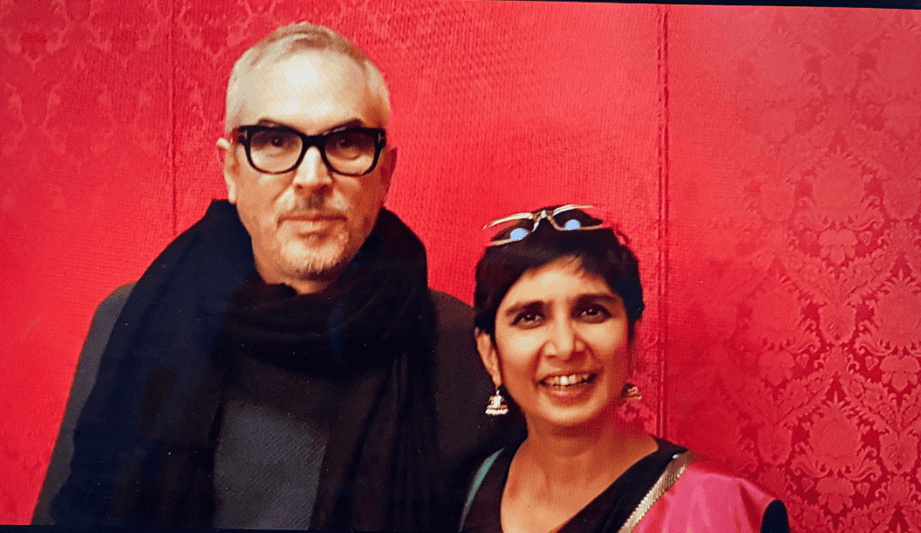








































Cover Story: Meenakshi Shedde, The Woman Shaping How The World Sees South Asian Cinema

Aug 21, 2020
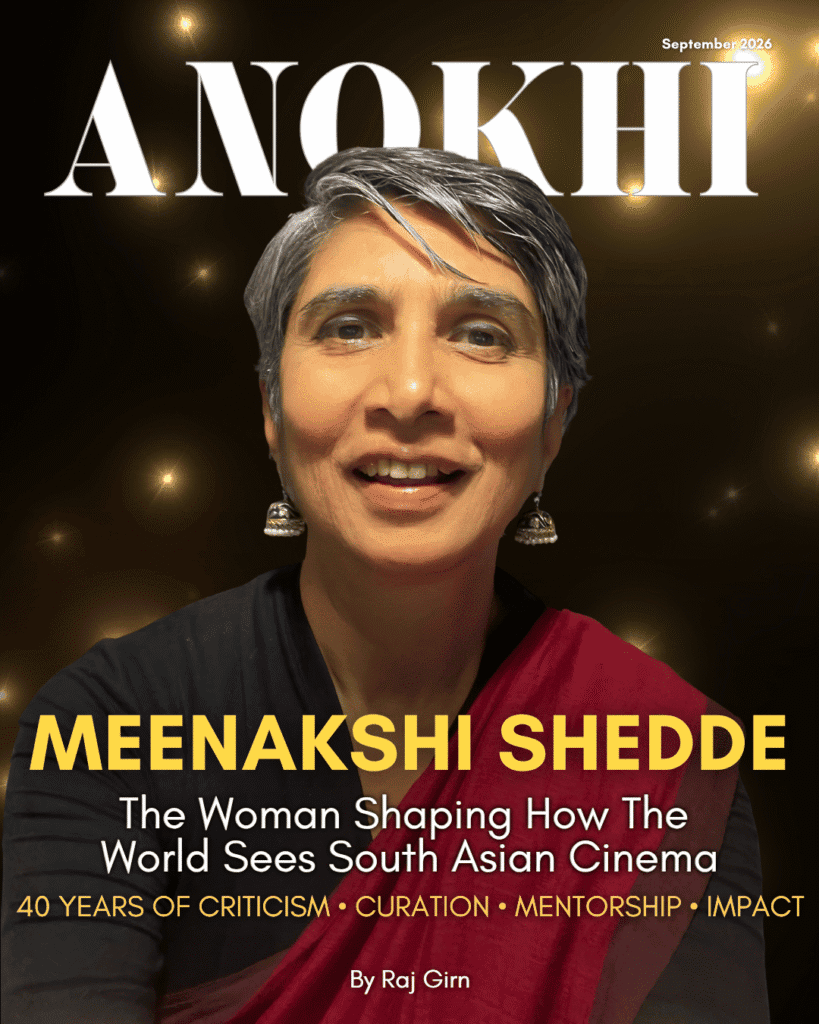
For four decades, Meenakshi Shedde has occupied a rare and influential place in global cinema: not simply watching films, but helping determine which stories cross borders, enter prestigious festivals, find international markets and become part of the cultural conversation.
Based in Mumbai, Meenakshi is a National Award-winning film critic, journalist, curator, programmer, script mentor and filmmaker whose work has taken her behind the scenes of some of the world’s most respected cinematic institutions. She currently serves as Senior Programme Advisor, South Asia, for the Toronto International Film Festival and has worked across festivals and organizations including Berlin, Cannes, Venice, Locarno, Busan, Dubai, the BFI and Cinémathèque Française. TIFF describes her as being widely influential in shaping global perceptions of South Asian cinema.
She has served on juries at more than 25 international film festivals, including the 2023 jury for Cannes’ Semaine de la Critique, or Critics’ Week. She has also mentored filmmakers through prestigious programs and funds connected to Sundance, Venice, Rotterdam, Locarno and the Asia Pacific Screen Lab. Her influence can be felt not only in the films that reach celebrated international stages, but also in the filmmakers whose stories become stronger through her guidance.
Yet perhaps the most powerful through-line in Meenakshi’s career is her commitment to what she calls “Cinema from the Margins”: stories created by Indigenous, caste-oppressed, LGBTQ+, disabled and otherwise historically underrepresented communities. For Meenakshi, cinema is not merely entertainment. It is a means of challenging power, expanding empathy, preserving memory and ensuring that those who have been pushed out of the frame are finally seen.
Her ability to place cinema within its wider social context earned her India’s National Film Award for Best Film Critic for 1998. Nearly three decades later, in January 2026, she was also honoured with the Sudhir V. Nandgaonkar Memorial Award for Best Film Critic at Mumbai’s Third Eye Asian Film Festival.
In this ANOKHI Magazine cover story, we speak with Meenakshi about the unseen influence of a film curator, the politics of who gets discovered, the changing international appetite for South Asian stories and why bringing marginalized voices to the centre of global cinema remains one of the most important chapters of her life’s work.
The Woman Behind The Work
RAJ GIRN: Meenakshi, you have spent four decades shaping conversations around Indian, South Asian and world cinema. When you look back, what do you believe first drew you so powerfully to film?
MEENAKSHI SHEDDE: When I was in college, Amrit Gangar, a beloved senior curator and film historian, ran a film society called Screen Unit where he would show us fantastic films from around the world on 35mm celluloid prints. He would share cyclostyled notes on each film before the screening, with select reviews and interviews of the director, and there would be exciting addabaji sessions after at some nearby Irani café. In hindsight, my richest learnings of cinema were not in a film class but guided by mentors and by hanging out with fellow film lovers over casual addabaji.
My lifelong film journey started there. I still remember he had shown us Hamlet, made by the Soviet director Grigori Kozintsev in 1964, a black and white classic whose hero, cinematic images, and music I still remember. I sat in the dark of the theatre, completely immersed in Hamlet’s tragedy and family horrors—his uncle killing his father and marrying his mother—while I secretly also had a crush on the handsome Russian actor playing Hamlet, Innokenty Smoktunovsky. In hindsight, I was mesmerised by the power of cinema to move you—audiences around the world, and years after the director has passed away.
Then, when I became a journalist—I was Assistant Editor at the Times of India in Bombay—I attended the first Mumbai Film Festival in 1997. I saw wonderful Indian films in regional languages for the first time with English subtitles in a theatre. I marvelled at the superb range of Indian films in Marathi, Malayalam, Tamil and Bengali, and reviewed them in the Times of India. Post-festival, I continued to review “parallel cinema,” as it was called, and the next year I was surprised and delighted to win the National Award for Best Film Critic, a Swarna Kamal, Golden Lotus medal, from the President of India, in 1998. Since then I have written for many papers.
Cinema has taken me on a thrilling, deeply enriching, lifelong journey—I have been greatly fulfilled seeing many films from around South Asia and the world, helped large number of Indian and South Asian filmmakers and talents shine at prestigious international platforms such as the Toronto, Berlin, Locarno, Busan, Dubai and many other festivals and win awards worldwide.
I have travelled worldwide, been blessed with deep friendships I made along the way, and paid my bills via cinema—as a film curator, programmer, journalist, critic, jury member, script mentor, screener on film funds, professor, guest lecturer, and teaching film appreciation and film curating.
You studied economics before pursuing journalism and later film appreciation. How did that unconventional combination influence the way you examine cinema, culture and power?
Studying economics helped me understand how Hollywood’s domination of global film markets rides directly on the back of the US political global domination as a superpower. The US’s Marshall Plan of 1948, for instance, ostensibly gave funds to Europe to help it rebuild post-World War II, but was conditional on Europe lowering trade barriers to allow American companies to easily sell their goods, and indeed a majority of the Plan funds were in fact spent on buying US products. In film, the US-Korea Free Trade Agreement of 2006 was made conditional on South Korea halving its screen quota from 146 days to 73 days reserved for Korean films in theatres, to allow Hollywood films easier access to the Korean market.
But my 40-year career in journalism has shaped me far more as a person, exposing me to pressing socio-political and cultural issues of the country. I was also an arts editor/writer for a decade, so I have a deep passion and some knowledge of film, dance, theatre, literature, photography, visual and plastic arts, architecture, etc.
My journalism on grassroots issues led to my working in development issues and advocacy for 30 years, mainly gender and water issues, and also education and health. I’m also Vice Chairperson on the board of Point of View, a non-profit that amplifies women’s voices in multiple media. So my film work is continually informed by my commitment to social issues, and I need both lives to feel complete.
Accordingly, I have been researching the films, arts and culture of marginalised communities since 2016, including by Indigenous people/adivasis/tribals, historically marginalised castes/Ambedkarites/Dalits, India’s North East and women filmmakers.
This year has seen a double-flowering of sorts: I helped programme Angh, debut feature of Theja Rio, indigenous Naga filmmaker, at the Toronto International Film Festival, September 10-20, 2026. It plays in the Platform Competition section, selected over 9,000 film submissions. Moreover the Platform winner will be automatically eligible for the Academy Award/Oscar for Best International Film. That’s an incredible achievement and an opportunity for an Indian filmmaker, let alone a debut indigenous filmmaker.
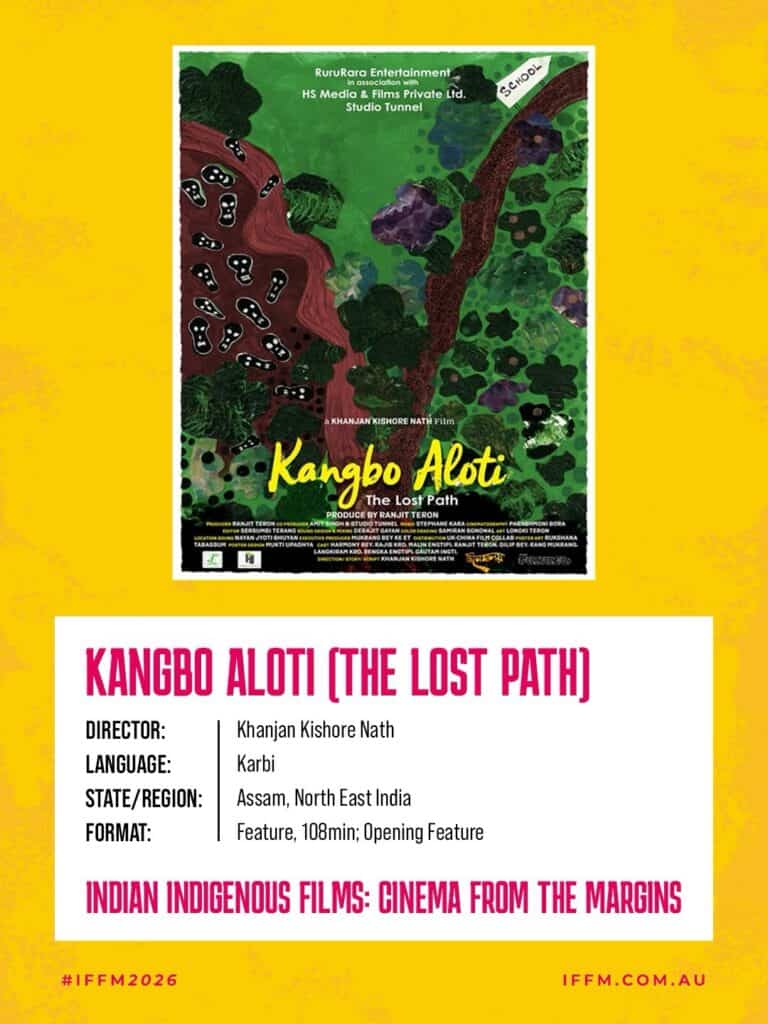
I was also Curator for ‘Changing the Narrative: Indian Indigenous Films: Cinema from the Margins’ for the 17th Indian Film Festival of Melbourne (August 13-23, 2026), Australia, and moderated a panel discussion between Indian and Australian indigenous filmmakers Theja Rio and Tiriki Onus. The aim was to give indigenous filmmakers “narrative sovereignty,” or the right to tell their own stories. This journey started a decade ago, when I was Curator of ‘The Die is Caste,’ for the Kochi Muziris Biennale, 2017, with films and musicians from caste-oppressed and indigenous communities exploring socio-political issues.
But I’m very aware of the politics of representation, and am keen to discover or mentor a pool of Indigenous and/or caste-oppressed curators, who can curate their films, arts and culture for themselves. I’ve also worked a lot in Impact of films, along with diversity, accessibility and inclusion, with various marginalised communities, including underprivileged youth, LGBT people, the blind and trauma survivors. But this impact work follows 30 years of grassroots work, not only top-down impact work because it is now the cool thing to do.
Was there a particular film, filmmaker or experience that transformed cinema from something you appreciated into the life you felt called to pursue?
Many filmmakers have left a deep impact on me, but I don’t think there was a single film or experience that led to the deeply fulfilling life I lead. Ritwik Ghatak’s Subarnarekha always haunts me and also feels like a stab in the stomach every time I see it. I first saw it at the Film and Television Institute of India, FTII Pune, where I did a Film Appreciation class, and I wept so bitterly, I crawled into the woods at the back of the cinema and wept for hours in the dark, not responding even when friends came with torches to look for me. I just wanted to be left alone to die. I have never had such a visceral reaction to a film.
But recently, Kaouther Ben Hania’s devastating Voice of Hind Rajab recently wounded me so much, I was weeping so much, I got breathless and had to rush out of the theatre, unable to breathe. Fellini’s La Strada is another.
Sometimes it’s a song that leaves a hole in my heart every time I listen to it—one such is Hridoy amar prokash holo (my heart was revealed in the infinite sky), a Rabindrasangeet from Aparna Sen’s Paromitar Ek Din, in Bengali.
These are all milestones along my life journey, but yes, films have been the breadcrumb trail that led to cinema becoming my muse, my dal-chawal, my ecstasy and my heaven.
You entered the film world during a period when relatively few Indian women held international authority as critics, programmers or festival decision-makers. What did you have to overcome to establish your voice?
There is no question the world is deeply sexist and has always been. When I won the National Award for Best Film Critic in 1998, I was Assistant Editor at a major Indian newspaper. My newspaper published the names of winners of all the 50 National Award categories, but deleted only my name from the list. Then the paper’s official film critic, a famous guy, stopped talking to me after I won the National Award. Another time I had the opportunity of a lifetime, invited on the FIPRESCI Jury of the Cannes Film Festival. I had applied for 10 days’ leave months before, but 48 hours before my flight, my leave was cancelled, with no reason given. Life is whimsical.
But equally, I have been nurtured by many who mentored and encouraged me—Amrit Gangar, Maithili Rao, Iqbal Masud, Dorothee Wenner and others. Another time, I was Guest Curator for a major programme of Indian cinema at a major European festival. I was invited to Europe as a guest and seated in the audience at the inaugural. In the interval, I ran into someone who was President of the organisation and when we introduced ourselves, she was outraged I was not onstage leading the proceedings as Guest Curator, while a white man remained in the limelight.
How have your identity, upbringing and experiences as an Indian woman informed the stories you recognize, champion and refuse to overlook?
I’ve grown up as a middle class woman in Bombay. In my childhood years, I lived in a chawl, in a modest home with an asbestos roof, but they were the happiest days of my life. I went to St Xavier’s College, Bombay, that was run by Spanish Jesuits. Every Diwali, Fr Juan Macia, HOD of Sociology, would take students on field trips: that’s how I spent a month among the Garos and Khasis in Shillong, Meghalaya.
My identity as a journalist remains strong, but it has also grown into wider, deeper interests working with film, as well as development issues—gender, water, education and health.
I am at home in many worlds—on the red carpet of the Cannes Film Festival, and eating langar of roti-alu-pyaaz sitting on the floor of a gurudwara at midnight in Rajasthan, next to a leper beggar, because all the restaurants were shut.
Likewise, I was totally comfortable, when I was invited on the Cannes Film Festival Jury of the Semaine de la Critique/Critics’ Week in 2023, wearing an elegant handloom sari and Rs 100 rubber Bata shoes on the red carpet, as it was predicted to rain, and I wasn’t going to ruin my good leather shoes. I do #festivalsonalovebudget, usually borrowing friends’ saris to wear to festivals, so I can also showcase the extraordinary textiles of India. I am comfortable being who I am. I’ve lived alone and independently for much of my life. Naturally, I watch films through these perspectives.
The Power Behind Film Festivals
Most audiences see the glamour of a major film festival, but very little of the work that happens before a film is selected. What does a programmer or curator actually do?
Film programming work comes from lifelong daily commitment, because the volumes of films made in India is so high. There are a few reasons I’m really proud of Indian cinema. First, India makes more films than any other nation: we made 17,000 films a year in 2023, including 3,847 or nearly 4,000 feature films. By contrast, Hollywood is a kacha limbu (raw lemon), making barely 700 films in a good year. Of course, Hollywood’s box office revenue is several times that of India.
Moreover, India makes films in 55 languages, more than all the languages of the EU–in a single country. Also, India is the only nation on the planet, where Hollywood is small change. After over a century of doing business in India, Hollywood is still barely about 10% of the Indian market—with no controls, and after releasing in English, and dubbed in Hindi, Tamil and Telugu, giant film budgets and top stars like Tom Cruise and Timothy Chalamet. In other words, Indians love Indian films.
I read fewer papers now, so I keep scanning social media and online news for new films and projects announced, film labs, and I keep track of films.
I see hundreds of films a year. 2023 was a horrible year for me in terms of pressure of work. I worked with the Berlin Film Festival and Toronto Film Festival, and was Golden Globes International Voter in the same year. Two-three times a year my body collapses from watching films non-stop to complete the work load. This year, I did an all day-all night- all day without sleep, just watching films. After that I was puking badly and collapsed from exhaustion, then slept so soundly, I could not hear any alarm clock at all.
I’ve been working with the Toronto International Film Festival TIFF/TIFF Cinematheque since 2011, including as Senior Programme Advisor, South Asia on the main festival since 4 years. I’ve worked for the Berlin Film Festival from 1998-2025, 27 years. As well as for the Locarno, Busan, Dubai, Mumbai Film Festival and other festivals, the British Film Institute/BFI, Cinematheque Francaise, Paris, etc.
I’ve spent decades watching hundreds of films from seven South Asian nations each year—India, Bangladesh, Pakistan, Nepal, Sri Lanka, Bhutan, Afghanistan, and recommending the best films to the festivals I work with. I also get a large number of South Asian Diaspora films from many continents. Although the number of films made is much higher each year, the actual number of strong films worth recommending to festivals is not much higher each year—it remains about 12-15 films for me.
I actively look for films from the margins—Himalayan borders west and east, smaller languages, dialects in the South Asian nations. I’m so proud that we were able to select Indigenous Naga filmmaker Theja Rio’s debut feature Angh this year, that plays in the Platform Competition. It is in the Konyak language. His previous short Ade-On A Sunday, that I recently screened in the Changing the Narrative: Indian Indigenous Films: Cinema from the Margins, that I curated for the 17th Indian Film Festival of Melbourne, IFFM, Australia, is in the Tenyidie language, that I have never heard before. Also, Rio did his Master’s in Directing Fiction at the National Film and Television School NFTS, London. His short film Remains is a terrific post-colonial pushback, has psychological horror genre elements, and is shot on 35mm film! So there’s always surprises and something to learn.
I also look out for debut features and women filmmakers and talent. Every time I review a film, I like to name the women talent before and behind the camera, including director, producer, screenwriter, cinematographer, editor, production design, audio, music, production design, costume design, colourist, etc. I believe in the motto of the Geena Davis Institute on Gender in Media: “If she can see it, she can be it.” It is so important to acknowledge and make visible women’s contributions—they are easily invisibilised by centuries of patriarchy, and that infuriates me. And of course, I watch out for films and works by marginalised communities–indigenous/adivasis/tribals and historically marginalised castes/Ambedkarites/Dalits, North East India and women.
As Senior Programme Advisor, South Asia, for TIFF, what qualities make you believe a film deserves to be introduced to an international audience?
This is hard to define, as there is no formula for selecting films. I look for films that are original, that reveal something new or surprise me, even if it is about a familiar subject. Well made films that are locally rooted can often be universal in appeal. It takes time to understand the taste of the selection team and earn their trust. So I am very pleased—and proud–that 14 films were selected at TIFF from India, South Asia and Diaspora in 2023, 11 films were selected in 2024, and 17 South Asian and Diaspora films and series chosen in 2025. This is a historic milestone for South Asian cinema, and for me personally, and an amazing achievement for every filmmaker, as each film has been picked from over about 9,000 submissions worldwide. The 17 works selected include eight films and series from India, four South Asian films beyond India, and five Diaspora films.
For me, the difference between working for Berlin and Toronto is that Berlin’s South Asian festival audience is hardly significant, whereas in Toronto, South Asians are the largest immigrant community, far ahead of the Chinese and Black communities, so there’s a sort of natural potential audience base. TIFF is one of the Big Five global film festivals alongside Cannes, Berlin, Venice and Sundance. Premieres at TIFF are crucial because the festival is well positioned to flag off the awards season, including the Academy Awards/Oscars, Golden Globes, BAFTAs, etc, and as a gateway to the North American market. So I’m also alert about strong films that may potentially be considering Academy Award campaigns.
Neeraj Ghaywan’s Homebound won the second runner-up, International People’s Choice Award at TIFF, and was later shortlisted for the Academy Awards for Best International Feature Film.
Kiran Rao’s Laapataa Ladies, Lost Ladies, was selected at TIFF and this surely partially influenced its subsequent selection as India’s Oscar entry for Best International Feature.
Payal Kapadia’s All We Imagine As Light won two Golden Globe nominations for Best Director and Best Foreign Language Film, following its screening at Cannes and TIFF. She also earned worldwide attention during her Academy Awards campaign, even though her film did not win an Oscar.
S.S. Rajamouli’s Telugu blockbuster RRR had already had a theatrical release in India and in the U.S., but as a part of the film’s concerted Oscar campaign, the director was interviewed at TIFF in the Visionaries series in 2022. RRR went on to win an Oscar for Best Original Song, as well as a Golden Globe in the same category.
Lakshmipriya Devi’s Boong (Manipuri, debut) had its world premiere at TIFF, and later won the BAFTA for Best Children’s and Family Film. Rima Das’s Village Rockstars (2017), Lijo Jose Pellisery’s Jallikattu (2019), were both selected as India’s official entry for the Academy Awards following their TIFF world premieres.
I love going to TIFF, not just for its superb film selection, but also because, like Berlin, it’s a very public-facing, people’s festival. And when I was on the red carpet in 2023, crowds of fans screamed “Ki-ran, Ki-ran”. They mistook me for the Laapataa Ladies filmmaker, and I apologised, “So sorry, I’m not Kiran, but you should see her brilliant film Laapataa Ladies/ Lost Ladies,” and we all had a good laugh.
You have helped shape the presentation of South Asian cinema at major festivals for more than 25 years. How has the international perception of Indian and South Asian filmmaking evolved during that time?
In 1998, when I started working with the Berlin film festival, my boss was Dorothee Wenner and festival director was Dieter Kosslick. Mani Ratnam had entered his Dil Se (the Germans called it Von Herzen in German), wondered if he should send an “international cut” without the songs.
The film was selected, and later when I discussed the film when I was on the FIPRESCI Jury in Berlin (Federation of International Film Critics) Jury. my fellow juror Derek Malcolm said mockingly, “What’s a Mani Ratnam film without the songs? Tell him we want only the songs!” Indian film-makers are always apologetic about their songs, but some Western connoisseurs feel that this is Indian cinema’s USP — provided you are in Mani Ratnam’s league, of course. Soon after, Sanjay Leela Bhansali’s Hum Dil De Chuke Sanam (2000) was selected in the forum.
Why experiment with Bollywood where Hollywood is dwarf in front of the national industry. Celebrate this industry.
Derek explained why they selected this masala film, “What is this huge film industry in India whereas Hollywood is so small? (Hollywood has less than 10% of the film market in India). It’s unthinkable for us that German or any other cinema can beat Hollywood in our own countries. We wanted to introduce our audiences to this vibrant film industry.” Bhansali, too, nervously chain-smoking outside the houseful hall showing his film, wondered, “Yaar, why do all these goras want to see my Bollywood film?” In fact, the audience warmly applauded the film, and the Q/A session with Bhansali went on till way past midnight.
The Berlinale, as it is called, has also frequently experienced the Shah Rukh Khan phenomenon; his presence always triggering mass hysteria amid fans arriving from all over Germany, France, Switzerland and Poland. At the premiere of Om Shanti Om (2007), a 99% white audience danced in the aisles during the climax song. It was remarkable as Berlin is not NRI territory.
I once asked Shah Rukh Khan why the foreigners were so crazy about him. He was most eloquent in explaining why audiences felt free to express their emotions during his films: “In the West you have a button for everything. You press a button for the elevator, to make orange juice... I think I am their button to cry.”
In 2014, Imtiaz Ali’s Highway, starring Alia Bhatt, was selected for the Berlinale’s Panorama section, placing it in the higher echelons of international cinema. Alia Bhatt discovered she had a German grandmother and was happy to meet her.
There was a huge fan base for Alia Bhatt and Ranveer Singh, with Hindi rap emerging from Dharavi, Asia’s largest slum. Also in Special Presentation was Ritesh Batra’s Photograph in 2019, with Nawazuddin Siddiqui and Sanya Malhotra.
But in Competition, there had been no Indian film in 30 years. Min Bahadur Bham’s Shambhala, from Nepal and in Tibetan, was selected for Competition.
With its eclectic choices, the Berlinale has helped expand the cinematic imagination of Indian filmmakers. Moreover, it is much more politically engaged than most A-list festivals, backing films that would be difficult to release in India. Its daring political choices have included Rakesh Sharma’s documentary, Final Solution, based on the Gujarat riots of 2002, and Qaushiq Mukherjee’s feature, Garbage, whose protagonists include a social media troll, a woman he has enslaved, and another woman whose ex-boyfriend has leaked “revenge porn” online. It is a powerful and provocative critique of Indian right-wing ideology, patriarchy and misogyny in contemporary India.
Beyond artistic merit, how much do politics, marketability, relationships and prevailing cultural narratives influence which films receive global attention?
You are absolutely right, and I think programming can be quite a nightmare because sometimes there are good years, like this year, 2026, when there are so many films. Despite the nightmares of trying to make a film in India, the extreme shortage of funds, grants and loans, filmmakers make incredible sacrifices to make their films, sometimes selling their wife’s mangalsutra or mortgaging the house in order to do so.
So, it’s a very, very, very good year. There are many, many very good films from which it is difficult to select four or five for the available South Asian film slots. Then it becomes more complicated because, you know, you have to go by other criteria beyond merit. The first and last criterion is artistic merit. Beyond that, it’s more to do with practical considerations, such as: Is the film offering us a world premiere? Is it a debut feature? Is it by a woman? Is it by an Indigenous woman? You know, these things come into consideration.
Are international festivals genuinely becoming more inclusive, or are they sometimes presenting diversity without transferring meaningful power to the communities being represented?
Excellent question. I think one of the reasons I took so long to do this is because your questions are so good. They are really thoughtful, and they make me thoughtful, so I don’t have one-word answers that would sort everything out. I really need to apply my mind. So thank you for taking all the trouble to present such great questions.
On whether festivals are becoming more inclusive, or whether diversity is sometimes tokenistic, I would say I’ve been lucky. The Berlin Festival, which I work with, and the Toronto Festival, which I work with now, have both been very good on this point.
Also, when you’re talking about something like sexual harassment, molestation, or the #MeToo movement, it’s very important that filmmakers, producers and everybody in the industry come forward together, spontaneously, to support the victim or survivor of the assault. Otherwise, these things will simply continue.
When you advocate for a film that other decision-makers may not immediately understand, how do you persuade them to see its cultural and cinematic value?
If you take a film like Angh, for example, Theja Rio’s film that’s in the Platform Competition, it’s a very quietly made film. It doesn’t have anything that shouts from the rooftops, but it’s actually surprising.
For example, I’ve been following Indigenous films and films about Indigenous peoples for the last 10 years, so I’ve learned a little bit about the criteria for films in these categories, which I’m reluctant to define too rigidly. You have a film in Cholanaikka, which is a tribal language, about one of Asia’s last communities of cave dwellers. It’s really fascinating what you see and what you learn.
Have you ever championed a film that was initially underestimated but later achieved significant international recognition? What did you recognize in it before others did?
Theja Rio, an Angami Naga filmmaker from Kohima, Nagaland, is a very unusual and very talented filmmaker. He did his master’s in Directing Fiction at the National Film and Television School (NFTS) near London for two years, and has done a whole lot of production work besides directing films. He really likes working on celluloid. His last film was called Remains. It’s a short film, and he made it on 35mm film. Then he made another film called Ade (On a Sunday). I’m showing both at the Indian Film Festival of Melbourne in a package of Indian Indigenous films, and they are both on celluloid, which is really astonishing.
Then there is Boong, for example. Boong was selected at Toronto, but also went on to win the BAFTA for Best Children’s & Family Film. It became the first Indian film to win a BAFTA, so it’s really a pleasure.
A treat is also Avinash Arun’s Killa, meaning “fort”. Killa was already at Berlin. Then there was Sthalpuran: Chronicle of Space by Akshay Indikar, also in Marathi, which was also at Berlin. And then there was Sthal by Jayant Digambar Somalkar, which won the NETPAC Award for Best Asian Feature at Toronto. Can you believe it? So, the ambitions of the filmmaker may not have been that big, but the film was absolutely deserving of its NETPAC Award for Best Asian Film.
There was also Dominic Sangma’s Rapture, which I really adore as a film and feel I haven’t seen enough times.
Criticism, Influence and Responsibility
Winning India’s National Film Award for Best Film Critic established you as one of the country’s most respected critical voices. What does responsible film criticism mean to you?
Responsible film criticism, to me, means looking at a film within its socio-political and cultural context, and not simply judging it on technical accomplishment.
Take a film like Amu, for example. It may not be the most technically accomplished film, but what it is saying, the history it engages with and the context in which it was made are enormously important. The same applies to Rakesh Sharma’s Final Solution, the documentary on the Gujarat riots that screened at Berlin.
I also think responsible criticism means paying attention to women in cinema, both above and below the line, and recognizing their contributions across every aspect of filmmaking.
Has the role of the film critic been weakened by social media, influencers, fan culture and instant online reactions, or has it simply evolved?
I think film has to evolve. It is mostly playing catch-up, but it’s important that it has a pulse on what people, especially youngsters who appreciate quality cinema, are interested in. It’s important to understand how their brains work and what their minds are drawn to.
How do you remain intellectually independent when reviewing or selecting work created by filmmakers with whom you may have longstanding professional relationships?
Excellent. Because my background is as a journalist, it goes much deeper than only being a film critic. As a journalist, I have traditionally always kept a certain distance from my subjects, especially if they were likely to become friends. I’ve always remained cordial, but never too close, because I think that is an important ethical line. It’s the same with film for me.
Indian cinema is often discussed internationally as though it were one industry or aesthetic. What do global audiences and decision-makers still misunderstand about its extraordinary complexity?
Take, for example, a gay love story. If you take that film to Australia or Europe, what may feel provocative, exciting or even groundbreaking to us might be something audiences there saw 20 or 40 years ago. For them, it may feel quite neutral. So, in those situations, you sometimes have to push for what you believe is the right decision. There is no absolute right or wrong, but you have to be able to defend your position.
One of the first things people misunderstand about Indian cinema is its extraordinary linguistic and cultural diversity. We make films in around 55 languages and dialects, and each language represents a rich subculture of its own. There are intellectual, literary, sociological and anthropological layers, as well as distinct traditions of music, song and drama.
It is difficult for a single film to convey all of that complexity. Some nuances can come through, but many Western or foreign film cultures are largely monolingual. Almost all of France makes films in French, Germany predominantly in German, and America predominantly in English. Of course, there are exceptions, such as Minari, which includes Korean dialogue alongside English.
India, by contrast, has this enormous range of languages and cultures. I think that is one important starting point for understanding the complexity of Indian cinema, rather than seeing it as one homogeneous whole.
Can a critic separate artistic achievement from the personal conduct, politics or social impact of the artist who created the work?
For me, it would be very hard to separate artistic achievement from the personal conduct, politics or social impact of the artist who created the work. Of course, the art and the artist are two different things, and I try very hard to maintain enough distance not to be biased, but it is still very difficult.
If somebody has committed a serious wrongdoing, you cannot simply erase or excuse it. You may be able to acknowledge it, put it in a separate compartment and then consider the work on its own terms, but I think the difficulty is that I find it very hard to keep those things in separate boxes.
This is especially true when it comes to people who have sexually harassed or assaulted women, raped someone, or committed other horrific acts, whether or not drugs or alcohol were involved. For me, those things are completely unpardonable.
So I am still in a dilemma about this, and I don’t think there is one simple answer. But for me, yes, the art and the artist are deeply connected.
Cinema From The Margins
You specialize in “Cinema from the Margins.” What does that phrase mean to you, both professionally and personally?
I think perhaps I started to feel this way because I live my life in Mumbai completely under the weight of Bollywood. It is very big, domestic masala, song and dance, action, adventure, thriller, happy-ending kind of cinema, which takes different forms but still has a certain broad-brush format. It has not always allowed other cinemas to thrive directly under it.
So I feel all the more strongly that I should look out for films from the margins, from marginalised people, but also from more fringe areas. For example, border regions like Himachal or Kashmir in the west, Leh and Ladakh, or any of the Seven Sister states in the Northeast.
I’m also interested in dialects that are dying and languages one hardly hears anymore. These are much more interesting to me, as are films by Indigenous people, Adivasis and tribal communities, as well as caste-oppressed people, including Dalits. I also look closely at films from the Northeast and films made by women.
These are overlapping categories, but I’m particularly interested in the work of these filmmakers. Many of them are very talented and deserve the opportunity to move forward, and I would be very glad to see that happen.
What is lost when stories from Indigenous, caste-oppressed, LGBTQ+, disabled and geographically marginalized communities are excluded from mainstream screens?
What is lost are the nuances, the depth of our roots and the deeper aspects of our culture. Animist beliefs, relationships with nature and ways of life that are rarely represented elsewhere are also lost. When stories from these communities are excluded from mainstream screens, we lose an important part of the richness and complexity of our culture.
Who has traditionally been permitted to tell marginalized stories, and why is authorship just as important as representation on screen?
Traditionally, the stories that were heard were those of the people who owned the means of telling them: the microphone, the camera, the money to produce the film, and so on. The people who were traditionally excluded from society were also excluded from having the means to control, convey and express their own stories through cinema, audio and film production.
Now, more and more, there are people, groups and institutions that are aware of how unequal societies can be, and how marginalized people often do not get their voices heard or have the opportunity to express themselves. Yet they often have extremely valid viewpoints, and sometimes very lyrical, poetic and powerful ways of expressing them.
In many cultures and societies, there are efforts to redress those wrongs and become more inclusive. For example, in the US, there are organizations and initiatives specifically supporting BIPOC communities, meaning Black, Indigenous and People of Colour, with opportunities and resources intended for people who have traditionally been excluded.
So the groups you refer to, including Indigenous, caste-oppressed, LGBTQ+, disabled and geographically marginalized communities, are precisely those for whom we need to make a concerted and positive effort to ensure greater inclusion in the mainstream.
Your work has included accessible screenings for blind audiences and engagement with underprivileged youth, women, trauma survivors and historically marginalized communities. What have these audiences taught you about the true impact of cinema?
I think, because of my work with marginalized groups and nearly 30 years of grassroots work, my understanding of the impact of cinema is a little different from how it may be described in contemporary terms.
Typically, the contemporary understanding of impact is to take screenings outside festivals and theatres, into schools, colleges, NGOs and grassroots communities, show people the film, and then analyse and discuss it. Whereas my work has come from the bottom up to begin with. It comes from a different kind of engagement with those audiences, not only seeing them as people on whom a film can have an impact, but treating them as whole human beings and engaging in a deep and meaningful relationship with them first, and subsequently also seeing them as audiences.
Independent cinema in India has traditionally found it very difficult to find audiences, either because films don’t get theatrical distribution or, increasingly, streaming opportunities. So filmmakers are now looking at different models.
For example, Nihaarika Negi’s TENFA, which is part documentary and part fiction, is a very beautiful Indigenous film, and she is herself partly Indigenous Kinnauri. I recently showed it as part of the Indian Indigenous Films: Cinema from the Margins package that I curated for the Indian Film Festival of Melbourne.
The film could have taken the traditional festival route, but the filmmakers consciously stepped back and raised money for an impact campaign. They showed it in schools, colleges, NGOs and communities in Kinnaur, Himachal Pradesh and the Western Himalayas, and discussed what the film was trying to say, how it connected to people’s actual lives, and how young people and communities could think about their own futures. This is still a relatively new thing in India, looking at impact in a different way and giving it an importance beyond simply how many festivals a film has travelled to. Audience research, audience building and the impact of films are also increasingly being taught as more formal subjects alongside cinematography, sound, music, editing and other technical skills.
One of my most moving experiences came from volunteering as an English teacher at a school for underprivileged teenagers near my home in Santacruz. I showed them the wonderful Canadian documentary Driving with Selvi by Elisa Paloschi. It is about a woman who grew up in an abusive family, escaped a violent child marriage and became determined to be financially independent. Eventually, she became South India’s first female taxi driver.
With support from the Canadian Consulate in Mumbai, we screened the film for around 500 students. Afterwards, because Selvi comes from an abusive family, we began sharing stories about families and about the ways people can sometimes be let down by those they love the most. A lot of people in the audience were crying. I said that if they were comfortable sharing, it would be really nice, because perhaps these stories are far more common than we assume. Sharing them could make us feel that there are others who have experienced the same thing, who are empathetic to us, and that we are not as alone as we may have felt before.
One girl was crying because the film had made her really miss her parents, who lived in Ratnagiri and had sent her to Bombay to study. I asked the students, “How can we help her?” They spontaneously began collecting money so she could buy a railway ticket and go home. Because Diwali was approaching, they also decided she should take her mother a sari, something she had never been able to give her before. They raised enough for the gift and a return ticket. Later, she came to find me in another part of the school simply to thank me.
I was just guiding the discussion from the outside. The students did everything themselves. What moved me enormously was the level of trust they placed in me with their stories and their vulnerability, even while sharing them publicly among people they didn’t necessarily know. I felt that something was very right with how things had happened so spontaneously.
I have also worked with blind audiences for perhaps 15 or 20 years. I was vice-chairperson of Point of View, the non-profit run by Bishakha Datta, which works on issues around feminism, digital culture, disability and inclusion. We worked with the Mumbai Film Festival to present films with audio description, so that blind audiences could understand what was happening on screen when there was action without dialogue.
At one of our inclusive screenings, we had both blind and sighted people in the audience. On every seat, we left a satin sash so that sighted audience members could blindfold themselves, if they wished, and experience the film as a blind person might. Nobody was forced to do it. If you wanted to watch the film normally and simply hear the audio description, that was fine. But for those who chose to participate, it could be a real revelation.
I also screened Secret Superstar, which I think is a fantastic film about feminism, particularly the feminism of a teenage girl who pushes her mother, who is being badly abused by her husband, towards independence, while pursuing her own dream of becoming a singer. Afterwards, we unpacked the film together. I shared things from my own life, and slowly, slowly, people began opening up.
Some of the blind women were astonished that I lived alone. They would ask me, “Is that allowed? Are you allowed to be single? Are you allowed to lead your own life and make your own decisions?” They simply had not known anyone who lived that way.
Because they could not see me, I also took a little trouble to become more tangible to them through their other senses. I would wear perfume so they could smell it, a sari with embroidery that they could touch if they wanted to, and payals and jewellery with little bells so they could hear me move. Sometimes I would hold their hands so they could touch me. I wanted to become more than just a voice. And when you share stories of grief and pain, and how you have overcome them, it breaks the ice and allows people to connect at a much deeper level.
I had also made a film called Looking for Amitabh, in which I interviewed blind people about their mental impressions of Amitabh Bachchan. I edited the film so that Amitabh was evoked through different senses, through sound, smell, touch and instinct. It featured only blind people, and that was really interesting to me.
Another important experience came through my work with the Kochi-Muziris Biennale. In the 2016–17 edition, I curated a programme called ‘The Die is Caste’. I showed films dealing with caste issues in different languages from across India, and also curated Dalit, Bahujan and Indigenous musicians, performers and dancers from different parts of the country.
That was a real revelation because audiences took to it very strongly. I began to reflect much more on the possibilities of the arts and cinema being used for social change, or at least for social reform in the way we think, for finding different ways to engage with other people and with the planet, and for becoming a little more mindful.
That brought me on a long journey which has included much more consistent research and work with Dalit, Adivasi and Indigenous film, arts and culture. For me, that is where the impact of cinema becomes much deeper than simply watching a film. It can change the way we think, the way we relate to one another, and the way we understand people whose lives may be very different from our own.


As curator of Indian Indigenous Films: Cinema from the Margins for the Indian Film Festival of Melbourne 2026, what conversations do you hope this program will generate?
What I’m really aiming to establish is what is called narrative sovereignty, which is the right of Indigenous or marginalized people to tell their own stories.
Take Martin Scorsese’s stunning film Killers of the Flower Moon, for example. It tells the story of the exploitation and murder of the Osage people in America, whose land had made them extraordinarily wealthy through oil. It is an important and powerful film, but it is still ultimately a narrative told by a white filmmaker. Allies are important, and it is absolutely valid and important to work together with allies, but we also need to hear more original voices, with people speaking for themselves. We need to be much more mindful of the politics of representation.
Narrative sovereignty is something that is already being discussed and practised in countries such as Canada, Australia and New Zealand, where there are structures to support Indigenous people in telling their own stories, including funding, festivals and other initiatives. Nobody is saying that other people cannot make films about Indigenous communities, but Indigenous filmmakers also need to be enabled to tell their own stories, in their own voices, because their gaze will naturally be different from somebody speaking on their behalf.
I also hope this programme encourages audiences to see Indigenous and marginalized communities with new eyes. Indians can be deeply racist and deeply hierarchical, and there are still enormous assumptions about what an Indigenous person is supposed to look like, where they come from, how educated they might be or what they are capable of.
Take Theja Rio, for example. He is an Angami Naga filmmaker from Nagaland, a very bright and accomplished filmmaker who studied at the National Film and Television School in the UK, has already made accomplished films, and now has his feature Angh at the Toronto International Film Festival. For somebody who has never encountered a person like him, seen his photograph, met him, watched him speak or seen his films, that reality might challenge many of the assumptions they have carried.
That is why visibility is so important. Indigenous and Adivasi communities in India can be completely invisibilized, or they are demonized and reduced to labels connected with insurgency, the “Red Corridor” or communism. But they are people like you and me, trying to make a living and get by, often caught between armed groups on one side and the army, police or other state forces on the other.
At the same time, many of these communities have protected the forests, land and natural resources on which all of us depend for centuries, yet they may have very little formal power over that land. So I hope these films create greater empathy for the people, the land, their stories and the issues they are dealing with.
The second thing I’m very keen on is learning from countries such as Australia, Canada and New Zealand about Indigenous rights, policies, festivals and funding, and understanding how some of those models work. Perhaps there are things we can learn from them and eventually adapt in India.
And thirdly, I’m very keen to discover Indigenous curators, as well as curators from historically marginalized castes, including Ambedkarite and Dalit communities, who can curate films, arts and culture from within their own communities.
I’m very grateful to Mitu Bhowmick Lange for giving me the opportunity to create this programme because she knew I had been working in this field for around 10 years. But I’m also very clear that I see my own role as a placeholder, a facilitator and an enabler. I am not Indigenous, and my gaze is different from an Indigenous person’s own internal gaze.
For me, this is also about continuing to understand best practices, cultural safety and the responsibilities involved when you are trying to enable a community from the outside.
I would like to discover more Indigenous curators who are already doing this work. And if there are people who would like to become curators, I would be very happy to mentor them, because ultimately I think it is important that communities are also able to curate their own films, their own arts and their own culture.
Mentorship, Legacy and the Future
Through programs connected to Sundance, Venice, Rotterdam and the Asia Pacific Screen Lab, you have helped filmmakers develop their scripts and ideas. How do you strengthen a filmmaker’s vision without imposing your own voice upon it?
I never, ever, ever impose my own voice. That’s not my job. My job is to help the writer or filmmaker discover their own voice and their own strengths, and to have greater clarity about what they are saying and why they are saying it.
One of the ways I do that is very early on, when I’m working on a project as a mentor, I ask them: Why do you want to make this film, and why do you want to make it now? I’m trying to understand the motivation. Usually, something has happened to them, something they have observed, read about or experienced, that has provoked the writing of the film.
I try to remind them of that core reason they were moved to express themselves through a film in the first place. Usually, there is a very clear emotional connection to that original point, and it gives them greater clarity about what I call the spine of the film. It helps them stay on track, because it is very easy to get lost in plot and other elements.
For example, perhaps the ending isn’t working, there are too many plotlines, there isn’t enough drama, or the film becomes very flat at certain points, where not much is happening. My job is to help them tighten those things, make the story stronger and more convincing, cut out what isn’t needed, and think about how they might arrive at an interesting and possibly unexpected ending, rather than an obvious happy or sad ending that the audience was expecting anyway.
But my job is not to suggest the ending, because then I would be giving them my voice. My job is to teach them to fish. They have to come up with the ideas themselves. It has to be their own voice, their own imagination and their own suggestions for how to make the film better.
I simply guide them from the outside. That’s how I work.
With streaming platforms, artificial intelligence and increasingly data-led commissioning transforming the industry, what excites and concerns you about the future of filmmaking and film criticism?
I remember, although not very clearly because it was many years ago, interviewing the wonderful Jean-Claude Carrière, the French writer and screenwriter who collaborated extensively with Luis Buñuel and also worked with Peter Brook, including writing the stage adaptation of The Mahabharata.
I had asked him a similar question, perhaps 20 or 25 years ago, about computers being used more and more in filmmaking and what the future of the film industry might look like. And he said, “Oh, that’s easy. Computers will make all the films, and all the other computers will go to see them.” I thought that was really charming.
So I think it is good to be a little wary and even cynical, but it is also important to remain open. There are many very useful applications of AI, particularly for handling the really boring, routine work, processing data and doing things that technology can manage very efficiently.
What is important is that we retain creative control over the storytelling: what stories we want to tell and how we want to tell them.
The same applies to film criticism. It is important to retain an original and independent voice, to be analytical, to question and understand why something is happening, and to describe qualities rather than simply crunch numbers. Criticism needs to be fair, independent and rooted in an understanding of society and what makes a particular story interesting or significant.
So I think both are needed: an independent human voice as well as AI. AI is not necessarily something I am dying to have, but at this point, it is kind of inevitable.
After four decades of influencing which stories are seen, supported and remembered, what work still feels unfinished, and what do you want your legacy in global cinema to be?
I think all of my work over these 30 or 40 years in cinema, alongside my work in journalism and what I call development issues, has deeply satisfied me.
But at this stage of my life, what I find especially satisfying is being able to empower marginalized filmmakers: Indigenous filmmakers, filmmakers from historically marginalized castes, women filmmakers and filmmakers from the Northeast. I want to encourage them, guide them and help them claim their own place in the mainstream. I find that deeply satisfying.
I would also like to do more work in the impact space. So many documentaries and fiction films are made, but their impact on society is not always really felt because that impact is not necessarily guided or developed. I think there is very powerful work to be done there, and I would like to be more involved with it.
My personal dreams are not very grand. They are actually very small and grounded.
Film is an enormously powerful medium. Governments around the world have understood that and used cinema as propaganda, from Russia to Germany, Italy, North Korea and India. I think it is very important for the rest of us to also understand the power of film as a medium of storytelling and to use that power for the right things: to help make society better, more peaceful, more satisfied and happier.
If there is a legacy I would like to leave, it would be helping marginalized filmmakers find their own voices, take their rightful place in the mainstream, and use cinema in ways that can have a meaningful impact on society.
Rapid Fire With Meenakshi
1. The first film that made you fall in love with cinema?
Grigori Kozintsev’s Hamlet. I must have seen it when I was in college, and I still have a crush on the actor playing Hamlet, the very fine Russian actor Innokenty Smoktunovsky.
2. A film you wish you could experience again for the very first time?
Ritwik Ghatak’s Subarnarekha.
3. One filmmaker whose body of work every aspiring critic should study?
Satyajit Ray.
4. The most beautifully directed film you have ever seen?
Charulata by Satyajit Ray.
5. A performance you consider nearly flawless?
This might be an unusual answer, but I would say the voice of Hind Rajab in Kaouther Ben Hania’s The Voice of Hind Rajab.
It is not a performance in the conventional sense. It is the actual voice of a small child trapped in a car in Gaza, calling the Palestinian Red Crescent for help after her family had been killed around her. All we hear is her voice desperately asking for somebody to come and rescue her.
The film is told from the viewpoint of the Red Crescent workers receiving her calls, with Palestinian actors reconstructing the drama around those real recordings. It is how the director has chosen to use Hind’s actual voice that makes it so extraordinarily powerful.
It was such a haunting film. I was weeping so much that I actually had difficulty breathing and had to rush out of the hall to get some fresh air. It was a very visceral reaction.
6. A film widely regarded as a masterpiece that you would challenge?
I’ll have to come back to this one. These questions are so good; I don’t have an immediate answer to all of them!
7. An underrated Indian film that deserves a much larger global audience?
Gurvinder Singh’s Rehmat. It’s an exquisite film that was recently shown at the Locarno Film Festival, with Naseeruddin Shah and a host of very fine actors.
It brings together three stories that merge into each other, and what stands out for me is the very, very deep level of compassion. There is kindness to strangers, forgiveness and patience with people who may not fit neatly into the regular boxes we create for them.
It also revisits the legacy of Partition in Punjab and, very delicately, questions: Who is the enemy? Who decides who the enemy is? These were actually your relatives before some politician drew a line and made them two countries.
For me, it is a complete counterpoint to what is going on in Gaza. It is a very gentle and delicate film, haunting, exquisitely written and beautifully performed. This is a film I will remember for a long time.
8. A South Asian filmmaker the world should be watching right now?
Abinash Bikram Shah from Nepal. A fantastic director.
His Elephants in the Fog was at the Cannes Film Festival this year, where it won the Un Certain Regard Jury Prize, and it is also going to the Toronto International Film Festival.
He also made the exquisite short film Lori, which received a Special Distinction at Cannes in 2022. He is also a very accomplished screenwriter who has written for some of the leading contemporary filmmakers from Nepal. He is definitely somebody the world should be watching.
9. A film from a marginalized filmmaker that fundamentally changed your perspective?
I would say Sairat by Nagraj Manjule. He comes from a marginalized community but, over the years, has moved swiftly into the mainstream, which is a good thing, although that can also bring mixed things with it.
Sairat is particularly close to my heart because we invited it for its world premiere at the Berlin Film Festival when I worked with them.
What changed my perspective was that here was a film in Marathi, a regional Indian language, with very raw, very unpolished performances. A lot of the performers were non-actors. There is an absolute rawness, and that rawness has enormous power.
Yet it accomplished three extraordinary things. It had a world premiere at a major international film festival, so it was unquestionably part of world cinema. It became an enormous commercial success and one of the biggest Marathi box-office hits. And then it had an actual social impact on the ground.
After Sairat, groups in Maharashtra began supporting couples whose relationships were opposed by their families, often because they were inter-caste or inter-religious. They helped vulnerable couples find somewhere to stay, find work, or remain safe until they were legally able to make their own decisions. I’m not aware of many films anywhere in the world that have accomplished all three things: international festival recognition, huge commercial success and social change that spontaneously comes from the people. I find that totally admirable.
Another film I would mention is Unnikrishnan Avala’s Thanthapperu (Life of a Phallus), set among the Cholanaikkan community, one of Asia’s last cave-dwelling Indigenous communities, in the forests of Nilambur in Kerala.
The storytelling is so original. It was written with the community and stars people from the community, who are in some ways acting their own lives. There is a tremendous level of authenticity. The director is not from the tribe, but he has been living and working with them for over 15 years and has had a very long commitment to the community. It is jaw-droppingly original, and I would really encourage people to see it.
10. The most important quality in a great film: story, direction, performance or emotional truth?
Emotional truth.
11. Subtitles or dubbing?
Subtitles. But I would also not like subtitling to become a monopoly of English.
I once saw a most exquisite Iranian film, Baran, meaning “rain,” with Marathi subtitles, and I thought it was fabulous. I think films should be subtitled in different local languages so that more people can understand and experience them.
12. Theatrical experience or streaming at home?
Theatrical, for sure.
The community of seeing a film together with other people, and then going out afterwards over a chai and discussing the film or discussing life, is part of the glue that sustains a film industry. It is a social glue that you don’t get from watching something streaming at home.
The other thing is that a theatre is one of the last few spaces where people of different faiths, communities and religions come together without necessarily knowing who the other person is. It doesn’t matter who anybody is. You are all there together, communing with one film.
So I think cinema in theatres can also be a very powerful social glue, and that is a wonderful thing for the stability, peace and prosperity of society.
13. Cannes, Berlin, Venice or Toronto… which festival has the most distinctive personality?
How to choose? Each festival has its own very distinct personality.
But I will forever remember one small incident at Berlin. Farah Khan’s Om Shanti Om, which is such a fun, self-mocking film about the Bollywood world, had a screening there. The audience was almost entirely international, people from Germany and many other countries, and at the end they were all dancing in the aisles to “Deewangi Deewangi” during the credits. It is one of those moments I will always remember.
And, in complete contrast, Berlin could also show something like Rakesh Sharma’s Final Solution, a very daring and courageous documentary. Berlin has space for all of these things.
14. The greater critical offence: a predictable film or a pretentious film?
A pretentious film.
15. One film you would take with you to a desert island?
Padosan, which has the delightful “Ek Chatur Naar.” I would definitely like that!
16. A film ending you still think about?
Ritwik Ghatak’s Subarnarekha.
Ishwar is despairing and gets drunk, and ends up in a brothel where his own sister, Sita, who is also desperate, is waiting for her first client. In horror and shame, Sita slits her own throat.
But her son Binu is unaware of all this. At the end, he is happy, believing that he and Ishwar are walking towards the happy home his mother had always told him about.
For me, it is one of the most heartbreaking and poignant endings in film history.
17. One question audiences should ask themselves after watching any film?
Why did the filmmaker make this film? What was the filmmaker trying to say through this story?
18. Complete this sentence: “Cinema matters because…”
Cinema matters because it can offer the richest, truest experience of life outside of literature.
Meenakshi Shedde’s career reminds us that cinema does not reach the world by chance. Behind every groundbreaking film that crosses a border is often someone willing to recognize its value before the rest of the world does, someone prepared to challenge convention, advocate for an unfamiliar voice and insist that important stories be given the space they deserve.
Across four decades, Meenakshi has used criticism, curation, mentorship and filmmaking to widen that space. Her influence extends beyond festival programs, jury rooms and published reviews; it lives in the filmmakers she has guided, the audiences she has challenged and the marginalized communities she has helped bring from the periphery into the centre of the cinematic frame.
Meenakshi, thank you for sharing your remarkable journey with ANOKHI Magazine and reminding us that choosing which stories are seen is never a neutral act, and that cinema, in the right hands, can become both a mirror of society and an instrument for changing it.
Editorial Reference Sources
The following public sources were consulted to verify key career details referenced in the introduction. Additional biographical information was supplied directly for the interview brief.
- Toronto International Film Festival: Programmer profile, Meenakshi Shedde
- La Semaine de la Critique, Festival de Cannes: 2023 Jury
- Asia Pacific Screen Academy: Meenakshi Shedde member profile
- British Film Institute: Meenakshi Shedde profile
- Network of Women in Media, India: 2026 Best Film Critic Award
Cover Story, film critic, indigenous films, indigenous voices, meenakshi shedde, Tiff, Toronto International Film Festival
Raj Girn
Author
Raj Girn is an award-winning media personality, confidence coach, consultant and mentor. Bio: Click here to know about founder, Read testimonial...
COMMENTS
YOU MAY ALSO LIKE
-
CHAI STAINS CRAMPING YOUR STYLE? Here’s Your Ultimate Beauty Guide For A Glowing Smile
-

LUXURY BUT MAKE IT BROWN: How South Asians Are Buying, Building & Shaping Premium Brands
-

Cover Story: A Different Way To Heal: Dr. Shireen Fernandez On Combining Science, Sound & Ayurveda
-
NOT YOUR TYPICAL BILLO: How Simar Is Giving Punjabi Music A Powerful New Female Voice
-
THE ULTIMATE ROAD TRIP BEAUTY GUIDE: Travel Smarter With Spill-Free Skincare & Makeup
-

THE MODERN SHARBAT: Reinventing A South Asian Classic, One Drink At A Time
-
THE ULTIMATE SUMMER BINGE GUIDE: From Comfort Classics To Brand New Must-Watch Releases
-

PARIS HAUTE COUTURE WEEK 2026: The Jaw-Dropping Looks From Rahul Mishra & Manish Malhotra
-
THE ULTIMATE BOLLYWOOD SUMMER WEEKEND: Neeraj Shridhar, DDLJ & 3 Days Of Non-Stop Entertainment In Mississauga
-
IS YOUR SUNCARE ON POINT? The Ultimate Retinol & Sunscreen Guide For Brown Skin
-
Ever Been Called A "Coconut"? See How Award-Winning Canadian Play ‘bol, brown boy, bol’ Addresses This
-

The Ultimate Desi Summer Patio: Your Step-By-Step Guide To Creating The Perfect Outdoor Space
-
Cover Story: Papa Don’t Preach’s Fashion Architect Shubhika Sharma On Creating Fearless Self-Expression & Dressing Without Permission
-

NAVIGATING WORKPLACE PREJUDICE: A Practical Playbook For South Asian Professionals
-
PRIDE MONTH SPECIAL: Why Queer South Asian Theatre Deserves The Spotlight
-

FROM CHAI TO COMMUNITY: How Chaiiwala Of London Is Brewing A Cultural Movement Across Canada
-

MAGIC, ROMANCE & DRAGONS: 8 Summer Books By South Asian Authors We’re Excited About
-

THE FUTURE OF SOUTH ASIAN FASHION: 5 Emerging Brands You Need On Your Radar
-
CAN YOGA MAKE YOU MORE BEAUTIFUL? Here’s What 18 Years Of Practice Taught Me
-
Father’s Day Gift Guide: 6 Gifts Your Desi Dad Will Pretend He Doesn’t Want (But Will Use Every Day)
-

FIFA MANIA: Nora Fatehi's Record-Breaking Launch & The Desi Players Everyone Is Watching!
-

STRAWBERRY LEGS NO MORE: How I Got My Brown Skin Summer-Ready
-
FROM CANNES TO TRIBECA: Box Office Guru Media Launches New Production Arm & Expands Programming
-
A MUMBAI STORY IN TORONTO: Our Exclusive Look Inside The Play 'Elephant Song'
-

Tired of the 401 Grind? Discover the Northern Ontario Train Adventure Winning Over GTA Families
-

Inside Vancouver's Luxury Event Scene: How Paarull JS Bakshi Is Turning Storytelling Into Unforgettable Experiences
-

Cover Story: This Hour Has Darrell Faria, The Storyteller Behind Canada's Biggest Laughs
-
Grey Hair, Don't Care: A South Asian Guide To Going “Greyt” Gracefully
-

From Simran to Poo: 5 Bollywood Characters Who Changed Fashion Forever
-

Couture, Culture, Star Power: Cannes 2026’s Most Stunning South Asian Fashion Moments
-

The Suburban Evolution: How South Asians Are Reshaping Canada’s Housing Future
-
The Stories Behind the Spice: 7 South Asian Dishes Carrying Stories of Migration, Memory & Survival
-

"We’re Buying the Buildings Now": Inside ANOKHI LIFE’s Legacy Builders Event For South Asian Heritage Month
-
Mom-And-Me Movie Guide: The Ultimate Mother's Day Bollywood Watchlist
-

The Best Runway Moments: Inside IFE's 18th Edition Runway Showcase
-
Cover Story: South Asian Heritage Month: The 10 Most Powerful South Asian Dynasties Shaping the Globe
-
When Amma Says “Don't Get Me Anything”, But She’ll Be Glad You Did Anyway With These Mother’s Day Gifts
-
Pistachio Lehengas & Pastel Sherwanis Plus More 2026 South Asian Wedding Trends
-

The Rise of Mirchi Beauty: How South Asian Brands Are Challenging K-Beauty
-
Beyond the Taj Mahal: 8 South Asian Places That Feel Like Walking Through History
-
Are You A True-Crime Junkie? Then We Have 10 Docs That Will Keep You Up At Night!
-
When Sufi Meets the Dancefloor: A Global South Asian Collaboration Reimagines “Mast Qalandar”
-
8 Spring Bingeworthy Reads From The South Asian Diaspora
-
From Funnel Necks to Balloon Pants: 5 Spring 2026 Fashion Trends You Need Now!
-
Review: Behind the Moon — A Powerful Story of Immigrant Life Inside a Canadian Mughlai Restaurant
-
Toronto Business Event Announces ‘VibrantCanada’ Initiative for India–Canada Trade Corridors
-

Cover Story: Mumbai to Houston, How the Art of SNEHA MERCHANT Impacts Global Storytelling
-
IFFLA 2026 Unveils Lineup Bringing The Best Of South Asian Cinema To Los Angeles
-
Exclusive Chat: Zaiba Baig On Her Return To Theatre With 'The Begging Brown Bitch Plays'
-
Your Ultimate Guide To Recreating South Asian Red Carpet Beauty Looks
-

Lakmē Fashion Week 2026: The Runway Looks That Absolutely Slayed
-
No Visa, No Problem! The New Global Career Playbook For Indian Talent
-

Exclusive Chat With Adi Arora: Cornell Student By Day, ‘The Voice’ Artist By Night
-
Exclusive Chat: Inside ‘Fly In The Chai’ With Author Zenia Wadhwani
-
International Women’s Month: Beauty Lessons From Inspiring South Asian Women
-

The Biggest South Asian Moments At The 2026 Oscars
-
International Women’s Month: Celebrating The Women Behind The Camera Who Are Shaping Hindi Cinema
-
Groundbreaking Launch Of SASO Canada Aims To Elevate South Asian Voices In Film & TV
-
The Desi Advantage: How the Canada–India Trade Reset Benefits Indo-Canadian Businesses
-
Ann Mukherjee Discusses Launch Of The First Indo-American Bengali Film 'Chheledhora', Starring Swastika Mukherjee