

























































Business /
The Desi Advantage: How the Canada–India Trade Reset Benefits Indo-Canadian Businesses

The Desi Advantage: How the Canada–India Trade Reset Benefits Indo-Canadian Businesses
Business Mar 09, 2026
Read how new Canada–India trade reset is creating major opportunities for Indo-Canadian businesses to expand supply chains, partnerships, and global markets.
For the 2.6 million people in the South Asian diaspora here in Canada, the idea of a “living bridge” is not just a nice phrase. It is how we live our lives. In many ways, this community has become the foundation of Canada–India trade, moving culture, ideas, and business opportunities between two economies. As we get into March 2026, that bridge is becoming the most important tool for any Canadian business owner.
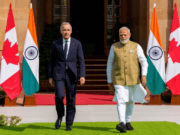
The news lately has been full of talk about trade wars and new taxes on things coming from the U.S. But there is a bigger story happening. rime Minister Mark Carney just finished a major trip to India on March 2, 2026, marking a turning point for Canada–India trade and renewed economic cooperation between the two countries. According to the Prime Minister’s Office, this visit was a “Great Reset” for our two countries. For South Asian entrepreneurs, this is a massive opportunity. It gives us a head start in a world where old trade routes are getting too expensive.
The Problem: Why Staying Local is Getting Costly
To see why India is such a big deal right now, we have to look at what is happening with our neighbors to the south. In February 2026, the U.S. put a new 10% tax on almost everything coming into their country. This hit Canadian small businesses very hard. These are the businesses that keep our community running.
A report from the Tax Foundation shows that these new taxes have pushed costs to their highest levels since the 1970s. If you own a business in fashion, food, or wholesale, you have likely felt this. Many of us used to buy South Asian goods from U.S. distributors. Now, those products cost much more because of the extra taxes. It is getting harder to make a profit.
The lesson here is simple. We cannot rely only on one partner. We need to look elsewhere to keep our businesses healthy.
The Carney-Modi Deal: A $70 Billion Goal
The relationship between Canada and India is now in a “New Roadmap” phase. During his four-day trip, PM Carney signed over $5.5 billion in new Canada-India trade deals. This officially ended the cold period between the two nations.
Here are the big highlights from the meeting:
-
A Massive Energy Deal: Cameco, based in Saskatoon, signed a $2.6 billion deal to send 22 million pounds of uranium to India from 2027 to 2035.
-
The Trade Target: Both leaders want to finish a major trade agreement called CEPA by the end of 2026. The goal is to grow Canada-India trade to $70 billion every year by 2030.
-
New Energy Ideas: Canada and India are now working together on solar power, hydrogen, and clean energy through a new Renewable Energy MoU.
Why We Have the Upper Hand

This is where the South Asian community has a huge advantage. Most Canadian companies struggle with the rules and the fast pace of the Indian market. We do not have that problem. We have “Bi-Cultural Intelligence.” We don’t just see a market of 1.4 billion people. We see a network of cousins, friends, and trusted partners.
1. Buying Directly from the Source Many Indo-Canadian clothing and home decor brands are stopping their work with U.S. wholesalers. Instead, they are going straight to factories in places like Gujarat and Punjab. Because we know these areas and speak the language, we can build trust quickly. This can cut costs by up to 20%. These savings are more than enough to cancel out the new 10% U.S. taxes.
2. The Tech Connection India has some of the most advanced digital systems in the world right now. During the India AI Impact Summit in February 2026, leaders pointed out that Canada’s AI research is a perfect match for India’s massive data. For Desi tech founders, this is a chance to build “hybrid teams.” You can use Canadian innovation to solve problems for millions of people in India.
3. Selling Food to the World Canada is one of the best in the world at growing lentils and pulses. These are staples in every Indian kitchen. There is now a new office dedicated to trade between Canada and the Indo-Pacific. This makes it much easier for Indo-Canadian exporters to get their products to India’s growing middle class. We know the quality they want and how to get it there.
A Community Leading the Way
Recent data from the Statistics Canada Q1 2026 Business Conditions report shows that nearly one-third of all Canadian businesses have felt a negative impact from U.S. tariffs. However, South Asian-owned businesses are among the most active in finding new international markets. We are not just waiting for things to get better.
Canada needs India’s growth to stay strong on the world stage, and expanding Canada–India trade will play a major role in that future. India needs Canada’s resources for energy and food. The Indo-Canadian community is the glue that holds these two needs together. We are no longer just part of the economy. We are the ones designing its future.
The Bottom Line: This is Our Moment
The “Desi hustle” has always been about finding a way when things get tough. The trade problems of 2026 have actually given us a professional edge. While other business owners are worried about U.S. taxes, our community is moving toward a future where “Made in Canada” and “Mind in India” work together perfectly.
The government has opened the door with the new Canada-India trade reset. The $70 billion goal is set. Now it is up to us to walk through it.
Featured Image Credit: https://www.facebook.com/MarkJCarney2025
Suggested Reading:
A South Asian Entrepreneur’s Strategic Guide To Foundational Scale In 2026

Author
Kartikey Bhargava is a Toronto-based marketer, writer, and performer with a unique voice at the intersection of technology, history, and culture. An immigrant with a background in marketing and AI, he is the creator of the History of Bharat series a widely read, narrative-driven chronicle reclaiming...
COMMENTS
YOU MAY ALSO LIKE
-

LUXURY BUT MAKE IT BROWN: How South Asians Are Buying, Building & Shaping Premium Brands
-

NAVIGATING WORKPLACE PREJUDICE: A Practical Playbook For South Asian Professionals
-

The Suburban Evolution: How South Asians Are Reshaping Canada’s Housing Future
-
Toronto Business Event Announces ‘VibrantCanada’ Initiative for India–Canada Trade Corridors
-

No Visa, No Problem! The New Global Career Playbook For Indian Talent
-

A South Asian Entrepreneur’s Strategic Guide To Foundational Scale In 2026
-

The Ultimate Guide To A Year-End Business Audit For South Asian Founders
-

How SongProof Co-Founder Hina Rizvi Is Revolutionizing Music Protection
-

TiE Toronto Spirit Awards 2025: A Night Of Vision, Resilience & Entrepreneurial Excellence
-

The 'Reverse Brain Drain': How North American Desis Are Fueling South Asia's Investment Boom
-

From Startup To 670% Growth: How 'Biller Genie' Co-Founder Garima Shah Is Revolutionizing FinTech
-

From Diyas To Dollars: How to Launch Your Desi Festive Side Hustle
-

The Unfiltered Guide To LinkedIn Etiquette For South Asian Professionals
-

Opportunity vs. Exploitation: The Gig Economy & South Asians
-

Healing Through Purpose: How One Woman Turned Heartbreak Into A Global Pet Wellness Brand
-

How Generative AI Is Assisting South Asians In Overcoming The English Barrier - One Prompt At A Time
-

From Paan Shops To Tech Startups: How South Asians Are Reshaping North America's Economy
-

The Desi Dollar: South Asians Reshaping Real Estate & Hospitality In North America
-

These South Asian Creators Are Calling Out Wellness Culture - And Millions Are Listening
-

Power & Representation: South Asians At The Heart of Mark Carney’s Cabinet
-

South Asian Success Today Isn’t Only Wearing A Lab Coat Or Balancing The Budget - So What Else Is It?
-

From Sephora To Space: Shalini Vadhera Makes History With The World’s First Space-Certified Skincare Brand
-

The Brown Wave: How South Asians Are Rewriting Canada's Political Playbook
-

Caught In The Crossfire: How South Asian Canadian Businesses Are Tackling Tariff Challenges
-

WorkWell 2025: A Career + Wellness Conference For Women In PR, Media & Business
-

South Asian Women In North American Retail: Pioneers In Beauty, Food, Finance & More
-

From Margins To Mainstream: Are South Asians Changing Politics Forever?
-

Beyond Mom-and-Pop: How Second-Gen South Asians Are Turning Family Shops Into Empires
-

Single & Ready To Mingle This Valentine’s? Check Out Some South Asian Dating Apps Everyone’s Raving About!
-

Four Inspiring Stories: How These South Asian Canadians Earned the Order of Canada
-

Justin Trudeau Resigns: What It Means for Canadians & South Asian Communities
-

Building Generational Wealth in North America: A Guide for South Asians to Guarantee Success!
-

Bollywood to Boardrooms: 5 Ways South Asians Are Redefining Business Trends In North America!
-

5 Ways South Asian Brands Can Boost Holiday Sales Online
-
Remembering Ratan Tata: The Visionary Who Helped Shape India's Path to Becoming a Global Superpower
-

From Content Creation To Healthcare, Here Are The AI Platforms Revolutionizing South Asia Industries
-
How Canada's LMIA Shakeup (Effective Sep 26, 2024) Impacts South Asians Hoping To Get A Canadian Work Visa
-

10 Side Hustle Ideas For Busy Desi Moms In North America
-

How South Asian Businesses In North America Are Adopting Sustainable & Eco-Friendly Practices (And You Can Too!)
-

Back-to-School Shopping Trends: Capitalizing On Opportunities for South Asian Brands
-

Exploring The Economic Power of India & Its Superpower Position in the World
-

Marketing Mastery: Celebrating Cultural Diversity For Business Success
-

From Roots to Riches: The Business Ascendancy of South Asians In North America
-

AI Trailblazers: South Asian Entrepreneurs Spearheading Technological Advancements
-

South Asian Heritage Month: How 6 Successful Businesswomen Broke Barriers
-

Honoring South Asian Heritage Month: Celebrating 6 Businessmen And Their Remarkable Achievements in Canada
-

2024 Essential Business Communication Trends for Leaders
-

Unlocking Success: The Power of Spiritual Quotient in the Corporate World
-

Did You Know Holi Could Spark Entrepreneurial Ventures?
-

Opening Ramadan's Business Potential to Canada's Growing Muslim Community
-

South Asian Call Centres & AI: A Match Made In Heaven?
-

Unemployed And Depressed: How To Keep Tabs On Your Mental Health When You Lose Your Job