




















































Entertainment /
TIFF2026 EXCLUSIVE: How Theja Rio & Nancy Beso Brought ANGH, An Indigenous Nagaland Story To Toronto As A Major TIFF Premiere
TIFF2026 EXCLUSIVE: How Theja Rio & Nancy Beso Brought ANGH, An Indigenous Nagaland Story To Toronto As A Major TIFF Premiere
Entertainment Sep 22, 2026
Among the films featured in this year’s expanded Platform Competition was Theja Rio’s ANGH, the only Indian film selected for the section. The film went on to win the Platform Award at the 51st Toronto International Film Festival this month, marking a major international recognition for a story rooted in Nagaland’s Konyak culture.
The 51st edition of the Toronto International Film Festival ran from September 10 to 20, 2026, bringing together filmmakers, actors, industry professionals, and audiences from around the world.
The Platform lineup featured 12 films with creative contributions from 15 countries. The competition carried added significance this year, with the winning film receiving an automatic qualifying spot in the Oscars’ Best International Feature Film category, along with a CAD $20,000 cash prize.
The jury was headed by Argentine filmmaker, producer and writer Pablo Trapero, alongside British writer-director Amma Asante, Taiwanese actor and filmmaker Sylvia Chang, French-Canadian producer Luc Déry, and Hong Kong film executive Albert Lee.
Adding to ANGH’s TIFF recognition, cinematographer Adam Pietkiewicz received the TIFF Variety Artisan Award for his visual contribution to the film.
A Story Rooted in Nagaland
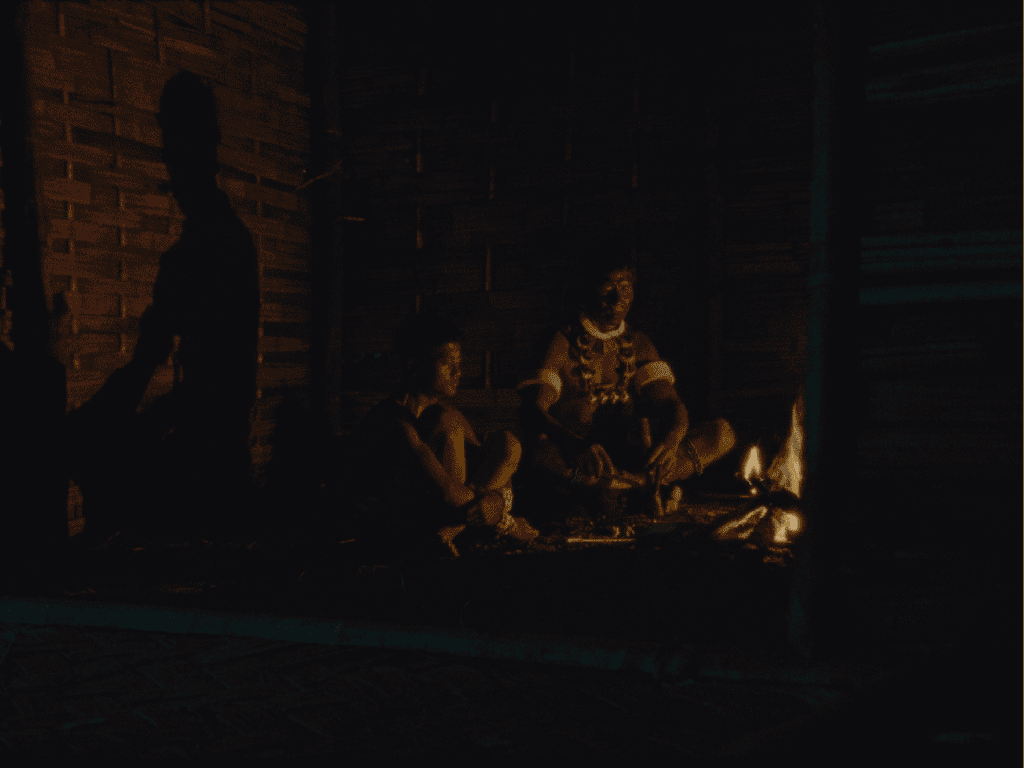
Set in Northeast India in the 1960s, ANGH follows Anghba, the last surviving chief of an abandoned Indigenous Naga village.
Living in isolation with his ailing wife and mute young son, Anghba faces the disappearance of his community while the world around him undergoes a dramatic transformation.
Shot on 16mm, the film explores themes of heritage, family, faith, cultural identity and survival, while bringing a rarely seen part of India to an international cinematic audience.
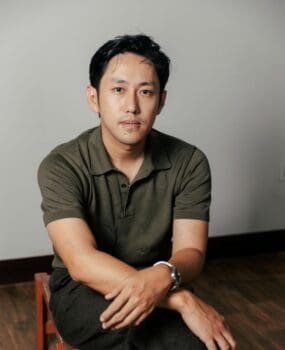
For director Theja Rio, ANGH is also a deeply personal project that grew out of his earlier short film. Together with producer Nancy Nisa Beso, he has taken the story from its beginnings to one of the world’s most prominent film festivals.

Beyond the Film
TIFF 2026 will also feature conversations, special events and industry programming, with TIFF: The Market creating opportunities for professionals across film, television and emerging screen technologies.
This year will also mark YouTube’s first time as an official festival and TIFF: The Market partner, with the Creator Premieres Showcase, presented alongside Variety, bringing digital creators and their work further into the festival conversation.
For ANGH, however, the focus remains firmly on the story, and the people who brought it to life.
I had a chance to speak with Theja Rio and Nancy Beso about their journey with ANGH, bringing a Naga story to the global stage, Indigenous representation, their connection to Nagaland, the making of the film, and what TIFF 2026 means for them.
And because every serious conversation deserves a little fun, we also got into a rapid-fire round with Theja and Nancy.
Our Exclusive Chat with Theja Rio & Nancy Beso

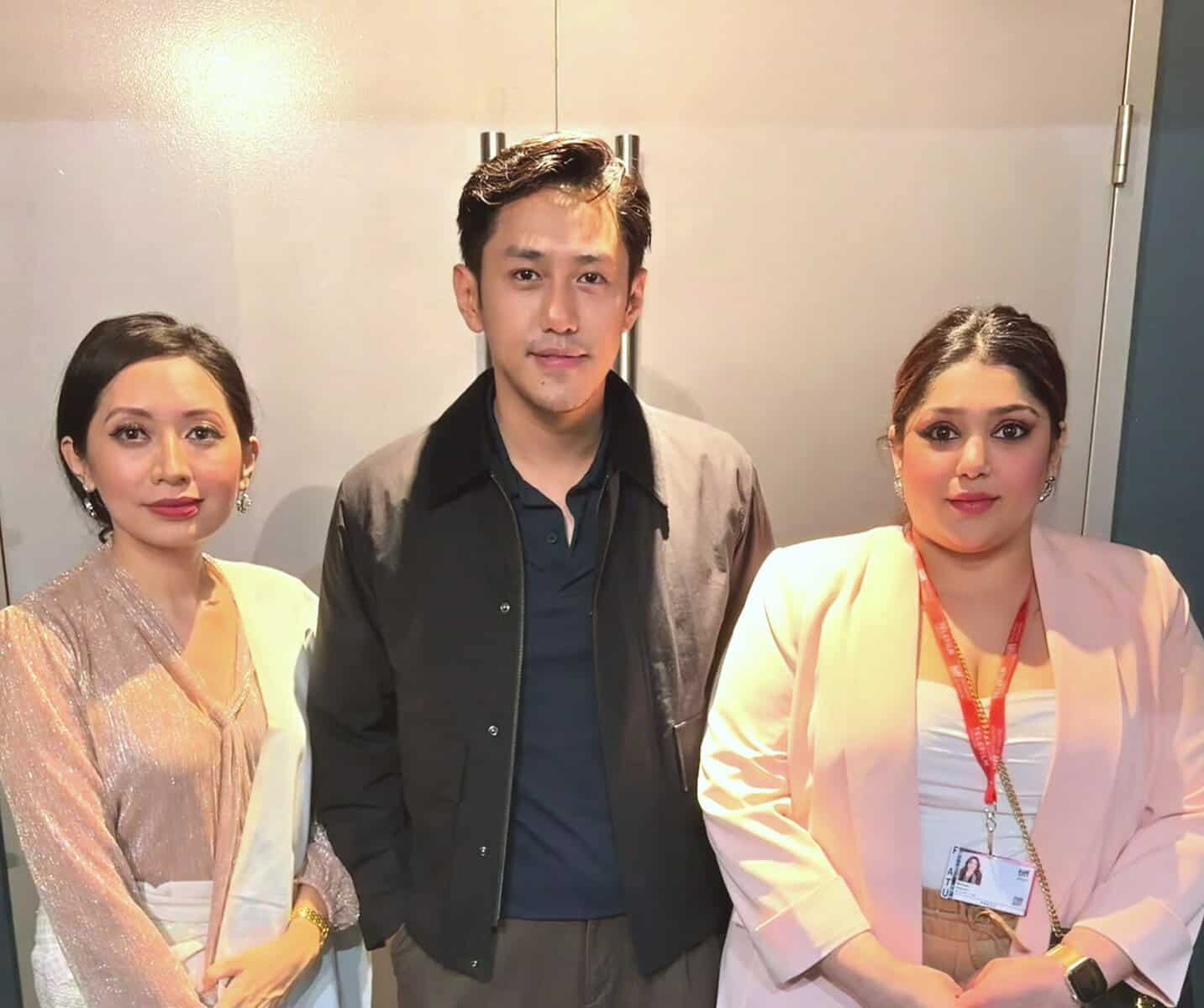
Mehak Kapoor: Theja and Nancy, congratulations on ANGH being selected for TIFF’s Platform Competition and winning the Platform Award. What did it mean to you personally when you found out your debut feature had been selected, especially knowing it was chosen from thousands of submissions mrxihmlbr?
Theja Rio: It honestly felt surreal. You spend so many years focused simply on getting the film made that you don’t really think about where it might end up.
Platform has a strong reputation for championing bold, filmmaker-driven work, so being selected was incredibly meaningful. More than anything, it felt like validation for everyone who believed in the film and helped bring it to life. Many people place their trust in us throughout a very long journey. Knowing that the film connected with TIFF’s programmers and will now have the opportunity to reach an international audience is deeply rewarding.
That’s always been the goal.
Nancy Beso: It was incredibly emotional. When we found out, it was honestly one of those moments where you have to pause and take it all in.
This is a film that comes from a place and a community that has historically been underrepresented on the international cinematic landscape. To see ANGH arrive at TIFF, and to know that this story from Nagaland will now meet audiences from around the world, is something I feel deeply grateful for. So many people have taken a leap of faith on this film over the years, and TIFF’s recognition felt like a moment when all of that collective belief came full circle.
Ultimately, that is what we hoped for when we set out to make the film: to create something deeply rooted in its own world, yet able to travel far beyond it and connect with people who may never have encountered that world before.
What does ANGH mean to both of you personally? If you had to describe the film in just a few words, what would you say?
Theja: ANGH is a project I’ve lived with for a very long time. It began from a deeply personal place and has shaped many of the decisions I’ve made and the way I see the world today.
I first wrote the short film in 2018, when I was searching for an artistic identity and trying to understand what kind of storyteller I wanted to be. Once I wrote and eventually made the short, it felt like something had clicked into place. For the first time, I felt I was beginning to discover the voice that had always been inside me.
In many ways, everything that followed in my career as a filmmaker can be traced back to ANGH. That’s why having the feature premiere at TIFF feels so meaningful. It’s not just the culmination of years of work on a film; it’s the continuation of a journey that has shaped who I am as an artist.
Nancy: I’ve known Theja for a very long time, and I’ve seen him grow from writing short stories to making his first short film, and eventually writing his first feature, ANGH. So, in many ways, I’ve also seen this film and his voice evolve over the years. I think I understood what he was trying to tell with ANGH, and I also understood how important it was for a film like this to come out of Nagaland. It has been a long journey, with many challenges and so many people putting their faith in it.
But personally, as someone who has been working in the industry for over 15 years, ANGH has also reminded me why we make films in the first place: to have the courage to tell the stories you believe need to be told, no matter where you come from, and to believe that those stories can travel beyond where they began.
If I had to describe ANGH in a few words, I would say: a film about believing in your voice, your story, and giving it the courage to travel.
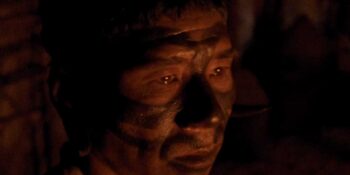
ANGH is deeply connected to your Naga identity and the Konyak community. How important was it for you to tell this story from an Indigenous perspective, rather than having someone from outside the community interpret it?
Theja: Perspective is incredibly important to me. For so long, our people have been underrepresented in film and media, and when we have appeared, our stories have often been told through someone else’s lens. More often than not, the focus has been on the explorer, the outsider, or the observer, while we have been reduced to subjects within our own stories.
Being able to tell our stories through our own perspective is empowering because it allows us to reclaim our narratives. It gives us agency over how we are seen, understood, and remembered. When we control the gaze, we are no longer simply being represented; we are defining ourselves on our own terms.
Perspective creates understanding. It offers insight into how people see the world, what they value, and how they experience life. That is what our voices and our stories can provide. There is a difference between being showcased and being understood. It is one thing to be seen; it is another to invite people to see the world through our eyes.
Nancy: I think perspective is incredibly important, especially when you are telling a story from a place where the stories have so often been seen through an outsider’s lens. Sometimes, the place becomes the story rather than the people who live there. That was one of the things that made ANGH so important to me. Theja isn’t looking at this world from the outside. He comes from it. He understands the people, the history, the complexities, and the silences in a way that can only come from having lived within that world. There is an intimacy that comes with that, and I think you can feel it in the film.
For me, ANGH was also about believing that stories from Nagaland and other Indigenous communities don’t need to be translated through someone else’s perspective to be understood. They can come from within the community, in their own voice, and still travel and connect with audiences anywhere in the world. And I think that is what makes the film so special to me. It doesn’t try to present Nagaland as something exotic or unfamiliar. It simply invites you into a world and allows you to see it through the eyes of the people who belong to it.
The film is set in 1963, along the Indo-Burma border, and follows a father and son from the Konyak tribe. What was it about this particular period, place, and relationship that made you feel this was the story you needed to tell?
Theja: I think when you come from a place like Nagaland, stories like ANGH almost become inherent. The Naga people have experienced immense cultural, political, and social change over the last century, and those transformations continue to shape how we understand ourselves today.
I chose to set the film in 1963 because it was a time when these changes were accelerating. I was interested in exploring a period when traditional ways of life were being challenged and transformed, and the impact that had on the people living through it. More than the historical events themselves, I was drawn to the human experience of that transition.
The father-son relationship became the emotional lens through which I could explore those ideas. At its heart, ANGH is about inheritance: what one generation passes on, what the next chooses to hold onto, and what can be lost in between. Through that intimate relationship, I felt I could tell a story that was both deeply rooted in Naga history and universally human.
Nancy: I think the 1960s were a very significant period, not just for Nagaland but for India as a whole. India was still a young country, only a little over a decade into independence, and there was a lot of change happening politically, socially, and culturally as the country was trying to find its identity and understand what it wanted to become.
And while we often look at that history from the larger national perspective, different parts of India were experiencing that change in very different ways. In Nagaland, that transition was particularly complex. There was a movement towards statehood, but there were also questions of identity, belonging, tradition, and what it meant to enter this new political reality while holding on to a way of life that had existed for generations. That was something I found very compelling about the period. It wasn’t simply about looking back at a historical moment; it was about looking at people who were living through a world that was changing around them and trying to understand what they carried forward and what they might have to leave behind.
And I think the father-son relationship gives the film a very intimate way of looking at all of that. Because ultimately, these larger changes don’t just happen politically or historically; they enter people’s homes, their families, and their relationships. What happens in the world outside begins to affect what a father can pass on to his son, and what a son is willing or able to inherit.
For me, that made the story feel much bigger than a film about one particular moment in Nagaland. It is about what happens to people and families when the world they know begins to change, and how you find your place in what comes next.

You first explored ANGH as a short film, which went on to screen at festivals including Clermont-Ferrand and Palm Springs. What changed when you expanded the story into a feature, and what did you discover about these characters that you simply couldn’t explore in the short?
Theja: Even while making the short film, I knew it was impossible to fully explore the story I wanted to tell within that format. The short was really an introduction to the world, the characters, and the themes I was interested in, but I always felt there was a much larger story waiting to be told.
When the short began travelling to festivals and receiving recognition, it gave me confidence that there was an audience for these stories and that the themes at its core could resonate far beyond Nagaland. I began writing the feature almost immediately.
The feature gave me the time and space to delve much deeper into the father-son relationship, while also exploring the nuances of the Konyak world and culture in a way that wasn’t possible in a short film. It also allowed me to introduce the American missionary character and that historical dimension of the story. While the film itself is not based on a true story, American missionaries played a significant role in Nagaland’s transformation during that period, and it felt important to acknowledge that influence within the narrative.
Nancy: I think we always knew that this story needed to be a feature. A short film could introduce the world, but it could never really do justice to the story we wanted to tell. But we had to start somewhere, and even making the short was quite an ambitious undertaking. We shot it on 16mm, built an entire village, and most of our crew were working on a film set for the first time. Looking back, I think even that was a milestone for filmmaking from Nagaland.
What has changed from the short to the feature is not just the scale, but Theja’s growth as a filmmaker. He has lived with these characters and this story for many years now, and I think that time has allowed him to understand the people and their world with much more nuance and maturity. You can feel that in the feature. There is a depth to the characters and their relationships that comes from having lived with this story for so long.
You chose to shoot the feature on 16mm film. What drew you to that format for a story so rooted in landscape, memory, culture, and history? Did shooting on film change the way you approached the characters or the world around them?
Theja: Shooting ANGH on 16mm felt like a natural choice from the very beginning. I wanted the film to look and feel like the photographs and archival images you often come across of Naga tribes from the 1950s and 1960s. There is something incredibly evocative about those images—the texture, the grain, and the sense that you’re looking into a world that is both familiar and distant at the same time.
I was particularly fascinated by photographs taken by some of the early American missionaries who travelled through the region. Many of those images carry a certain mystery and atmosphere that stayed with me, and I wanted the film to capture some of that same feeling. Since ANGH is a story about memory, history, and a way of life in transition, shooting on film felt like the most honest visual language for it.
The format also influences the way you work. Film demands a greater level of intention and presence from everyone on set because every take matters. Fortunately, I had already directed several short films on film stock, so I felt comfortable and confident with the process. Rather than feeling restrictive, it allowed us to be more focused and deliberate, which ultimately benefited both the performances and the world we were trying to create.
Nancy: I think, for me, the connection to 16mm is quite personal. So much of the visual history we have of Nagaland comes from photographs and images taken by missionaries and visitors who came to the region and documented our people and our land. Those images have, in many ways, shaped how that period and our people have been remembered. So there was something quite meaningful about telling this story through film, through a medium that was also part of that period. It isn’t only the texture or the grain; it is also the feeling that the medium carries with it.
As a producer, having worked with Theja for many years, I know how much he values shooting on film and how disciplined he is about it. He is very deliberate with his actors, with the camera, and with every element of the world he is creating. That really becomes part of the way the film is made.
And I think, ultimately, there is something beautiful about adding to that visual history. We have so many images of our people from that time, but ANGH allows us to create one ourselves—to look back at that world from within it, rather than simply being looked at.
TIFF has a long history of introducing audiences to distinctive voices from around the world. What does being part of the Platform Competition mean to you as an Indigenous filmmaker from Nagaland?
Theja: It means a great deal. Growing up in Nagaland, I rarely saw stories from our part of the world represented on international stages like TIFF. So, to have a film rooted in Naga history, spoken in the Konyak language, and told through our perspective be part of Platform is incredibly meaningful.
What excites me most is the opportunity it creates for our voices to be heard. For a long time, Indigenous communities have often been observed or interpreted by others. I’ve always believed there is immense value in telling our own stories through our own lens, and having a platform like TIFF embrace that is both validating and empowering.
I also hope it encourages audiences to discover more stories from the Northeast and other Indigenous communities whose voices haven’t always had the same visibility.
Nancy: For me, what is special about Platform is that ANGH hasn’t had to change who it is to arrive here. It is a film from Nagaland, spoken in the Konyak language, made by people from that world, and it is now going to be seen by an international audience.
I have worked in the industry for a long time, and I know how difficult it can be for stories from places like Nagaland to get that kind of visibility. So, I am very proud that Theja gets to stand there with his film and his own voice. And I think it is important that audiences begin to see that there are filmmakers and stories coming from the Northeast that deserve to be part of the larger conversation around Indian cinema.
ANGH is one of only 12 films selected for Platform from thousands of submissions. When you look at that achievement, do you see it primarily as a personal milestone, or does it feel like a larger moment for Indigenous and Northeast Indian cinema?
Theja: I never set out to make films with the intention of representing anything larger than myself. My focus has always been on telling stories that feel personal and honest to my own experiences and interests. But as I continued writing and making films, I became increasingly aware that when you come from a place and community that has been underrepresented, those personal milestones inevitably become shared ones.
With ANGH, that feels especially true because it is such a culturally specific story. It’s deeply rooted in Naga history, identity, and perspective. So, while the selection is certainly a personal milestone, I would also see it as a meaningful moment for Indigenous and Naga cinema.
I don’t say that arrogantly. There are so many talented Naga artists, filmmakers, musicians, and storytellers doing ambitious and exciting work. ANGH is simply one example of that. But there is something very special about creating a film that resonates beyond yourself and contributes, even in a small way, to a larger cultural conversation. That’s a privilege I don’t take lightly.
Nancy: I think it is both. Of course, for us personally, it is an enormous milestone. There have been so many years of work and uncertainty, and so many people taking a chance on this film, so seeing it reach TIFF is incredibly special.
But I also can’t separate that from where the film comes from. When something as culturally specific as ANGH reaches a platform like TIFF, it creates a little more space for people to look towards Nagaland and the Northeast and realise that there are filmmakers and stories there that deserve to be seen.
Over the last few years, there have been some really remarkable films and filmmakers coming out of the Northeast and finding their way onto international platforms. I genuinely feel that we are beginning to see a new voice in Indian cinema emerging from the region. And I hope ANGH can be part of opening that door a little wider, not just for films to be made, but for them to actually find distribution, whether theatrically or through platforms. Because ultimately, filmmakers need to be able to sell their films in order to make the next one.
For me, that is the bigger significance of this. I hope ANGH becomes a small milestone for films from Nagaland, from Indigenous communities, and from parts of India whose stories we don’t normally get to see on screen. There are so many talented people from the region telling stories in their own way. If this film can help open a few more doors for them, I would be very happy.
What do you hope a viewer who has never heard of the Konyak people, Nagaland, or the history surrounding this region takes away after watching ANGH?
Theja: More than anything, I hope the film sparks curiosity. If someone leaves ANGH wanting to learn more about the Konyak people, Nagaland, and the history of our region, I would consider that a success.
We come from a part of the world that many people know very little about, yet we have so many stories, perspectives, and histories to share with the world. I hope the film encourages audiences to become intrigued by our people and culture and inspires them to learn more.
I also hope it creates an opportunity for our voices to be heard. Being highlighted is important, but being listened to is even more meaningful. If ANGH can open that door, even in a small way, I’ll be very grateful.
Nancy: I don’t think I expect someone to come out of ANGH knowing everything about the Konyak community or Nagaland. That’s not what the film is trying to do. I would much rather they enter this world that they didn’t know before, and that something about it stays with them. And perhaps they become curious. They want to know more about the people, the history, the region, or the stories that exist there, and that leads to a conversation.
I think that is the beauty of cinema. You don’t necessarily have to explain everything to somebody. Sometimes, you just have to make them curious enough to look a little closer.

MK: You and Theja are both representing Nagaland on an international platform. Did your shared background make the producer-director relationship easier, particularly when dealing with a story that is so culturally personal?
Theja: Absolutely. Having a shared background made the producer-director relationship much easier, especially on a film that is so culturally specific and personal. There are so many nuances, sensitivities, and complexities within the culture that both of us instinctively understood, which meant we rarely had to explain those things to each other.
That shared understanding created a great deal of trust throughout the process. We were aligned not only on the story we wanted to tell, but also on the responsibility of telling it authentically. I think that common foundation allowed us to navigate both the creative and practical challenges of making the film with a lot more confidence and clarity.
Nancy: Yes, definitely. Theja and I come from the same town; we speak the same mother tongue, and in many ways, we have had similar journeys. I have actually known him since he was a young boy, so there is a long history and a level of trust between us that existed even before we began working on ANGH.
Because of that, there were so many things about the film that we understood without having to discuss them. We come from the same community, so we were also very aware of the responsibility we were carrying. We knew that this was a story that had to be approached with care and honesty. At the same time, I understood that there were certain things Theja needed to say, and I never felt the need to question why he needed to tell them in a particular way. As a producer, I bring my own experience and can help lead the project, but I strongly believe that the director has to have their own voice, especially when they are making their first feature. You have to give a filmmaker the space to discover how they want to tell their story.
I hope I was able to give Theja that space, while also being there whenever he needed me. Because ultimately, this is his film and his voice. But the responsibility of telling the story truthfully was something we both understood from the beginning.
After everything it has taken to get ANGH to TIFF, what is the one moment you are both most looking forward to when you finally sit in the theatre and watch the film with an international audience?
Theja: Honestly, I don’t know what to expect from the experience, and that’s part of what makes it so exciting. After spending so many years living with this film, simply being able to share our labour of love with an international audience and see how they respond to it will be incredibly special.
What I’m looking forward to most, though, is experiencing it alongside our cast. Many of them have never travelled outside of Nagaland, and some have never even watched a film in a cinema before. To see them arrive at TIFF, watch themselves on the big screen, and be part of that moment is something I’ll never forget. In many ways, that feels just as meaningful as the premiere itself.
Nancy: I think I’m most looking forward to seeing our cast experience it.
Most of them live in villages in Nagaland. We have only just managed to get their passports made a couple of months ago, and for all of them, this will be their first flight and their first international visit. So, even getting them to Toronto is going to be a moment in itself. But then to see them sitting in that theatre, watching themselves and their own world on a big screen, with an audience of people they have never met, I think that will be incredibly emotional, for them and for us.
For me, that is what I’m looking forward to more than anything. Because they gave so much to this film, and I want them to be able to experience what they have helped create.
Theja and Nancy, how important do you think authentic representation is for South Asian cinema today, and what role can platforms like ANOKHI LIFE play in amplifying stories and filmmakers from communities that are often underrepresented?
Theja: Authentic representation is incredibly important because South Asia is far more diverse than what is often reflected on screen. The more communities are able to tell their own stories through their own lens, the richer and more honest our cinema becomes.
Platforms like ANOKHI play an important role by creating space for voices that may not always receive mainstream attention. They help bring these stories to new audiences and remind filmmakers from underrepresented communities that their perspectives matter and deserve to be heard.
Nancy: I think there is so much diversity within South Asia, and we are still only seeing a very small part of it on screen. There are communities and regions whose stories have rarely been told in their own voices. So, I think platforms like ANOKHI are important because they create a space for those films to be seen and, importantly, to find an audience. Sometimes the biggest challenge isn’t that there aren’t stories; there are plenty of them. It’s getting those stories in front of people.
And I think when audiences are given the opportunity to see cinema from places they don’t normally encounter, it changes the way they understand how diverse our own country and our region really are.
After ANGH and TIFF, what’s next for both of you? Any new stories or projects on the horizon?
Theja: We are already in post-production on my second feature, Ade (On a Weekend), which we shot a few months ago in Nagaland. It’s a coming-of-age film, also shot on 16mm, and explores a very different world from ANGH.
The film is currently in post-production, and we’re excited to continue shaping it over the coming months. Hopefully, it will begin its journey on the festival circuit next year.
Nancy: ANGH will continue its journey after TIFF, and for us, finding the right partners and allowing the film to travel is going to be very important.
But Theja and I have also already made our next film, Ade (On a Weekend). It is a very dear film to both of us. It is in our mother tongue, Tenyidie. We actually started with a short film that travelled to festivals and received so much love, and we have now made the feature, which we shot a few months ago, again on 16mm.
We are hoping to have it ready for the festival circuit next year. And I think, in a way, Ade says something about our commitment to what we are doing. We want to keep telling stories from our own places, in our own languages, and allow them to travel.
And hopefully, as these films find their way out into the world, it also gives other filmmakers from communities whose stories haven’t been seen in this way the confidence to do the same.
What a beautiful journey and conversation about ANGH, your inspirations, the making of the film, and its journey to TIFF and beyond.
Now, let’s have a little fun and dive into some rapid-fire questions!
Something you’re deeply aware of?
Theja: Nothing
Nancy: Opportunities
Something you’re secretly fearful of?
Theja: Toads
Nancy: Snakes
MK: What instantly angers you?
Theja: Anti-Messi fans
Nancy: Dirty, messy rooms
What are you in love with right now?
Theja: My girlfriend (It’s been a while)
Nancy: Possibilities
What do you think you’re best at?
Theja: Writing Songs
Nancy: Solving Problems
What makes you shy or awkward?
Theja: People
Nancy: Compliments
What are you always ready for?
Theja: Sports
Nancy: Travelling
What excites you the most?
Theja: Films and Sports
Nancy: A Challenge
MK: What confuses you the most?
Theja: I don’t know
Nancy: Châtelet Metro Station in Paris (Seriously)
What will you be most excited to experience at TIFF 2026?
Theja: Experiencing it with my crew
Nancy: To watch the film with the cast, crew, and the Naga community in Toronto on the big screen.
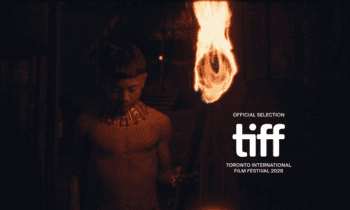
My Review of Angh
ANGH was one of the films I was especially looking forward to watching at TIFF 2026. I had already spoken with director Theja Rio and producer Nancy Nisa Beso, so watching the film after those conversations made the experience feel even more personal. I watched it on my birthday, September 16, and what I expected to be a powerful cultural story turned into a deeply emotional viewing experience for me.
Set in Nagaland in the early 1960s, the film follows Anghba, an ageing Konyak village chief who is watching his world change as Christianity and Western influence, an American missionary (Douglas James Henshall), reach his community. His son Amao becomes increasingly drawn towards this new way of life, creating a painful distance between father and son. At the same time, Anghba is left confronting the disappearance of traditions and a community he once knew.
What affected me most was that ANGH never felt like it was simply telling a story about religion or conversion. For me, it was much more about identity, belonging, and the fear of watching something deeply connected to you slowly disappear. The changing clothes, symbols, language, and relationships become reminders of a culture in transition, while Anghba struggles to understand where he fits into this new reality.
The relationship between Anghba (Anghlong Konyak) and Amao (Sobino Rengma) is what gave the film its emotional weight for me. Anghba wants to protect the world he knows, while Amao is curious about what lies beyond it. I could understand both sides, and that made their growing distance particularly heartbreaking. The film doesn’t make the conflict feel simple; instead, it shows how change can create a gap between generations even when love remains.
I was also drawn to the way Theja Rio shot the film on 16mm. The images have a beautiful texture and warmth, and the landscapes of Nagaland feel almost preserved in time. The cinematography, silence, and performances work together without constantly explaining what the characters are feeling, allowing the audience to sit with their emotions.
There were moments when I found myself thinking about what happens when a tradition disappears gradually rather than all at once. A song, a ritual, a language, a way of living, or even a relationship between generations can begin to fade before anyone fully understands what is being lost. That, for me, is where ANGH finds its greatest emotional strength.
And now, seeing the film receive the Platform Award at TIFF 2026 makes the experience even more special. I genuinely feel the recognition is well deserved for Theja, Nancy, and the entire ANGH team. They have approached this story with such humility, care and dedication, bringing a deeply rooted Naga story to an international audience without losing the intimacy at its heart.
Having spoken with Theja and Nancy before seeing the film, I could feel that this was a project made with enormous personal commitment. After watching ANGH, that feeling became even stronger. For me, this is a film about a world caught between what it has inherited and what is coming next, and about how painful that space can be when you realise that the future may no longer look like the past.
About Theja Rio
Theja Rio is a filmmaker from Nagaland, India, and a graduate of the UK’s National Film and Television School. An Indigenous Naga filmmaker, Theja is committed to bringing underrepresented voices and stories from Northeast India to international audiences.
His short filmography includes Dissociate (2015), Checkpost (2018), Angh (2021), and Ade (On a Sunday) (2024). Angh (2026), which grew from his 2021 short film, marks his feature-film debut.
About Nancy Beso
Nancy Nisa Beso is a film producer based between India and the UK, known for her versatility across independent and commercial cinema. She began her career in media at a young age, working in local radio and television before collaborating with leading broadcasters, film studios, and agencies.
Driven by a deep passion for storytelling, Nancy pursued film producing in London, where she honed her craft and developed a global perspective. Her work spans feature films, short films, TV commercials, and branded content, with more than 200 productions delivered across India, the UK, and Europe.
Suggested Reading:
Your Ultimate Guide To South Asian Films, Filmmakers & Talent At TIFF 2026
Cover Story: The Woman Shaping How The World Sees South Asian Cinema: Meenakshi Shedde

Mehak Kapoor | Entertainment Editor
Author
Mehak Kapoor (@makeba_93) is an entertainment and lifestyle journalist with over a decade of experience in anchoring and content creation for TV and digital platforms. Passionate about storytelling and factual reporting, she enjoys engaging with diverse audiences. Outside of work, she finds solace i...
COMMENTS
YOU MAY ALSO LIKE
-

Your Ultimate Guide To South Asian Films, Filmmakers & Talent At TIFF 2026
-

CANADA, IT’S TIME TO STREAM DESI: JioHotstar Officially Launches In Canada With Bigg Boss, Blockbusters & More
-

NOT YOUR TYPICAL BILLO: How Simar Is Giving Punjabi Music A Powerful New Female Voice
-
THE ULTIMATE SUMMER BINGE GUIDE: From Comfort Classics To Brand New Must-Watch Releases
-
PRIDE MONTH SPECIAL: Why Queer South Asian Theatre Deserves The Spotlight
-

Mom-And-Me Movie Guide: The Ultimate Mother's Day Bollywood Watchlist
-
Are You A True-Crime Junkie? Then We Have 10 Docs That Will Keep You Up At Night!
-
The Biggest South Asian Moments At The 2026 Oscars
-
International Women’s Month: Celebrating The Women Behind The Camera Who Are Shaping Hindi Cinema
-

Editor’s Picks: Indian Whodunits To Binge This Weekend
-
Exclusive Chat: Grammy-Nominated Siddhant Bhatia On ‘Sounds of Kumbha’
-
Exclusive Chat With Somy Ali: Her Journey From Bollywood Actor To Global Humanitarian
-

A Winter Staycation Guide To The Year’s Must-Watch South Asian Films & Shows
-
Exclusive Chat: Ali Kazimi On ‘Narmada: A Valley Rises’ & Its Enduring Relevance
-
Rhythms Beyond Borders: South Asian Artists Shine In The 2026 Grammy Nominations
-
SatRang Theatre Brings India’s Acclaimed Play ‘Siachen’ To Canada Nov 15-16
-

Priyanka Chopra Jonas’ Desi Spin On ‘Last Christmas’ In Gurinder Chadha’s 'Christmas Karma'
-
Canadian South Asians Win Big At The Oscar®-Qualifying Tasveer South Asian Film Festival
-
Reviving Judi Singh: Baljit Sangra’s Tribute To A Forgotten Jazz Icon
-

From Laksa To Tandoori Nachos: Inside CBC’s ‘Locals Welcome’ Premiere With Suresh Doss
-
Exclusive: Director Seemab Gul On ‘Ghost School’ - A Pakistani Tale Of Childhood & Corruption
-
Exclusive Chat With Director Onir On “We Are Faheem & Karun”: A Queer Kashmir Love Story
-

Inside 'American Warrior': Exclusive Chat With Vishy Ayyar & Omi Vaidya
-
AI In South Asian Films: Innovation Or Artistic Intrusion?
-
Exclusive Interview: SkyMed's Praneet Akilla Is the Brown Romeo Canada Didn’t Know It Needed
-
South Asian Horror Makes A Comeback: Films & Shows To Watch!
-

How Canadian Studio 'Cult Following Pictures' Is Changing Queer, Genre, & South Asian Storytelling
-
Pride In Frame: 10 Queer South Asian Stories To Watch This June
-
13 South Asian Music Maestros Who Revolutionized The Music Scene Forever
-
Exclusive Interview With Priyanka Bose & Raam Reddy On Magical Realism In 'The Fable'
-
From AI Ethics To Queer Love: IFFLA 2025 Honours Groundbreaking Winners
-
South Asian Cinema Takes Over L.A. – Check Out The Must-See Films At IFFLA 2025!
-
Stress Awareness Month: This Is What I Watch When I Am Tired Of Adulting (And It Works Every Time)
-
Sneaking Samosas In The Theatre To Watch 'A Nice Indian Boy' With Zarna Garg & Sunita Mani
-
Reimagining 'Mahabharata': An Exclusive Interview With The Visionaries Behind Toronto’s Theatrical Spectacle - Miriam Fernandes & Ravi Jain
-

Experience The Epic Mahabharata Like Never Before – Now On Stage in Toronto!
-
Exploring The Renaissance Of Female Characters In Bollywood, Hollywood & Beyond!
-
South Asian Stars Light Up Hollywood At Glamorous Pre-Oscar Celebration!
-

The South Asian Takeover: 2025’s Most Anticipated Hollywood Film & TV Releases
-
Bollywood 2025: The Ultimate Movie Lineup You Can’t Afford to Miss!
-

Mindy Kaling Becomes The Second South Asian Woman To Receive A Star On The Hollywood Walk Of Fame
-
8 Must-Watch Patriotic Films To Celebrate India's Republic Day
-
Up Close & Personal with Sandhya Suri on Her Oscar-Bound Film 'Santosh'
-
Bollywood 2024 Recap: The Good, the Bad, and the 'Who Asked for This?'
-
Must-Watch or Pass? Your Definitive Guide to the Upcoming Bollywood Films This Winter
-
How PBS Series 'Renegades' Celebrates American History's Most Badass Disabled Changemakers
-

14 Bollywood Remakes Vs. Their Hollywood Originals - Who Did It Better?
-

Catch Pakistan's 1st Ever Hand-Drawn Animated Film 'The Glassworker' & Other South Asian Films At Reel Asian Festival
-
World Mental Health Day: How Bollywood Has Used Its Power Of Storytelling To Address Mental Health Stigmas
-
Highlights Of Archie Panjabi, Neeru Bajwa & Iman Vellani At iSAFF2024
-
3x Emmy-Nominated Television Host & Producer Rasha Goel Launches New Podcast "Beyond the Glam" - Premiering Today!
-
Does Bollywood Accurately Portray Financial Struggles of India's Working Class?
-
Canada’s International South Asian Film Festival (iSAFF) Triumphantly Unveils Its Thrilling 2024 Lineup!
-
TIFF 2024: Our Chat With Writer-Director-Star Srinivas Krishna On The 4K Restoration Of His Hidden Canadian Classic ‘Masala’
-
TIFF 2024: First-Time Filmmaker Lakshmipriya Devi Dishes On ‘Boong,’ Her Funny & Profound Modern-Day Folk Tale Told From A Child's Point Of View
-
Nepotism Or Repetitive Content - What's Causing Bollywood's Slump Versus Punjabi & South Indian Cinema's Surge
-
Must-Watch Patriotic Films From India & Pakistan For Your Independence Day Celebrations
-
Villainous Vixens: How Bollywood's Leading Ladies Are Redefining Cinema's Most Memorable Antagonists
-
'Girls Will Be Girls' Wins Big At The 2024 Indian Film Festival Of Los Angeles (IFFLA)
-
OTT Revolution: How Streaming Platforms Are Transforming Indian Cinema