

















































Business /
LUXURY BUT MAKE IT BROWN: How South Asians Are Buying, Building & Shaping Premium Brands
LUXURY BUT MAKE IT BROWN: How South Asians Are Buying, Building & Shaping Premium Brands
Business Aug 10, 2026
Luxury no longer has a single accent. Across North America, South Asians are influencing what luxury looks like, how it is experienced, and where brands are investing next. From fashion houses and Michelin-starred restaurants to five-star hotels and destination weddings, a new generation of affluent consumers is quietly reshaping the premium economy-one celebration, one purchase, and one experience at a time.
Luxury Has a New Accent
On a warm Saturday evening in downtown Toronto, guests begin arriving at the ballroom of one of the city’s premier luxury hotels. Valets guide a procession of Bentleys, Mercedes-Maybachs, and Range Rovers beneath a canopy of chandeliers. Inside, florists make final adjustments to towering arrangements of orchids and roses. Crystal stemware catches the glow of candlelight while chefs prepare a multi-course menu that blends French technique with Indian flavors.
This is no ordinary wedding.
Over the next three days, the celebration will include a mehndi ceremony, a sangeet, a traditional baraat, and a black-tie reception. Each will require its own décor, wardrobe, entertainment, and culinary experience. Hundreds of guests have flown in from across North America, Europe, the Middle East, and India.
For luxury brands, events like these are no longer niche occasions. They are among the most lucrative opportunities of the year.
Across Canada and the United States, South Asians are no longer simply participating in the luxury economy, they are helping redefine it. Their influence extends far beyond weddings into fashion, hospitality, fine dining, jewelry, travel, real estate, and premium retail. In doing so, they are prompting established luxury brands to rethink products, services, and experiences for one of the world’s fastest-growing affluent communities.
Luxury today isn’t becoming more “ethnic.”
It’s becoming more global.
A Market Too Large to Ignore
For decades, marketers viewed South Asians as a multicultural niche. Today, they represent one of North America’s fastest-growing and increasingly affluent consumer groups.
According to Statistics Canada, more than 2.6 million Canadians identified as South Asian in the 2021 Census, making them the largest visible minority group in the country. Population growth continues to accelerate through immigration, entrepreneurship, and the entry of second-generation professionals into high-income careers.
South of the border, the U.S. Census Bureau estimates the Indian American population has surpassed five million. More importantly, Indian Americans consistently rank among the highest-earning ethnic groups in the United States, with household incomes well above the national average.
For luxury brands, demographics tell only part of the story. Culture explains the rest.
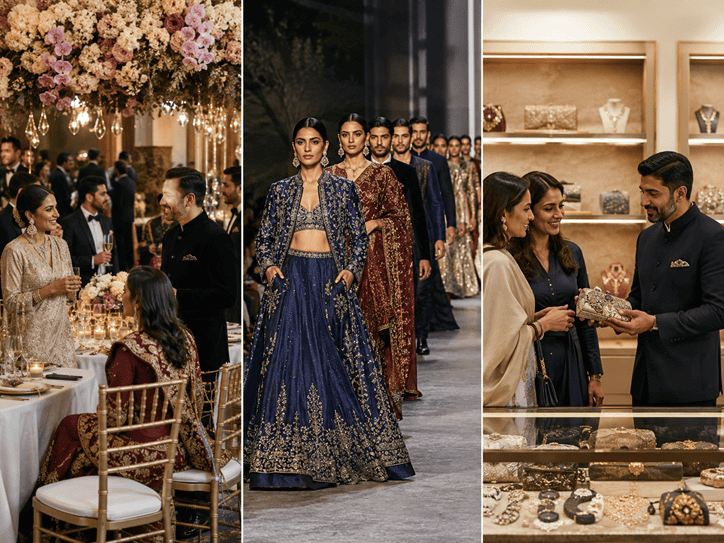
Unlike many affluent consumer segments where luxury purchases center on individual status, South Asian spending is often communal. Weddings, milestone birthdays, anniversaries, religious celebrations, and family gatherings create recurring demand for premium experiences that involve hundreds and even thousands of guests.
From Consumers to Market Makers
Historically, luxury brands focused on introducing European craftsmanship to emerging global markets.
Today, the relationship has become more reciprocal. Luxury houses increasingly recognize that South Asian consumers are influencing design, merchandising, hospitality, and customer experience.
That evolution represents an important shift. Instead of asking whether South Asians fit within traditional luxury, brands are asking how luxury itself should evolve.
The New Face of Affluence
The South Asian luxury consumer is also changing. First-generation immigrants often viewed luxury as a reward for sacrifice. The second generation increasingly views luxury as an extension of identity.
That difference is subtle but profound. Millennials and Generation Z consumers are just as likely to invest in Michelin-starred dining, bespoke travel experiences, contemporary art, and wellness retreats as they are in designer handbags or jewelry.
Luxury has become experiential, and South Asians are helping drive that transformation.
Fashion: Where Heritage Meets Haute Couture
Few industries demonstrate this evolution better than fashion. For years, Indian bridal wear occupied its own category, largely disconnected from mainstream luxury conversations. Today, designers from the subcontinent command international attention as they dress celebrities, royalty, and business leaders across continents.
Sabyasachi Mukherjee
Founded in Kolkata in 1999 by designer Sabyasachi Mukherjee, the label has become one of India’s most recognized luxury fashion houses. Known for meticulous craftsmanship, heritage textiles, and hand embroidery, Sabyasachi’s collections have appeared on international celebrities including Oprah Winfrey, Reese Witherspoon, and several members of global royal families.
North America has become one of the brand’s most important international markets, serving affluent diaspora clients seeking couture that blends tradition with modern luxury. Its flagship presence in New York marked an important milestone in positioning Indian craftsmanship alongside established European luxury houses.
Rather than competing on price, Sabyasachi competes on heritage, storytelling, and exclusivity-qualities that increasingly define luxury purchasing among younger South Asians.
Anita Dongre
Another designer successfully bridging continents is Anita Dongre. Founded in Mumbai, her eponymous label has expanded internationally while championing sustainability and artisan craftsmanship.
Dongre’s New York flagship reflected growing demand from North American consumers seeking luxury occasion wear beyond conventional Western bridal fashion. Her business model also emphasizes female artisan employment across rural India, adding social impact to luxury positioning. This is a value increasingly appreciated by younger affluent buyers.
Today, the brand attracts customers preparing for not only weddings but also gala events, destination celebrations, and cultural festivals across Canada and the United States.
Manish Malhotra
No conversation about South Asian luxury fashion is complete without Manish Malhotra.
Initially celebrated for costume design in Bollywood, Malhotra transformed cinematic glamour into one of India’s most influential couture businesses. His collections now represent aspiration across global South Asian communities.
For diaspora consumers, purchasing a Manish Malhotra ensemble often represents more than fashion. It represents belonging, and connects cultural heritage with contemporary luxury in a way few Western labels can replicate.
Luxury Retail Is Paying Attention
Luxury department stores have also begun recognizing these changing demographics.
Retailers such as Holt Renfrew, Saks Fifth Avenue, Neiman Marcus, and Harrods increasingly feature South Asian designers through special collections, trunk shows, and curated events.
Meanwhile, luxury e-commerce platforms have expanded partnerships with Indian designers to reach affluent diaspora shoppers seeking premium fashion without international travel.
Industry analysts increasingly describe South Asian consumers as among the most resilient in luxury retail, driven by relatively strong household incomes, entrepreneurial success, and a cultural emphasis on generously celebrating milestones.
Jewelry: More Than Adornment
For many luxury consumers, jewelry represents beauty. For South Asians, it often represents history.
Across generations, gold and precious jewelry have symbolized prosperity, security, and family legacy. Increasingly, luxury jewelers are adapting to this cultural understanding.
Brands such as Tanishq, Sabyasachi Jewelry, Cartier, Tiffany & Co., Bulgari, and Van Cleef & Arpels all serve affluent South Asian clientele through bespoke bridal collections, private appointments, and high-jewelry experiences.
While traditional Indian jewelers continue to expand internationally, established Western maisons have also become fixtures of high-end South Asian weddings.
The result isn’t competition. It’s convergence. Luxury is no longer divided into Eastern and Western aesthetics. Instead, consumers increasingly curate collections that blend both worlds.
A New Definition of Prestige
Perhaps the most remarkable aspect of this transformation is that South Asians are no longer aspiring toward someone else’s definition of luxury. They are creating their own.
The shift is visible in fashion, jewelry, and retail—but these industries represent only the beginning.
How South Asians Are Redefining North America’s Premium Economy
The Big Fat Wedding Economy: A Multi-Billion-Dollar Luxury Engine
When people think of South Asian luxury, weddings often come to mind first. But to view them merely as extravagant celebrations misses a far bigger story.
A modern South Asian wedding in North America is an economic ecosystem.
Unlike traditional Western weddings, which typically revolve around a single ceremony and reception, South Asian weddings often span three to five days, with multiple events including engagement, mehndi, haldi, sangeet, the wedding ceremony, reception, and a post-wedding brunch. Each event demands its own venue, décor, wardrobe, entertainment, photography, catering, transportation, jewelry, beauty services, and hospitality.
The result is an industry that extends well beyond the wedding sector—it fuels luxury hospitality, aviation, fashion, floral design, live entertainment, beauty, and premium retail.
Wedding planners across Toronto, Vancouver, New York, Chicago, Dallas, and Los Angeles regularly coordinate celebrations with guest lists of 400 or more. Six-figure budgets have become increasingly common, while seven-figure weddings, though still rare, are no longer extraordinary among affluent families.
According to wedding industry estimates, luxury South Asian weddings in Canada typically range from CAD $150,000 to $500,000, depending on guest count, destination, venue, and production scale. High-profile celebrations can exceed $1 million, particularly when multiple international events are involved.
The scale has attracted attention from industries that previously had little understanding of South Asian traditions.
Hospitality’s Biggest Opportunity
Walk into the ballroom of Toronto’s Fairmont Royal York, The Ritz-Carlton Toronto, The St. Regis Toronto, or Four Seasons Hotel Toronto, and chances are the events team has extensive experience hosting South Asian weddings.
Across North America, luxury hotel brands have evolved their offerings to accommodate these celebrations.
Instead of marketing generic “Wedding Packages,” many now promote experiences specifically designed around South Asian traditions.
Hotels have expanded services to include:
- Dedicated spaces for mehndi ceremonies
- Outdoor baraat processions
- Multiple event configurations over several days
- Vegetarian, Jain, halal, and regional Indian cuisine
- Specialist culinary teams
- Large-capacity ballroom transformations
- Extended family accommodation blocks
- Cultural concierge services
This shift is more than cultural sensitivity—it is sound business.
A three-day South Asian wedding often generates substantially higher revenue than a traditional one-day celebration through room bookings, food and beverage sales, event rentals, spa services, and ancillary spending.
Marriott International has actively developed multicultural wedding offerings across many of its premium brands. At the same time, Fairmont Hotels & Resorts and Four Seasons continue to expand their reputation for hosting elaborate South Asian celebrations throughout Canada and the United States.
Destination Weddings Have Become a Luxury Industry of Their Own
Today’s affluent South Asian families are increasingly looking beyond local venues.
- Mexico.
- Italy.
- Portugal.
- Dubai.
- The Caribbean.
These destinations have become extensions of the North American luxury wedding market.
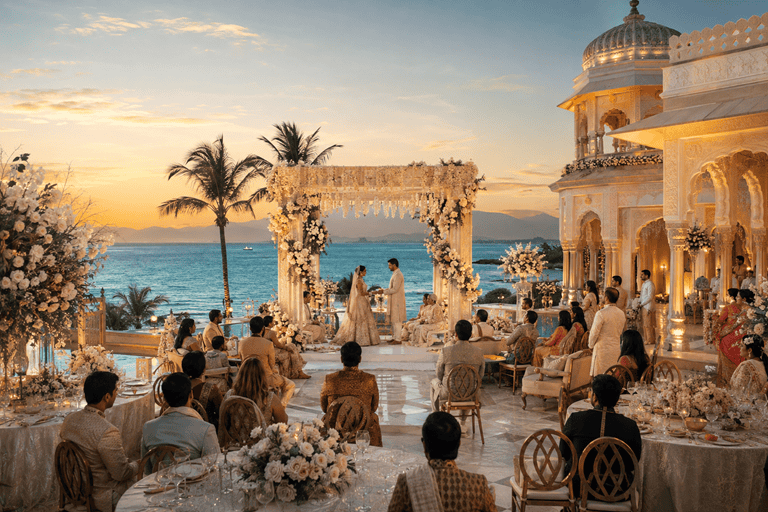
Resorts across Cancún, Riviera Maya, Los Cabos, and Punta Cana now maintain dedicated South Asian wedding teams familiar with traditional ceremonies, religious requirements, and multi-day event logistics.
Hospitality companies have learned that destination weddings are no longer simply vacations.
They are complex productions requiring months of planning and dozens of specialist vendors.
Luxury travel companies such as Abercrombie & Kent, TCS World Travel, and premium destination wedding planners increasingly curate bespoke experiences for affluent South Asian families seeking exclusivity and personalization.
The destination itself has become part of the luxury experience.
The Business Behind the Celebration
The economic ripple effects extend far beyond hotels.
A single luxury South Asian wedding may involve:
- couture designers
- jewelry retailers
- luxury car rentals
- photographers
- cinematographers
- drone operators
- floral designers
- entertainers
- decorators
- invitation designers
- makeup artists
- hairstylists
- cake designers
- security personnel
- event staffing
- premium gifting companies
Rather than a single industry, South Asian weddings support an interconnected network of luxury businesses.
Many entrepreneurs have built thriving companies by specializing exclusively in this market.
The Rise of Luxury Wedding Planners
Companies such as WedLuxe, although serving a broad luxury audience, have increasingly featured South Asian weddings among their editorial showcases, reflecting both the creativity and economic significance of these celebrations.
Meanwhile, boutique planners across Toronto and New York have developed expertise in managing complex, multi-cultural celebrations where Hindu, Sikh, Muslim, Christian, and Western traditions coexist seamlessly.
Today’s planner isn’t simply coordinating vendors.
They’re managing experiences.
They’re orchestrating cultural nuance, international logistics, family dynamics, and luxury expectations simultaneously.
Fine Dining Has Entered a New Era
Luxury dining has undergone its own transformation.
For decades, Indian cuisine in North America was largely confined to neighborhood restaurants and buffet-style establishments.
Today, some of the continent’s most acclaimed restaurants are redefining South Asian gastronomy.
Semma – New York
Awarded a Michelin star, Semma celebrates regional South Indian cuisine with extraordinary precision and authenticity.
Chef Vijay Kumar’s menu demonstrates that dishes rooted in tradition can stand comfortably beside the world’s finest culinary experiences.
Rather than adapting flavors for Western audiences, Semma has succeeded by remaining unapologetically authentic.
Dhamaka – New York
Created by restaurateur Roni Mazumdar and chef Chintan Pandya, Dhamaka challenged long-held assumptions about Indian cuisine.
Instead of familiar butter chicken and tikka masala, diners encounter bold regional dishes rarely seen outside India.
Its success has influenced how luxury diners perceive Indian food.
Junoon – New York
For more than a decade, Michelin-starred Junoon has blended classical Indian flavors with refined presentation and contemporary technique.
It helped establish Indian fine dining as a permanent fixture of New York’s luxury culinary landscape.
Toronto’s Premium Dining Scene
Toronto has experienced its own evolution.
Restaurants such as The Cottage Cheese, Aamara, and Pukka have elevated regional South Asian cuisine through sophisticated interiors, curated cocktail programs, premium wine lists, and refined service.
These establishments are attracting increasingly diverse clientele.
Luxury dining is no longer defined solely by French or Japanese cuisine.
Indian gastronomy has earned its place at the table.
Luxury Retail Learns a New Language
Retailers have also adapted.
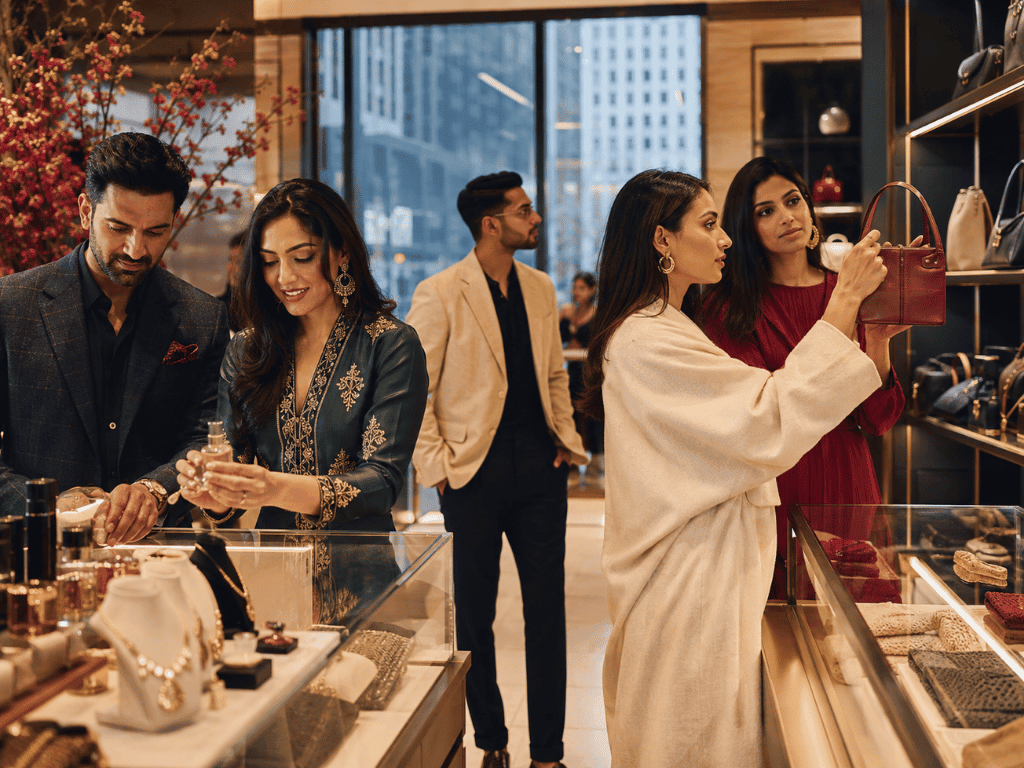
Walk through luxury shopping districts in Toronto, New York, or Vancouver, and you’ll notice a greater representation of South Asian aesthetics.
Personal shopping services increasingly accommodate wedding wardrobes involving multiple events.
Luxury boutiques understand that one client may purchase:
- engagement attire
- mehndi outfits
- reception gowns
- cocktail wear
- bespoke jewelry
- luxury accessories
—all within a single shopping journey.
For retailers, these aren’t isolated purchases.
They’re complete luxury wardrobes.

Luxury Travel Beyond First Class
Travel itself has become part of the luxury equation.
Affluent South Asian families increasingly prioritize experiential travel over material possessions.
- Private villas in Tuscany.
- Safari lodges in Kenya.
- Expedition cruises through Antarctica.
- Wellness retreats in the Maldives.
- Luxury pilgrimage experiences.
These journeys reflect a broader shift toward experiences that create lifelong family memories.
Travel advisors increasingly recognize that multi-generational itineraries require entirely different planning approaches than conventional luxury vacations.
The New Meaning of Luxury
Perhaps the greatest misconception surrounding affluent South Asian consumers is that luxury is driven solely by display.
Increasingly, that isn’t true.
Today’s buyers are investing in craftsmanship.
- Authenticity.
- Personalization.
- Exclusivity.
- Experiences.
- Meaning.
Luxury has become less about demonstrating wealth and more about celebrating identity.
It is an evolution that luxury brands have noticed—and one they are increasingly embracing.

Author
Internationally celebrated, award-winning media personality and author of several business and lifestyle articles, Tushar Unadkat, is the CEO, Creative Director of MUKTA Advertising, Founder, and Executive Director of Nouveau iDEA, Canada. He holds a Master of Design from the University of Dundee, S...
COMMENTS
YOU MAY ALSO LIKE
-

NAVIGATING WORKPLACE PREJUDICE: A Practical Playbook For South Asian Professionals
-

The Suburban Evolution: How South Asians Are Reshaping Canada’s Housing Future
-
Toronto Business Event Announces ‘VibrantCanada’ Initiative for India–Canada Trade Corridors
-

No Visa, No Problem! The New Global Career Playbook For Indian Talent
-

The Desi Advantage: How the Canada–India Trade Reset Benefits Indo-Canadian Businesses
-

A South Asian Entrepreneur’s Strategic Guide To Foundational Scale In 2026
-

The Ultimate Guide To A Year-End Business Audit For South Asian Founders
-
How SongProof Co-Founder Hina Rizvi Is Revolutionizing Music Protection
-

TiE Toronto Spirit Awards 2025: A Night Of Vision, Resilience & Entrepreneurial Excellence
-

The 'Reverse Brain Drain': How North American Desis Are Fueling South Asia's Investment Boom
-

From Startup To 670% Growth: How 'Biller Genie' Co-Founder Garima Shah Is Revolutionizing FinTech
-
From Diyas To Dollars: How to Launch Your Desi Festive Side Hustle
-

The Unfiltered Guide To LinkedIn Etiquette For South Asian Professionals
-
Opportunity vs. Exploitation: The Gig Economy & South Asians
-

Healing Through Purpose: How One Woman Turned Heartbreak Into A Global Pet Wellness Brand
-

How Generative AI Is Assisting South Asians In Overcoming The English Barrier - One Prompt At A Time
-

From Paan Shops To Tech Startups: How South Asians Are Reshaping North America's Economy
-

The Desi Dollar: South Asians Reshaping Real Estate & Hospitality In North America
-
These South Asian Creators Are Calling Out Wellness Culture - And Millions Are Listening
-
Power & Representation: South Asians At The Heart of Mark Carney’s Cabinet
-
South Asian Success Today Isn’t Only Wearing A Lab Coat Or Balancing The Budget - So What Else Is It?
-

From Sephora To Space: Shalini Vadhera Makes History With The World’s First Space-Certified Skincare Brand
-
The Brown Wave: How South Asians Are Rewriting Canada's Political Playbook
-

Caught In The Crossfire: How South Asian Canadian Businesses Are Tackling Tariff Challenges
-
WorkWell 2025: A Career + Wellness Conference For Women In PR, Media & Business
-

South Asian Women In North American Retail: Pioneers In Beauty, Food, Finance & More
-
From Margins To Mainstream: Are South Asians Changing Politics Forever?
-
Beyond Mom-and-Pop: How Second-Gen South Asians Are Turning Family Shops Into Empires
-
Single & Ready To Mingle This Valentine’s? Check Out Some South Asian Dating Apps Everyone’s Raving About!
-
Four Inspiring Stories: How These South Asian Canadians Earned the Order of Canada
-

Justin Trudeau Resigns: What It Means for Canadians & South Asian Communities
-

Building Generational Wealth in North America: A Guide for South Asians to Guarantee Success!
-
Bollywood to Boardrooms: 5 Ways South Asians Are Redefining Business Trends In North America!
-

5 Ways South Asian Brands Can Boost Holiday Sales Online
-
Remembering Ratan Tata: The Visionary Who Helped Shape India's Path to Becoming a Global Superpower
-

From Content Creation To Healthcare, Here Are The AI Platforms Revolutionizing South Asia Industries
-
How Canada's LMIA Shakeup (Effective Sep 26, 2024) Impacts South Asians Hoping To Get A Canadian Work Visa
-

10 Side Hustle Ideas For Busy Desi Moms In North America
-
How South Asian Businesses In North America Are Adopting Sustainable & Eco-Friendly Practices (And You Can Too!)
-

Back-to-School Shopping Trends: Capitalizing On Opportunities for South Asian Brands
-

Exploring The Economic Power of India & Its Superpower Position in the World
-

Marketing Mastery: Celebrating Cultural Diversity For Business Success
-

From Roots to Riches: The Business Ascendancy of South Asians In North America
-

AI Trailblazers: South Asian Entrepreneurs Spearheading Technological Advancements
-
South Asian Heritage Month: How 6 Successful Businesswomen Broke Barriers
-
Honoring South Asian Heritage Month: Celebrating 6 Businessmen And Their Remarkable Achievements in Canada
-

2024 Essential Business Communication Trends for Leaders
-

Unlocking Success: The Power of Spiritual Quotient in the Corporate World
-

Did You Know Holi Could Spark Entrepreneurial Ventures?
-
Opening Ramadan's Business Potential to Canada's Growing Muslim Community
-

South Asian Call Centres & AI: A Match Made In Heaven?
-

Unemployed And Depressed: How To Keep Tabs On Your Mental Health When You Lose Your Job