






















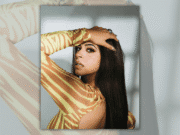

















Cover Story: Papa Don’t Preach’s Fashion Architect Shubhika Sharma On Creating Fearless Self-Expression & Dressing Without Permission
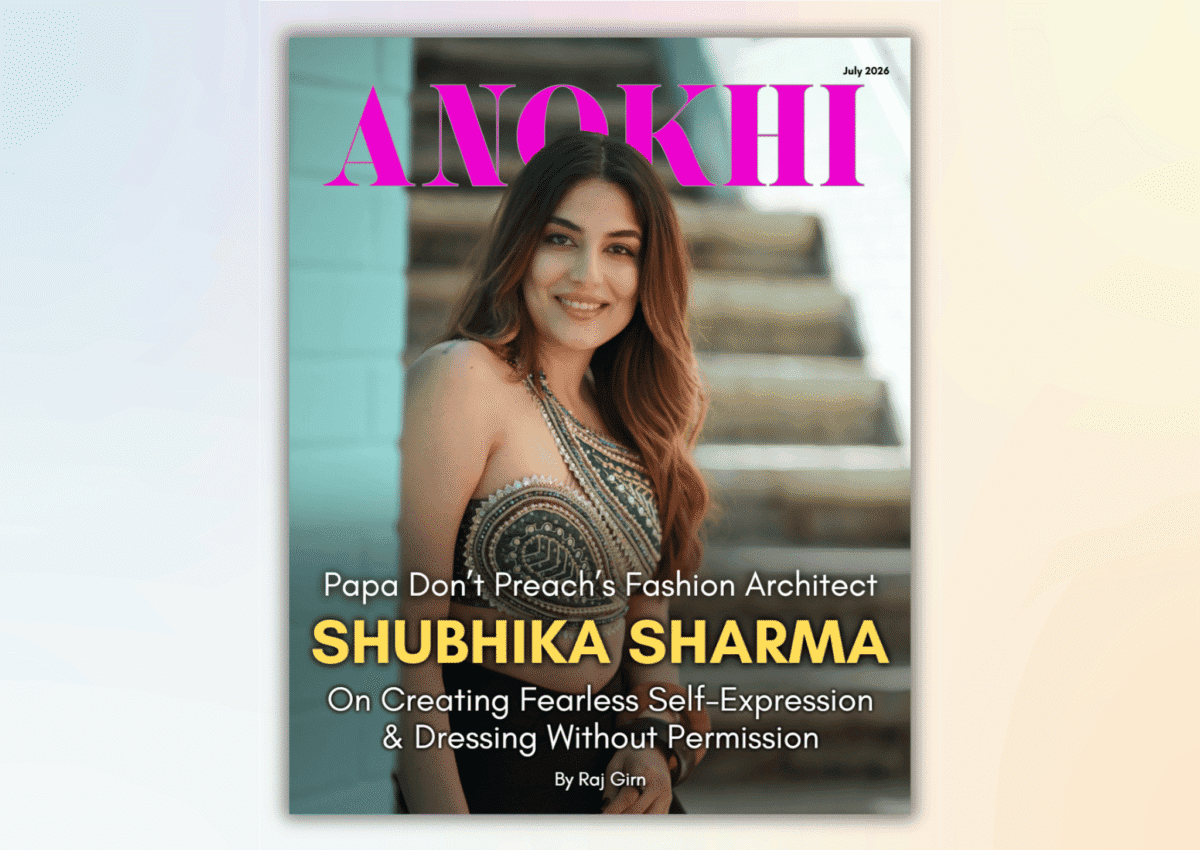
Cover Stories Jul 07, 2026
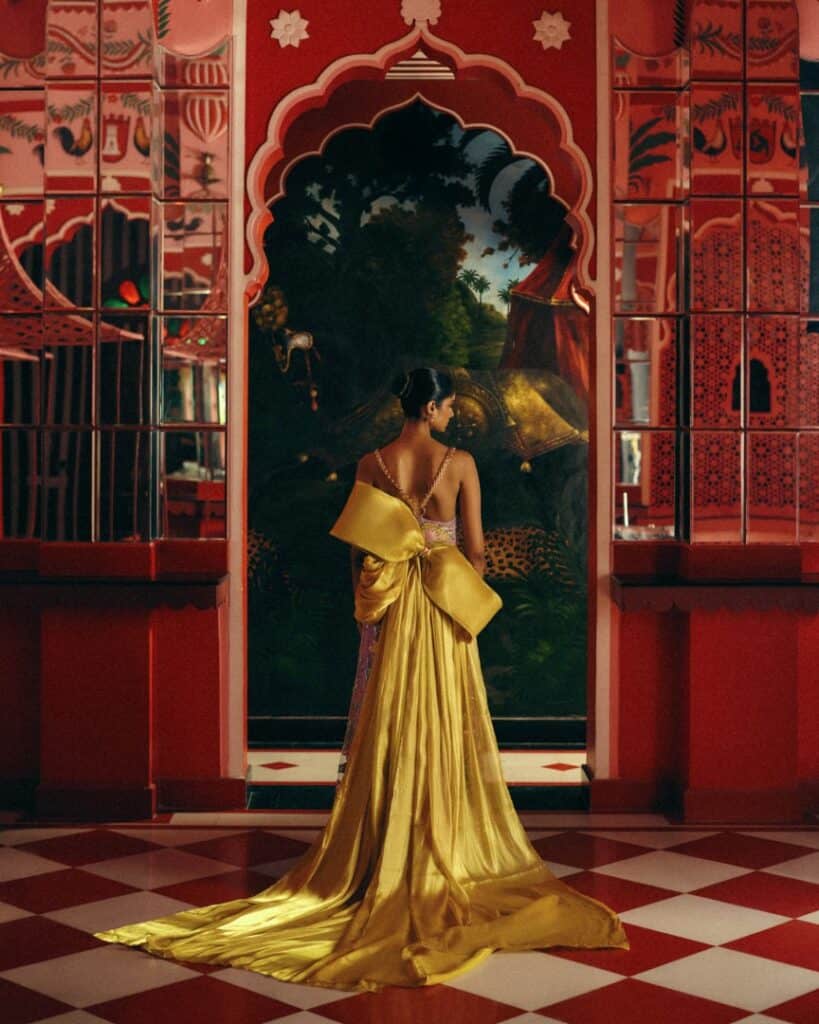
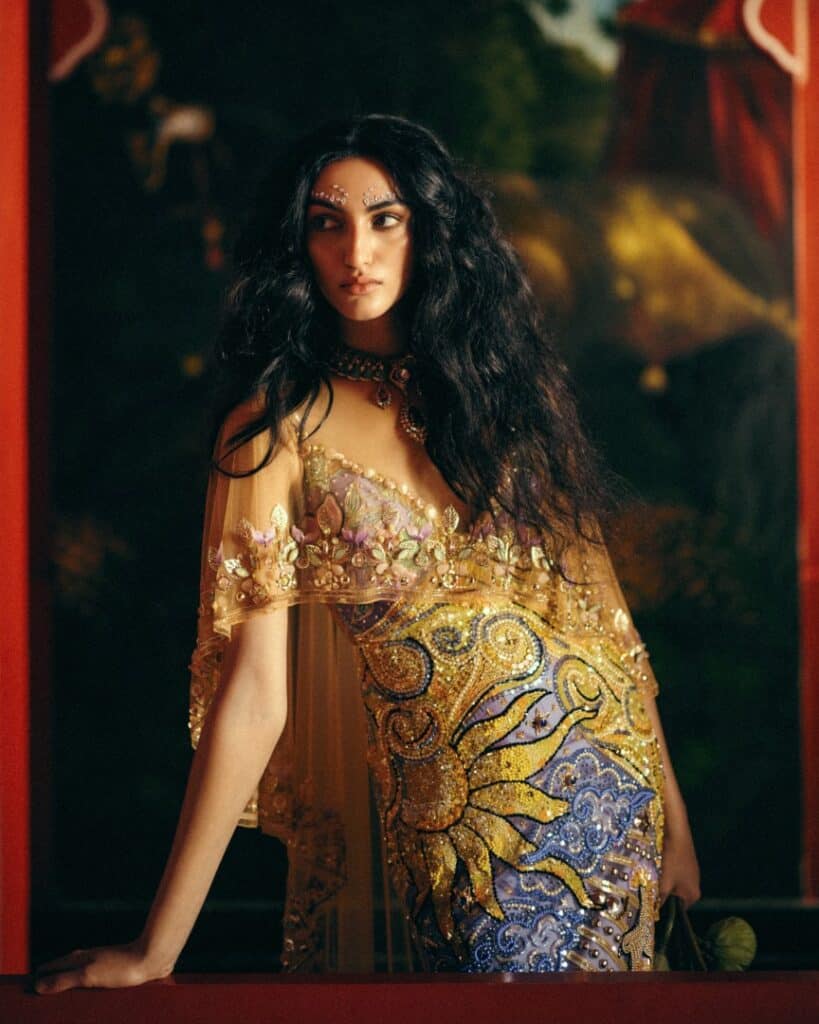
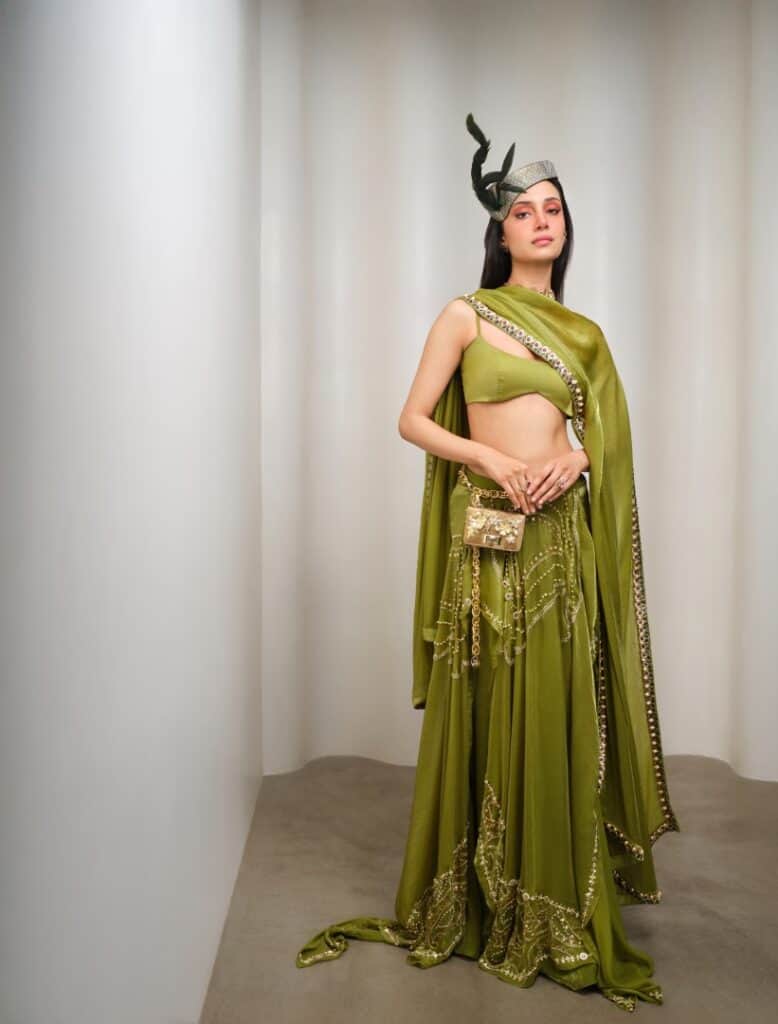
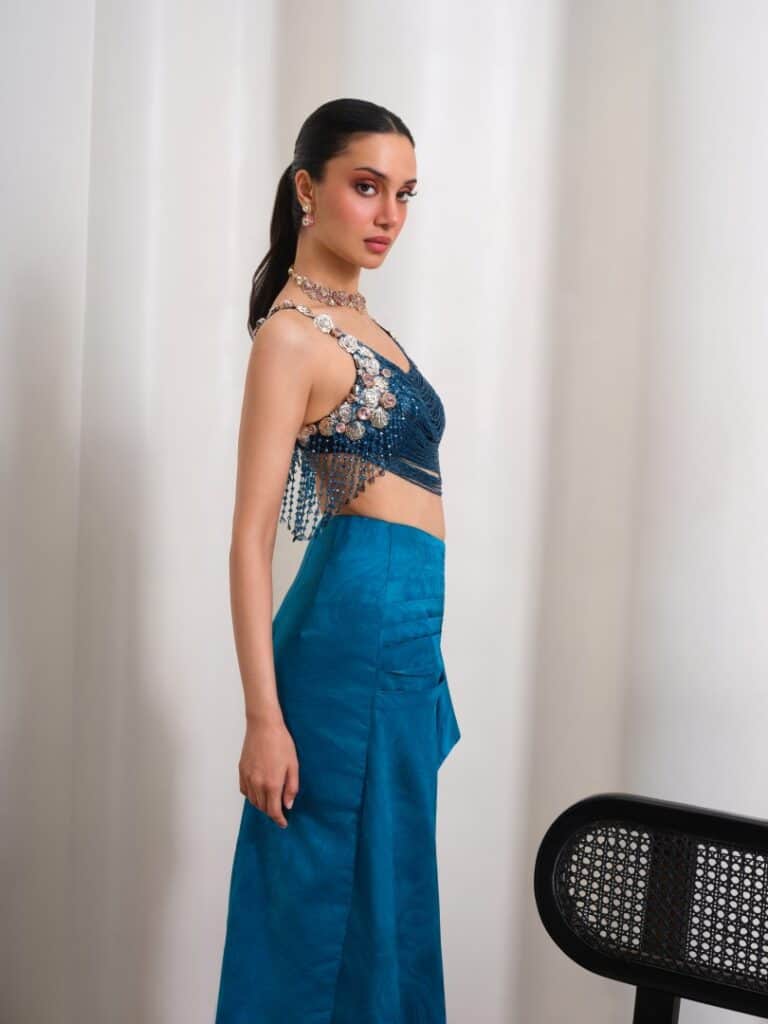
Some fashion brands follow trends. Others create entire worlds. When Shubhika Sharma launched Papa Don’t Preach in Mumbai over a decade ago, she was not simply trying to build another occasionwear label. She was building a language – one made of colour, craftsmanship, rebellion, femininity, fantasy, individuality and emotional self-expression.
What began as an entrepreneurial leap in her early twenties has grown into one of India’s most recognizable contemporary fashion identities. Known for maximalist storytelling, bold bridalwear, expressive silhouettes, jewelry, accessories and immersive retail spaces, Papa Don’t Preach does not quietly enter a room. It arrives with personality, presence and permission.
But behind the visual drama of the brand is a more intimate story: that of a woman who chose not to follow the expected script. Shubhika’s journey is not only about fashion. It is about upbringing, identity, ambition, South Asian womanhood, cultural expectation, creative courage and the ongoing process of becoming yourself in public while building something deeply personal.
For ANOKHI, this cover story goes beyond the clothes. It explores the child before the designer, the woman behind the founder, the values inside the brand, and the emotional world that Papa Don’t Preach has created for women who want to feel seen, celebrated and unafraid to take up space.
In this conversation, Shubhika reflects on her beginnings, the expectations she has had to question, the brand universe she has built across clothing, jewelry and accessories, and what it means to create fashion that does not just dress women but gives them permission to express who they are becoming.
Childhood, Upbringing & The Making Of Shubhika
What kind of child were you growing up, and what would your family say you were obsessed with before fashion ever entered the picture?
I was a true-blue Cancer child-extremely sensitive and always absorbing the emotions of the people around me. I was the middle of three sisters, and looking back, I genuinely think I had one of the happiest childhoods anyone could ask for.
We grew up in Navi Mumbai when it still felt like a tiny town rather than the city it is today. There were only a handful of schools, a stationery shop or two, one cake shop, a couple of clothing stores, and eventually, after many years, a small library. It was wonderfully uneventful.
I often say my parents gave me the greatest gift a child can receive-they gifted me boredom.
There wasn’t endless television or constant entertainment. When school ended, I had to figure out how to occupy myself, and that’s where creativity quietly found me.
My favorite moments were when my mother would pull out her sewing machine. I’d steal scraps of fabric, stitch little bags out of old pockets, make clothes for my dolls, paint endlessly, build miniature houses whenever construction was happening nearby, and create board games for my friends. At one point, I even started a tiny neighborhood library by collecting books from friends and buying second-hand ones with money I earned selling old newspapers.
Long before fashion entered my life, I was simply obsessed with making things.
When you think of your childhood, what colors, textures, music, places, or memories still show up in your designs today? Was creativity encouraged, questioned, or treated as a hobby rather than a career in your household?
Creativity wasn’t treated as a hobby in our home-it was simply how we lived.
We came from a modest middle-class family, but my mother had this incredible ability to make everything around us feel beautiful. She stitched our clothes, made covers for old trunks, redecorated the house every few years with almost no budget, and somehow made ordinary things feel special. Beauty wasn’t about luxury; it was about imagination.
My father, on the other hand, was an engineer. He was always walking around with a toolkit, fixing things, building things, and teaching us how to use drills and hammers. Between the two of them, we learned something very valuable: beauty and functionality didn’t have to exist separately.
Looking back, I realize that my mother taught me aesthetics,
while my father taught me confidence in making things with my own hands.
Music was everywhere too. My mother and I would spend hours dancing together after school, and I was an obsessive reader. Judy Blume, R.L. Stine, Sweet Valley, The Baby-Sitters Club, Enid Blyton-I devoured them all. Through those books, I traveled the world long before I ever left India.
I think all of those influences still exist in my work today. There’s always a sense of storytelling, curiosity, and playfulness. Even now, every collection begins with a feeling before it becomes a garment.
Growing up in India, what messages did you absorb about who girls should become? Was there a defining moment when you realized your voice mattered?
I grew up in a loving family, but I also grew up in a society that was deeply patriarchal.
My parents never discouraged our ambitions. In fact, they encouraged us to study, play sports, take up dance and music, and pursue whatever careers we wanted. When I wanted to start a fashion business at nineteen while studying journalism, my father simply said, “As long as your studies don’t suffer, do it.”
But there was still an unspoken hierarchy that many South Asian girls of my generation will recognize.
My father had the final word in the house. My mother was incredibly wise and quietly strong, but I grew up understanding that the last decision belonged to someone else.
As a teenager, I remember constantly wishing I had been born a boy-not because my parents loved us any less, but because boys simply had more freedom. They could stay out later. They weren’t constantly told how to dress, who to talk to, or how to protect their reputation.
It took me years to realize how deeply that shapes the way women lead.
When I started running a business, I found myself constantly looking for validation before making big decisions. I had to consciously build the muscle of trusting my own judgement because I hadn’t grown up believing that my voice could be the final voice in the room.
That has probably been one of the biggest personal transformations of my life.
What is something your younger self needed to hear but never did?
Honestly, I don’t think I needed different words. I think I simply needed to see more women making decisions.
My parents did the very best they could, and they gave us extraordinary freedom in so many ways. If anything, I just wish I had seen more examples of women occupying positions of authority-not because they had fought for permission, but because it was simply normal.
Representation quietly changes what you believe is possible.
If I asked your parents what shaped your ambition, what would they say? And do you agree with your family’s definition of success?
I don’t actually know where ambition comes from, but I know what shaped mine.
I grew up surrounded by entrepreneurs. My aunt built a successful school, and my father supported her every step of the way. Every summer, my sisters and I would work there as junior teachers. We planned lessons, took responsibility, and even earned tiny salaries. I still remember receiving my first paycheck-it wasn’t much, but it completely changed how I saw work.
At home, idleness wasn’t really encouraged. If we weren’t reading, we were building something. If we weren’t building something, we were volunteering, teaching, or creating little businesses of our own. But alongside ambition, there was something else that defined our household: spirituality.
My mother never preached. She rarely sat us down and gave us life lessons. Instead, she’d hand us a book and ask us to think for ourselves. She taught us, mostly through her actions, that ambition was wonderful-as long as it didn’t come at someone else’s expense.
Success wasn’t about standing above people. It was about taking people with you.
I think that’s still the definition of success I carry today.
Personal Identity & Becoming Yourself
Who is Shubhika outside of Papa Don’t Preach? Has there ever been pressure to become a version of yourself to fit the fashion industry?
People are often surprised when they meet me because they expect me to be exactly like the brand-loud, colorful, constantly social, and always dressed up.
The reality couldn’t be more different. I’m actually a deeply introverted person. I love books, quiet mornings, yoga, long walks, and disappearing into my own little world. I don’t have a huge social circle, I don’t enjoy small talk, and networking has never come naturally to me.
The fashion industry often rewards visibility and constant social engagement. I’ve always admired people who can effortlessly walk into a room and make connections, but that’s simply not how I’m wired.
I’ve also never looked at fashion through a purely fashion lens. For me, it’s one of many ways people express themselves. That’s probably why I’ve never been particularly interested in trends or trying to fit into what the industry expects a designer to be.
Over time, I’ve realized that trying to become someone else is exhausting. The older I’ve become, the more comfortable I’ve become simply being myself.
Has building a public-facing brand ever made it harder to know who you are privately? Do people assume they know you because they know your brand?
Interestingly, no. If anything, building Papa Don’t Preach has made me even more aware of the difference between a brand personality and a human being.
People assume I’m this rebellious, pink-loving, rock-and-roll girl who’s always out at parties. In reality, I’m a vegetarian homebody who would much rather spend an evening reading than attending an event. I’m deeply spiritual, I don’t drink, and I enjoy a very quiet life.
For a long time, I kept that side of myself fairly private because faith can feel like a very personal thing, especially in a world that is increasingly polarized. As I’ve grown older, though, I’ve become much more comfortable allowing every part of who I am to exist together-the entrepreneur, the creator, and the spiritual seeker.
I don’t think they’re separate identities anymore.
What parts of yourself exist inside Papa Don’t Preach that most people do not notice? If someone spent one ordinary day with you, what would they discover that doesn’t show up online?
People would probably discover how ordinary my life actually is. I spend most days in comfortable clothes. I’m usually makeup-free and happiest with a cup of chai, my family, my cats, and a good book. Fashion isn’t something I perform every single day.
The brand is my alter ego in many ways.
It’s like having another version of yourself who gets to walk into the world with complete confidence and joy. I often joke that Papa Don’t Preach is my Sasha Fierce. That doesn’t make either version less authentic. They’re simply different expressions of the same person.
What identities do you hold most closely today-entrepreneur, creator, daughter, woman, leader, dreamer, or something else? And when do you feel most like yourself?
One of the biggest lessons my spiritual practice has taught me is to become a little less attached to labels. Every identity can become comforting, but it can also become limiting.
Today, I don’t feel the need to define myself by a single role. I’m grateful that I get to create, build, lead, and learn, but none of those things fully capture who I am. What matters more to me is whether I’m becoming a kinder human being.
I probably feel most like myself on slow days-when I’m traveling, practicing yoga, reading, or simply being fully present with the people I love. Presence has become far more meaningful to me than productivity.
What has success given you that you didn’t expect, and what has it not solved?
When I was younger, success felt very measurable. It was getting onto a runway. Seeing your work in a magazine. Dressing someone famous. Opening a store.
The interesting thing is that every time you reach one milestone, another one quietly appears. You realize that external markers of success are constantly moving.
What success has given me, unexpectedly, is people. Some of the most remarkable women I’ve met have come into my life because of my work. They’ve opened their homes to me, shared their experiences, championed my journey, and reminded me what generosity looks like.
Traveling also helped me rediscover India. As a child, I’d romanticized the West through the books I read. Ironically, it was only after traveling abroad and meeting proud South Asian women building incredible businesses that I truly fell in love with my own culture.
What success hasn’t solved is the ability to feel present all the time. That’s still an everyday practice.
I’ve realized that peace doesn’t arrive
with achievement. It’s cultivated separately.
Shubhika Unfiltered
One word your closest friends would use to describe you?
Caring.
Early mornings or late nights?
Early mornings.
Introvert, extrovert, or selective?
An introvert who’s learned to be social when she needs to.
One city that inspires you creatively?
Paris.
One place that feels like home?
Home. Or Rishikesh.
Comfort food?
Bread, butter, and Indian chai.
One thing you buy too much of?
Shoes.
Heels, sneakers, or barefoot?
Barefoot.
One color you’ll never tire of?
Green.
Most worn item in your wardrobe?
Fit-and-flare dresses.
Vintage or new?
Whichever suits my mood that day.
One trend you secretly love?
Maximalism.
One trend you’d happily retire forever?
Low-waisted trousers.
Music while designing or complete silence?
Music.
Go-to playlist?
Independent house and chilled electronic music.
A song that instantly changes your mood?
Rangi Saari.
One movie you can watch repeatedly?
I actually don’t enjoy rewatching films I like not knowing the ending.
One book everyone should read?
The Forty Rules of Love by Elif Shafak.
One person you’d love to have dinner with?
Shams of Tabriz.
The best advice you’ve ever received?
Fashion isn’t frivolous. It’s one of the most powerful tools of self-expression.
One habit that changed your life?
Yoga.
Something people always assume about you that isn’t true?
That I’m a party person.
What instantly grounds you?
My family.
Your idea of luxury?
Time, peace, and a really good massage.
Creative Rebellion & Identity
The name Papa Don’t Preach itself feels like a statement. What are you still refusing to be preached to?
The older I get, the more the world tries to tell you who you should become.
Luxury should look a certain way. Sophistication should be understated. Success should follow a formula.
I’ve never been interested in any of those rules. I’m still refusing to believe that Indian luxury has to imitate someone else’s definition of luxury. I’m still refusing to believe color can’t be elegant, humor can’t be luxurious, or craftsmanship has to become quieter to be taken seriously.
Papa Don’t Preach has always been about finding confidence
in our own vocabulary rather than borrowing someone else’s.
Your designs often feel joyful, bold, playful, and rebellious. What emotions are you designing for? And how do you decide when to honor tradition and when to challenge it?
I don’t consciously design for a specific emotion. I usually design from a mood. Some collections begin with joy, others with romance, curiosity, humour or nostalgia.
I’ve often described Papa Don’t Preach as a box of alphabets. We simply create the alphabets. The woman wearing them writes her own story. That’s why I’ve always believed fashion is a tool for self-expression rather than self-definition. When it comes to tradition, I don’t think we’re challenging it as much as we’re playing with it.
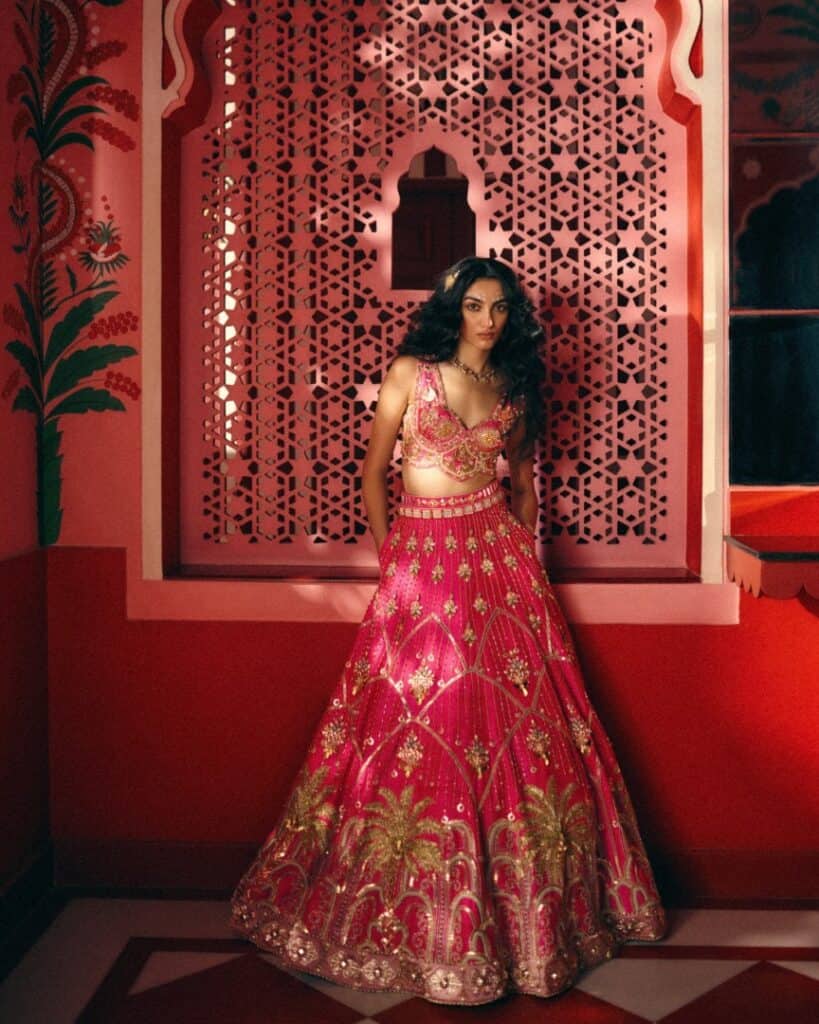
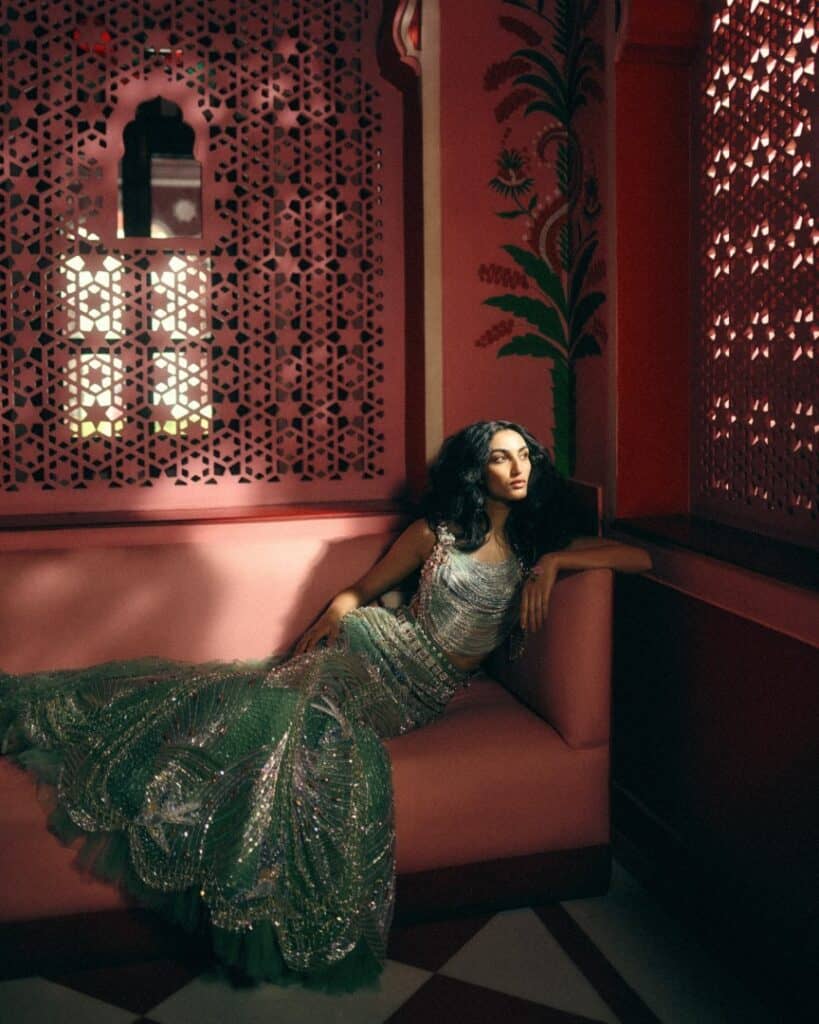
The craftsmanship remains deeply Indian. The embroidery remains handcrafted. But perhaps we add pockets to a lehenga, belts to a saree, unexpected silhouettes, or whimsical motifs.
We’re simply building a bridge between what was and what can be. That’s what “Vintage × Forward” has always meant to me.
Do you think fashion is becoming more about identity than aesthetics? What does authenticity look like in an industry that constantly asks creators to reinvent themselves?
I think we’re living in a moment where many brands are beginning to look remarkably similar. The pressure to fit trends, algorithms, and public opinion often encourages convergence rather than individuality.
For me, authenticity has never been about constantly reinventing yourself. It’s about becoming more recognizably yourself over time.
If people can look at something across a room and immediately know it belongs to your world without seeing your logo, you’ve probably built something authentic. That’s always been a much more exciting goal for me than simply chasing what’s current.
The Brand As An Extension Of Self
At what point did you realize Papa Don’t Preach was no longer just a label but an identity people wanted to belong to? If the brand were a person, who would she be?
I realized it a few years ago while working with a bride. I showed her a beautiful tone-on-tone piece and suggested she try it. She smiled and said, “But that’s not Papa Don’t Preach.”
I remember laughing because that was the first moment I realized the brand had developed an identity completely independent of me. It had become a person.
If I had to describe her, she’d probably be Elle Woods meeting Alice in Wonderland. She’s intelligent, joyful, emotionally expressive, wildly imaginative, and completely comfortable taking up space. She never asks for permission to be herself.
What parts of your personality live inside the brand? Has there ever been a collection that reflected a deeply personal chapter of your life?
The brand definitely carries my curiosity and my constantly shifting moods. I’ve never wanted Papa Don’t Preach to become predictable. Every collection reflects where I am emotionally at that point in time.
There was one period when we tried to play things a little safer with our bridal collections-more muted colors, more conventional palettes.
They simply didn’t resonate. Our clients reminded us who we really were. That experience reinforced something important: people don’t come to us because we resemble everyone else. They come because we don’t.
In many ways, that’s been one of the biggest creative lessons of my career.
What does the brand allow women to express that they don’t always feel permission to express in everyday life? What emotional experience do you want someone to have the moment they put on one of your pieces?
More than anything, I want someone to feel free. Free to stand out. Free to be joyful. Free to take themselves a little less seriously. Free to occupy space without apology.
The garment is only the beginning.
What I really hope we’re giving women is permission to express parts of
themselves they may not always feel comfortable revealing in everyday life.
If we’ve done that, we’ve done our job.
Has the brand evolved because you evolved, or have you evolved because of the brand?
Honestly, both. The two have grown together for almost fifteen years now. As I’ve changed, the brand has changed. As the brand has challenged me, I’ve changed again.
At this point, it’s impossible to separate one journey from the other. They’ve shaped each other continuously.
What values do you protect no matter what trends are happening?
Authenticity. Craftsmanship. Curiosity. And our people. No trend is important enough to compromise the values that built the company.
Our karigars have never been projects for us. They’re protagonists. That’s why their names appear on our garment labels alongside the work they’ve created. It’s why we don’t display visible size labels.
It’s why we’re dreaming of building a Karigar Academy for future generations.
Fashion trends will come and go. Those values shouldn’t.
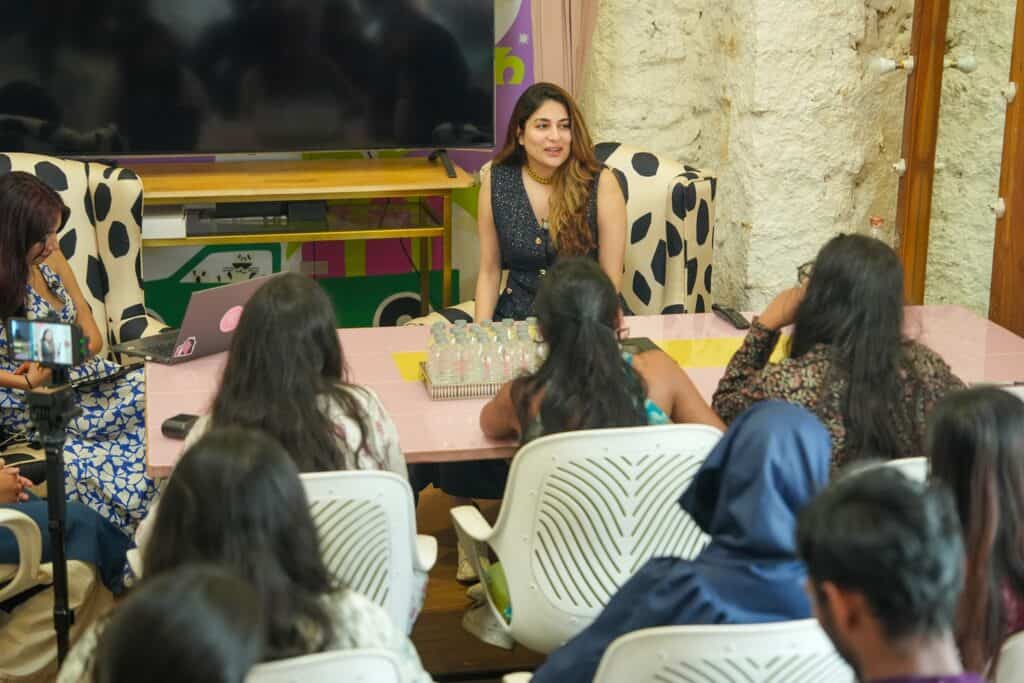
Photo Credit: Provided by Team Papa Don’t Preach
South Asian Culture, Womanhood & Expectation
South Asian communities often celebrate achievement but can be uncomfortable with individuality. Have you experienced that tension?
Absolutely.
I think my generation grew up at an interesting crossroads. We were encouraged to dream, study, build careers, and become independent, but there were still very clear expectations around how ambitious a woman should appear.
I remember, especially in my twenties, instinctively making myself smaller in conversations. If I were speaking to men in business, I’d often downplay my abilities or joke about not understanding numbers or finance. Looking back, I realize I wasn’t lacking confidence-I was trying to make my ambition feel less threatening.
It took time to recognize that tendency and even more time to unlearn it.
Today, I don’t feel the need to shrink myself to make someone else feel comfortable. Confidence, I’ve realized, doesn’t need to announce itself, but it also shouldn’t apologize for existing.
What expectations did you have to unlearn to become the woman you are today? Did you ever feel pressure to make your ambition feel more acceptable to others?
One of the biggest expectations I had to let go of was the belief that women always needed external validation before making important decisions.
Growing up, I had seen many decisions ultimately resting with someone else. When I started my business, I found myself constantly looking for reassurance that I was making the right call.
Leadership taught me that sometimes there simply isn’t a perfect answer. You gather the information you have, trust your instincts, and take responsibility for the outcome. That muscle only develops by using it.
I also had to stop believing that humility meant diminishing myself. There’s a difference between being humble and making yourself invisible. I spent years learning that distinction.
What conversations do you think South Asian women still need permission to have? What do you think younger South Asian women are doing differently than previous generations?
One of the things I admire most about younger South Asian women is how unapologetically proud they are of who they are. They’re not choosing between being global and being Indian. They’re confidently neither.
Ironically, that confidence has given my generation permission too.
Growing up, I consumed so much Western literature and media that I often romanticized everything outside India. Then I started travelling and met extraordinary South Asian women across the world who were building brands, businesses, and communities while celebrating their heritage so confidently.
It made me look at my own culture differently.
I think younger South Asians are creating an entirely new vocabulary—one that doesn’t reject tradition but doesn’t feel confined by it either. They’re building bridges rather than choosing sides. I find that incredibly exciting.
The deeper work is learning to enjoy building without constantly postponing your happiness until the next milestone.
That’s something I’m still practicing every day.
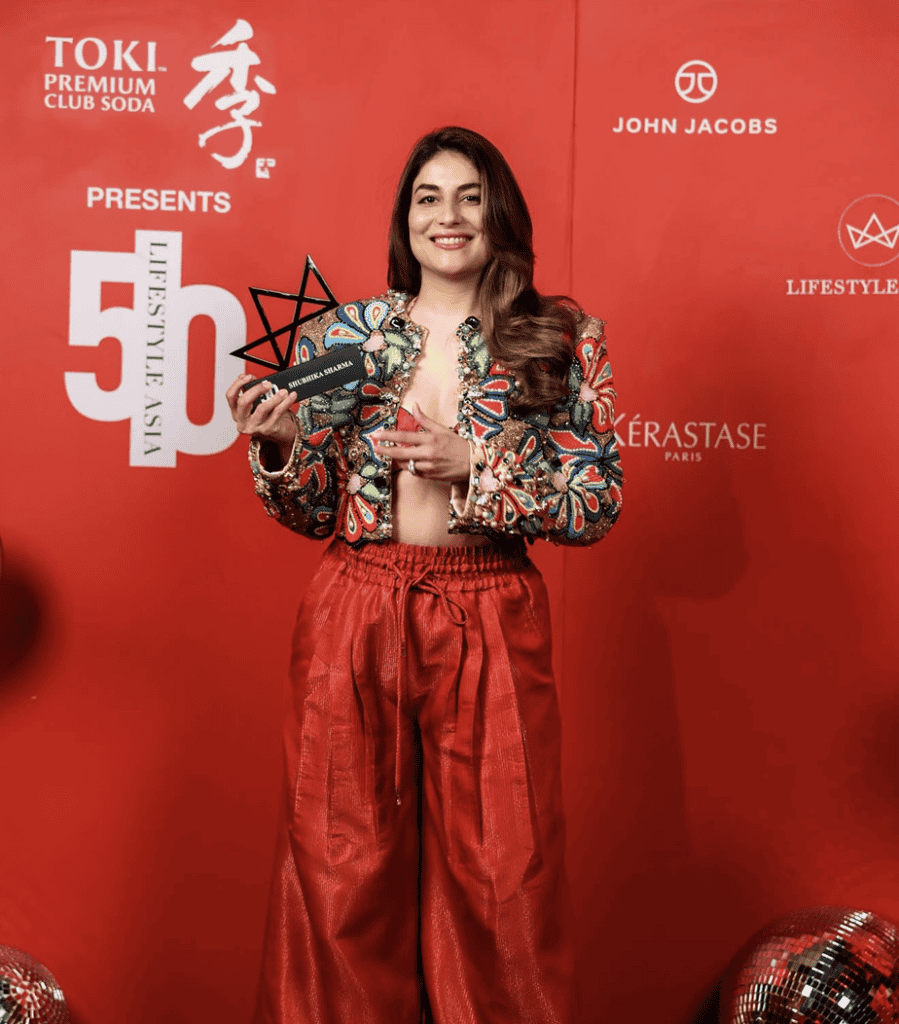
Photo Credit: Provided by Team Papa Don’t Preach
Inside The World Of Papa Don’t Preach
For someone discovering Papa Don’t Preach for the first time, how would you describe the brand in your own words?
Papa Don’t Preach is a celebration of fearless self-expression. At its heart, it’s a bridge between Indian craftsmanship and contemporary storytelling.
We often describe our philosophy as “Vintage × Forward” because we’re constantly bringing together seemingly opposite worlds-traditional handcraft with modern silhouettes, heritage techniques with unexpected materials, and nostalgia with optimism.
For me, fashion has never been the destination. It’s simply one of the canvases through which we tell stories.
When people think of Papa Don’t Preach, they often think of color, embellishment, playfulness, and individuality. What do you hope they feel? What do you think your customer is really buying beyond the garment?
I hope they feel seen. Beyond the garment, I think they’re buying permission.
Permission to be expressive. Permission to wear color. Permission to stand out. Permission to be joyful.
We’ve never designed clothing to help people fit in. We’ve always designed it to help people feel more like themselves.
That’s a very different emotional experience.
Your world extends beyond clothing into jewelry, accessories, and a complete lifestyle aesthetic. Why was it important to build an entire universe rather than stay within one category?
From the very beginning, I knew I didn’t want to build just a clothing label. I wanted to build a world.
When someone walks into Papa Don’t Preach, I want them to feel immersed in an entire universe-from what they wear to how they accessorize, how they celebrate, and how they experience beauty.
Jewelry had always been a dream of mine, but timing mattered. It’s a very capital-intensive category, and we wanted to enter it when we could do it thoughtfully.
Interestingly, our very first runway appearances were actually as an accessories brand. Lakmé Fashion Week selected our accessories before our garments. So in many ways, jewelry, belts, and shoes have always been part of our creative vocabulary.
Fashion is simply a canvas. The canvas can change. The language remains the same.
If you had to choose one signature Papa Don’t Preach piece that captures the DNA of the brand, what would it be and why?
I’d probably choose our jumpsuits and our D-length lehengas.
Those silhouettes have stayed with us almost since the beginning, and it’s incredibly moving to see brides still asking for them years later.
To me, that’s a sign that you’ve created something beyond a trend. You’ve created something people emotionally connect with.
Shubhika’s Style Notes
One piece every first-time customer should try?
Our blouses and tops. They transform completely once they’re worn.
Most underrated category?
Shoes. South Asians don’t give them enough attention, but they can completely change a look.
A collection that still feels deeply personal?
Bring Your Own Fairytale. It reminded women that they could write their own stories.
One word that defines Papa Don’t Preach?
Free-spirited.
Maximalist or minimalist?
Maximalist with intention.
One thing customers always notice?
The color and embroidery.
One thing they usually miss?
The extraordinary amount of handcraft behind all the playfulness.
What belongs in every woman’s wardrobe?
A pair of shoes that makes her walk differently.
Dream city for the next store?
New York.
The future of Papa Don’t Preach in four words?
India to the world.


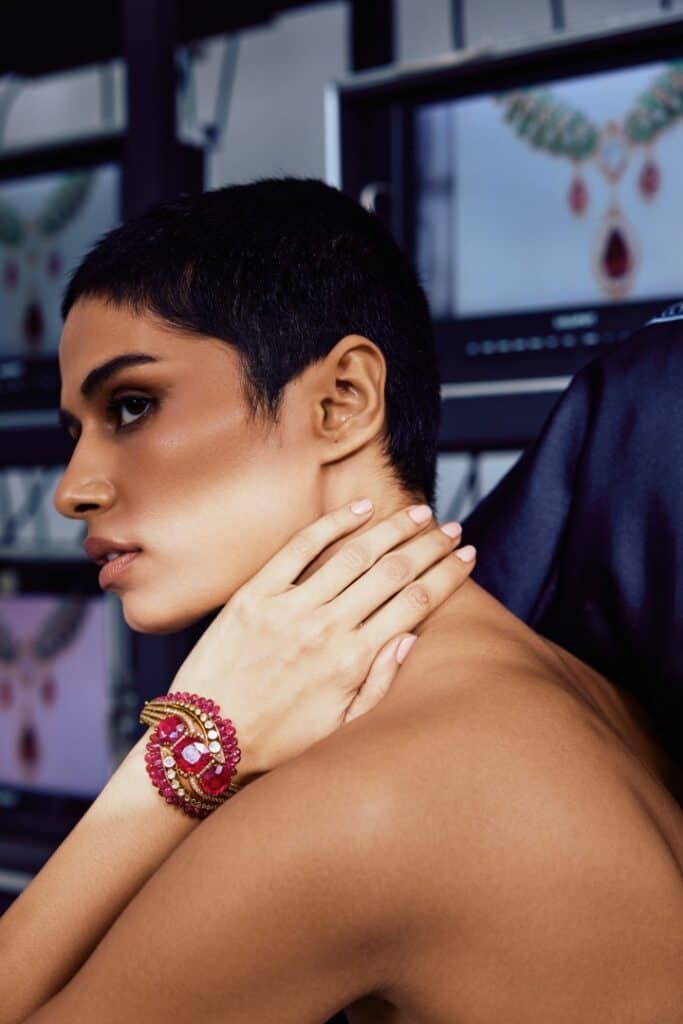
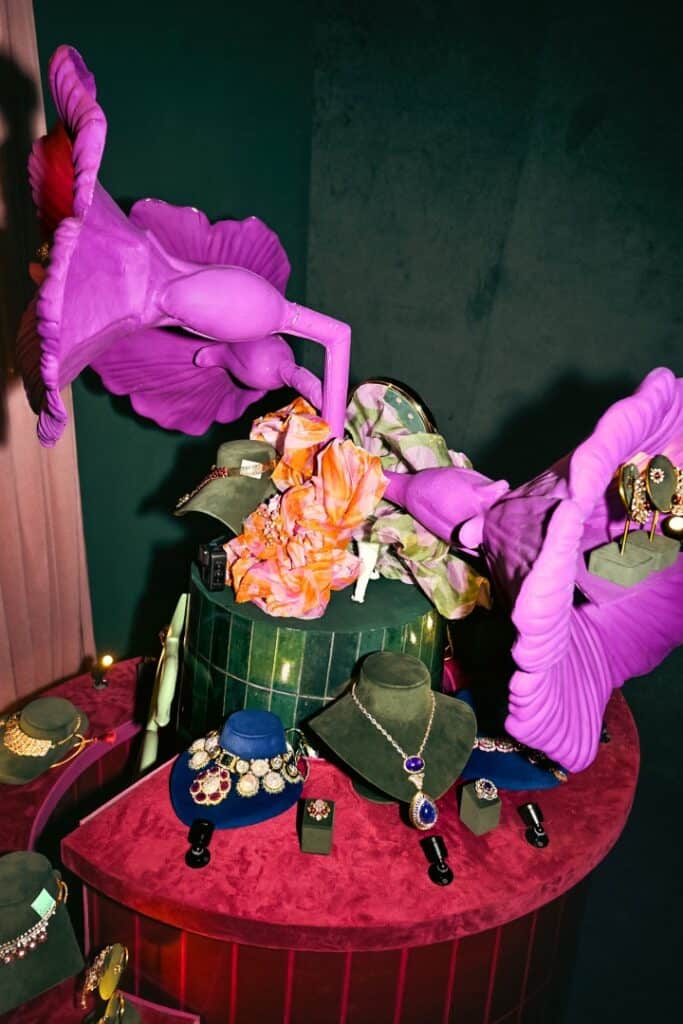
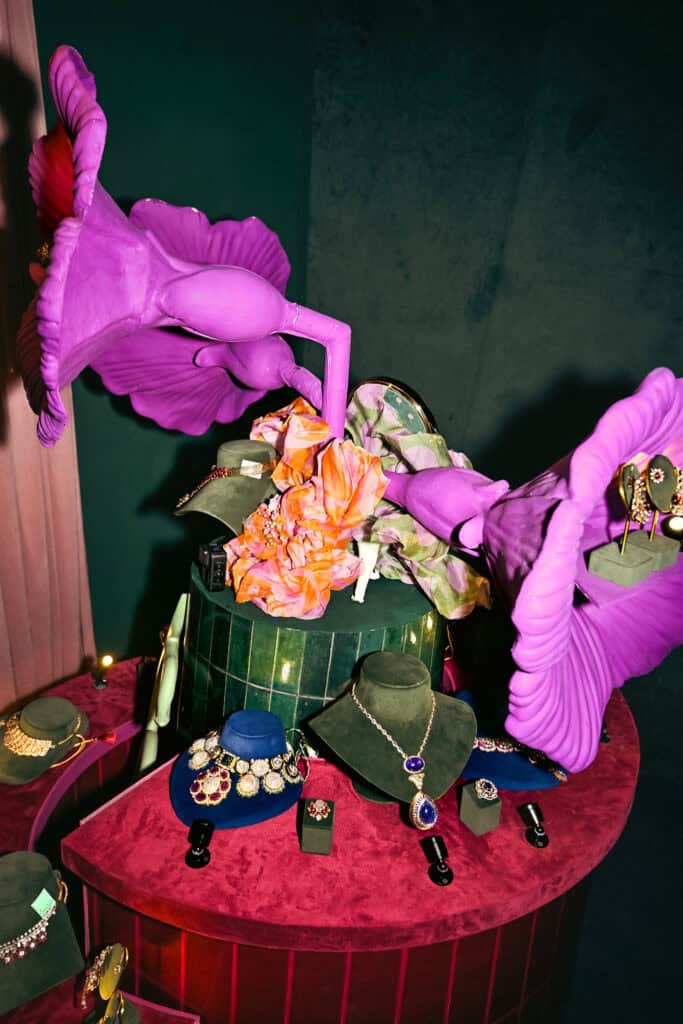
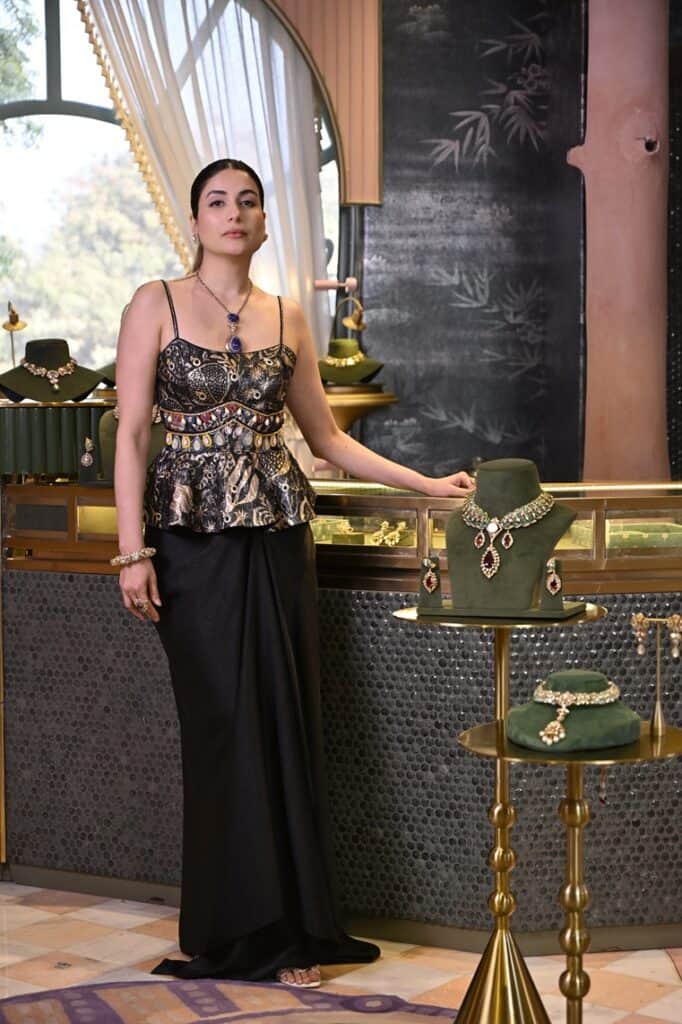
Papa Don’t Preach Jewelry Collection | Photo Credit: Provided by Team Papa Don’t Preach
Your designs feel expressive and emotionally charged. Where do collections usually begin for you?
Almost always with a mood. Sometimes it’s joy. Sometimes it’s romance. Sometimes it’s curiosity.
Then inspiration arrives from unexpected places. A line from a book. A dialogue from a film.
The name of a Frida Kahlo painting-she’s like a ribbon around a bomb.” A stone I find in the market.
A particular fabric. A color combination. It’s never a formula. I usually marinate on a lot of feelings and things-simply collecting ideas until one of them quietly becomes the beginning of a collection.
How would you describe the woman who wears Papa Don’t Preach today? Has she changed over time?
She’s always been remarkably consistent. She isn’t afraid of being noticed. She doesn’t dress for approval. She dresses for expression.
In many ways, she’s my alter ego. She’s the version of me that walks into the world with complete confidence. That’s probably why designing for her has always felt so natural.
Bridalwear has become such an important category for the brand. What did you feel was missing in the market?
Interestingly, we didn’t set out to become a bridal brand. Our clients took us there.
As more women began wearing Papa Don’t Preach for their celebrations, they naturally started asking us to create their wedding looks too.
Then, when I began imagining my own wedding, I realized I couldn’t quite find what I was looking for. That became the starting point.
Even in bridalwear, we’ve always wanted to honor traditional craftsmanship
while introducing unexpected details-three-dimensional charms, metallic
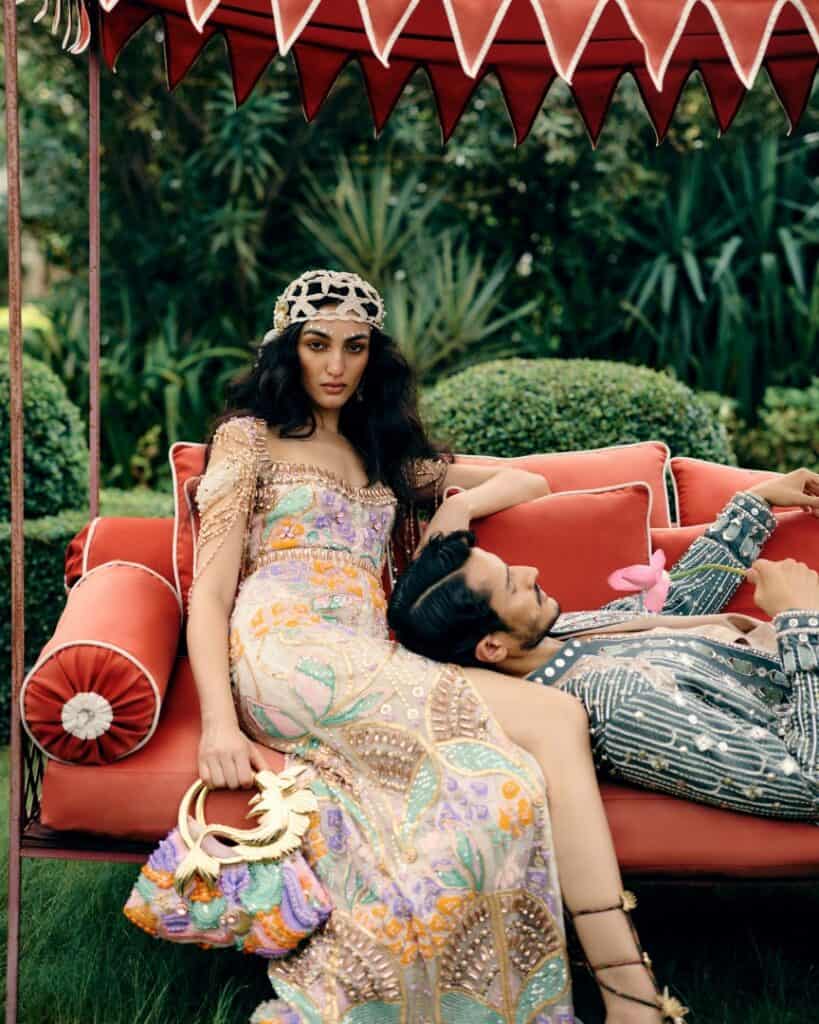
embellishments, playful motifs, shells, celestial elements, and sculptural embroidery.
We’re not changing Indian craftsmanship. We’re simply expanding its vocabulary.
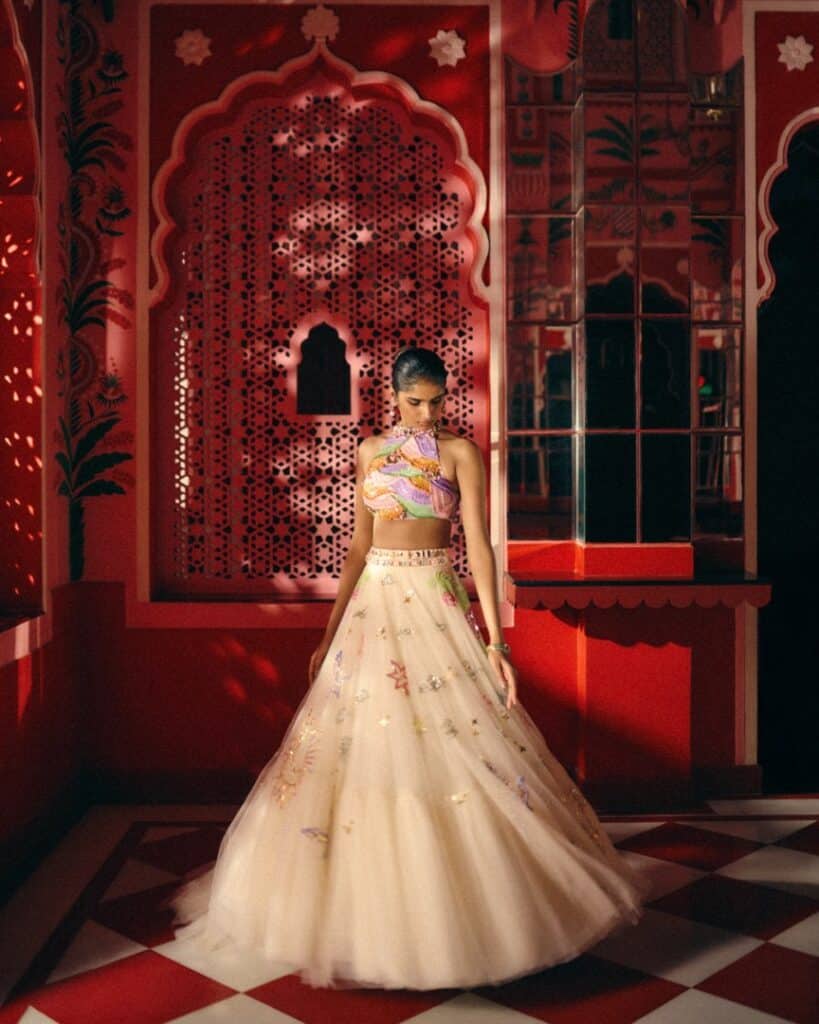
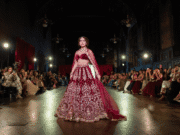
Papa Don’t Preach Bridalwear | Photo Credit: Provided by Team Papa Don’t Preach
Are there any materials, techniques, colors, or motifs that have become signatures for the brand?
Color will always be one of our strongest signatures. So will handcrafted embroidery. But what excites me most is the way we reinterpret traditional techniques.
We work with zardozi, aari, and hand embroidery but combine them with unconventional materials and unexpected detailing. It’s our way of respecting the past while gently nudging it towards the future.
What role do Indian craftsmanship and artisans play in your collections?
They are the heart of everything we do. I often say our karigars are protagonists, not projects. Without them, there is no Papa Don’t Preach. That’s why their names appear on our garment labels. Their craftsmanship deserves visibility.
Looking ahead, one of my biggest dreams is to build a Karigar Academy that helps preserve these extraordinary skills for future generations.
For me, preserving craft isn’t about nostalgia. It’s about ensuring that these traditions continue to evolve and remain relevant.
If someone walked into your store for the first time, what journey do you want them to experience?
Luxury, to me, is anticipating someone’s needs before they’ve even thought of them. That’s the feeling we try to create.
We’re pet-friendly. Children have spaces to play.
Clients can spend hours with us if they wish. Everything is tailored around making people feel comfortable rather than intimidated. More importantly, I want people to feel like they’ve stepped into the world of Papa Don’t Preach.
Unlike many luxury houses that draw from historical worlds that already existed, we had to build our own mythology.
That’s why our stores feature fantastical hand-carved creatures, whimsical details, and immersive spaces. They aren’t just stores. They’re invitations into another universe.
What details inside the store should visitors pay attention to that represent the heart of the brand?
Look closely at the craftsmanship. Almost everything has been made by hand.
The carvings. The textures. The tiny details hidden throughout the space. They tell the same story as our garments.
It’s a reminder that craftsmanship isn’t limited to clothing. It’s a way of thinking.


Papa Don’t Preach Stores | Photo Credit: Ashish Sahi
What has remained unchanged about Papa Don’t Preach since day one?
Our philosophy.
We’ve always believed that craftsmanship deserves celebration. That
individuality deserves space. That fashion can be joyful without losing depth.
Our visible values may evolve, but our core remains remarkably consistent.
Even today, every decision we make is measured against one simple question: Does this still feel like us? If the answer is no, we don’t do it.
Shubhika’s Style Notes
One piece every first-time customer should try?
Our blouses and tops. They transform completely once they’re worn.
Most underrated category?
Shoes. South Asians don’t give them enough attention, but they can completely change a look.
A collection that still feels deeply personal?
Bring Your Own Fairytale. It reminded women that they could write their own stories.
One word that defines Papa Don’t Preach?
Free-spirited.
Maximalist or minimalist?
Maximalist with intention.
One thing customers always notice?
The color and embroidery.
One thing they usually miss?
The extraordinary amount of handcraft behind all the playfulness.
What belongs in every woman’s wardrobe?
A pair of shoes that makes her walk differently.
Dream city for the next store?
New York.
The future of Papa Don’t Preach in three words?
India to the world.
The Woman Before The Brand
Before Papa Don’t Preach became what it is today, who was Shubhika when nobody knew her name?
Long before Papa Don’t Preach had a name, I was simply someone who loved making things and finding little ways to turn creativity into a business.
At nineteen, while I was still studying journalism, I opened a tiny 200-square-foot tailoring studio under my own name. We stitched blouses, petticoats, and sarees, often for what would today sound unbelievable-₹100 or ₹200 a piece. It was just me, one masterji, and two tailors.
But if I’m honest, entrepreneurship had started much earlier. As children, my sisters and I made board games and charged our friends to play them. I started a neighborhood library. Every summer I found ways to work, earn, and create. Looking back, I don’t think I was chasing fashion as much as I was chasing the joy of building something.
That’s probably the biggest misconception about my journey. People assume I fell in love with fashion. I actually fell in love with the business of creativity.
Fashion simply became the medium where all the things I loved-storytelling, craftsmanship, entrepreneurship, and self-expression-found each other.
You studied journalism but chose fashion. What did that decision cost you personally, and what did it give you? Was there a moment when you realized success wasn’t going to come from following the expected path?
Journalism wasn’t the plan B. It was simply one of many things I was curious about.
Growing up, I wanted to become everything. I wanted to be a neurosurgeon after reading Doctors.
Then I wanted to become a lawyer after reading John Grisham. At one point I wanted to study international relations. I was endlessly curious, and by the time I finally made up my mind, I’d actually missed most of the fashion school application deadlines.
Looking back, I’m grateful that happened.
Studying mass media and journalism taught me how to communicate, observe, market, ask questions, and tell stories. I even worked as a newspaper reporter for a year, and I still think that experience shapes the way I run my company today.
No education is ever wasted. No experience is ever wasted.
People often think creative businesses are built
only on creativity. They’re actually built
on communication, psychology, operations,
storytelling, and understanding people.
Journalism quietly gave me all of that.
Later, I paused my business for a year to study fashion in London. That experience gave me technical knowledge, but journalism gave me perspective.
If I had to choose again, I honestly wouldn’t change a thing.
You started young. What do people misunderstand about building something in your twenties?
Your twenties are powered by something that becomes harder to manufacture later in life-pure instinct.
You’re fearless because you haven’t yet accumulated enough failures to become cautious. You don’t overthink every decision. You don’t wait until everything is perfect. You simply begin. I think that’s a huge advantage.
Today I met so many incredibly talented young people who are paralyzed by perfection. They’re waiting for certainty before taking the first step, but entrepreneurship rarely gives you certainty. It rewards movement.
At the same time, I also think we’ve romanticized the idea of building from scratch.
I was fortunate. My parents believed in me and supported me financially, and that’s something I openly acknowledge. Fashion is an incredibly capital-intensive business. You need machinery, artisans, raw materials, marketing, and time. Talent alone isn’t enough.
If I have one regret, it’s that I didn’t spend enough time working for someone else before starting my own company.
Internships are underrated. Your first few years of work are the only time in your life when someone is essentially paying you to learn, build relationships, and make mistakes. I learned every lesson at my own expense, and some of those lessons were incredibly expensive.
There were years when the business wasn’t even breaking even. I still remember writing to my father and telling him, “I’ll give this one last year. If it doesn’t work, I’ll stop.”
That was around year four. We only started breaking even in year five. I’m actually glad it happened that way because it taught me patience.
We’re living in a culture of instant
gratification, where we’re constantly shown
overnight success stories. But most meaningful
businesses aren’t built overnight. They’re built
one ordinary day at a time by people who simply
keep showing up long after the excitement has faded.
Shubhika Unfiltered
Your non-negotiable self-care ritual?
Yoga and massage.
If you disappeared for a weekend, where would you go?
A quiet Airbnb in Rishikesh with my husband.
Your ideal day off?
Home. Books. Cats. Absolutely no plans.
One thing that gives you childlike joy?
Animals.
What are you currently obsessed with?
Learning.
Your biggest guilty pleasure?
Bread, butter, and chai.
What’s always in your bag?
Hand sanitizer, lipstick, blush, and my house keys.
One thing you’re trying to say no to more often?
People-pleasing.
One thing you wish women did less of?
Apologizing for taking up space.
One thing you wish women did more of?
Trusting themselves.
What instantly earns your respect?
Someone who can honestly say, “I don’t know.”
What instantly turns you off?
Pretending to know everything.
One thing success has taught you?
Presence is more valuable than achievement.
One thing you’re still learning?
How to slow down.
If your life had a title right now, what would it be?
Shubhika in the Making.
Describe this season of your life in three words.
Curious. Patient. Authentic.
If Papa Don’t Preach had a soundtrack?
“Papa Don’t Preach” by Madonna, of course.
One piece from your own brand you’d save forever?
Probably one of our earliest jumpsuits. It reminds me where we began.
What excites you most about the future?
Taking Papa Don’t Preach to the world while staying deeply rooted in India.
One thing nobody knows about you?
I’m still discovering that myself.
What does confidence mean to you today?
Having the courage to say, “I don’t know,” and being curious enough to learn.
Success or significance?
Significance.
What are you protecting your energy from these days?
People-pleasing and unnecessary noise.


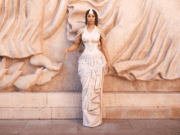
Papa Don’t Preach Clothing Collection | Photo Credit: Provided by Team Papa Don’t Preach
Building A Business Without Losing Yourself
What part of entrepreneurship did no one prepare you for?
Nobody prepares you for how much patience entrepreneurship requires.
We often celebrate the big moments-the launches, the milestones, the headlines-but most of entrepreneurship is wonderfully ordinary.
It’s showing up. Again. And again. And again.
There isn’t a secret formula. The principles haven’t really changed over generations. My father’s business required sharp thinking, disciplined execution, and resilience. Mine requires exactly the same things.
At the end of the day, entrepreneurship is simply fighting for one more day. Then another. Then another.
The extraordinary part is built on thousands of very ordinary days.
How do you balance protecting creativity while making commercial decisions?
It’s one of the hardest parts of my job. I’ve realized that creativity and commerce aren’t enemies-they simply need different spaces to exist.
Today, we approach our collections with that understanding. Around thirty percent is pure creative expression. It’s where we experiment, dream, and push ourselves.
The remaining seventy percent translates those ideas into pieces that women can wear repeatedly and build their wardrobes around.
I’ve stopped believing that commercial automatically means less creative. Sometimes the most beautiful design is the one that genuinely becomes part of someone’s everyday life.
What is something you said no to that ended up becoming one of your smartest business decisions?
Ironically, it wasn’t saying no to something outside the business. It was saying no to my own assumptions.
For a long time, I believed that if I focused on creating beautiful work, everything else including money would naturally follow. I don’t believe that anymore.
Financial discipline is one of the most creative decisions a founder can make. Money isn’t the opposite of creativity. It’s the bloodstream that allows creativity to survive. It allows you to pay artisans fairly.
It allows you to invest in people. It allows you to preserve craftsmanship. It allows you to build ethical businesses. Without financial health, even the best intentions eventually struggle.
That has probably been one of my biggest leadership lessons.
What does leadership look like inside your company today?
Leadership has changed dramatically for me over the years. When I was younger, I thought leadership meant having all the answers.
Today, I think it means creating an environment where the best answers can emerge.
One of the biggest shifts in my own journey has been learning to trust the incredible women around me. Many of them have grown alongside the company for years. They’ve taken career breaks, become mothers, returned, evolved, and helped build Papa Don’t
Preach into what it is today.
Leadership isn’t about being the loudest voice in the room.
It’s about creating space for other people to do their best work.
That’s something I’m still learning every day.
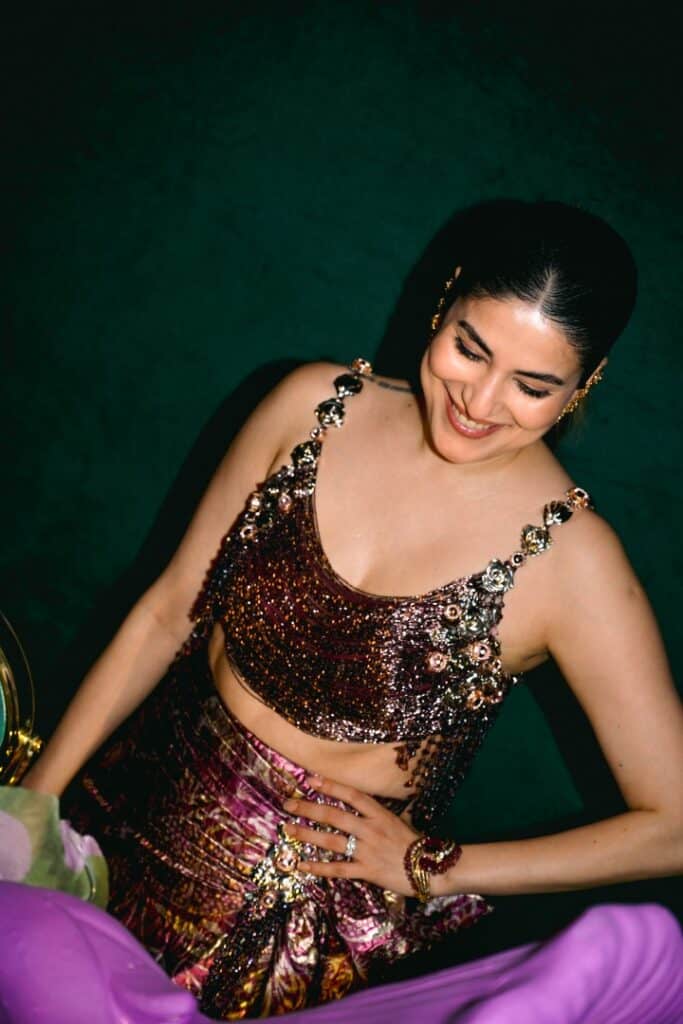
Photo Credit: Provided by Team Papa Don’t Preach
The Future
If someone opened your closet and your calendar, what would they learn about who you are right now?
Probably that I’m much simpler than people expect. My wardrobe is surprisingly practical on most days. My calendar reflects someone who’s become kinder to herself.
I’m much more intentional with my time now. I’ve become more comfortable saying no. More comfortable resting. More comfortable choosing depth over constant activity.
This is probably the happiest and most grounded version of myself I’ve known.
What still scares you?
Not reaching my full potential. Not professionally alone, but as a human being.
I often wonder whether I’m contributing everything I’m capable of contributing- to people, to craftsmanship, to society.
That question keeps me curious. It keeps me growing. And perhaps it always will.
If fashion disappeared tomorrow, what would remain at the core of Shubhika Sharma?
Creation.
Fashion has never been the destination for me. It’s simply been one canvas. If fashion disappeared tomorrow, I’d probably write. Teach. Build schools. Consult. Create podcasts. Tell stories.
Find another medium. The canvas would change. The instinct wouldn’t.
Finish this sentence: The greatest thing I have learned from building Papa Don’t Preach is…
…that building a company has really been a journey of building myself.
Papa Don’t Preach has taught me far more about who I am than about fashion.
It’s become a tool for self-discovery, for introspection, for understanding my swadharma my purpose and hopefully, one day, moving a little closer to my truest self.
In that sense, the company has been my greatest teacher.
Rapid Fire: Shubhika Unfiltered
One word your closest friends would use to describe you?
Caring.
Early mornings or late nights?
Early mornings.
Introvert, extrovert, or selective?
An introvert who’s learned to be social when she needs to.
One city that inspires you creatively?
Paris.
One place that feels like home?
Home. Or Rishikesh.
Comfort food?
Bread, butter, and Indian chai.
One thing you buy too much of?
Shoes.
Heels, sneakers, or barefoot?
Barefoot.
One color you’ll never tire of?
Green.
Most worn item in your wardrobe?
Fit-and-flare dresses.
Vintage or new?
Whichever suits my mood that day.
One trend you secretly love?
Maximalism.
One trend you’d happily retire forever?
Low-waisted trousers.
Music while designing or complete silence?
Music.
Go-to playlist?
Independent house and chilled electronic music.
A song that instantly changes your mood?
Rangi Saari.
One movie you can watch repeatedly?
I actually don’t enjoy rewatching films I like not knowing the ending.
One book everyone should read?
The Forty Rules of Love by Elif Shafak.
One person you’d love to have dinner with?
Shams of Tabriz.
The best advice you’ve ever received?
Fashion isn’t frivolous. It’s one of the most powerful tools of self-expression.
One habit that changed your life?
Yoga.
Something people always assume about you that isn’t true?
That I’m a party person.
What instantly grounds you?
My family.
Your idea of luxury?
Time, peace, and a really good massage.
Your non-negotiable self-care ritual?
Yoga and massage.
If you disappeared for a weekend, where would you go?
A quiet Airbnb in Rishikesh with my husband.
Your ideal day off?
Home. Books. Cats. Absolutely no plans.
One thing that gives you childlike joy?
Animals.
What are you currently obsessed with?
Learning.
Your biggest guilty pleasure?
Bread, butter, and chai.
What’s always in your bag?
Hand sanitizer, lipstick, blush, and my house keys.
One thing you’re trying to say no to more often?
People-pleasing.
One thing you wish women did less of?
Apologizing for taking up space.
One thing you wish women did more of?
Trusting themselves.
What instantly earns your respect?
Someone who can honestly say, “I don’t know.”
What instantly turns you off?
Pretending to know everything.
One thing success has taught you?
Presence is more valuable than achievement.
One thing you’re still learning?
How to slow down.
If your life had a title right now, what would it be?
Shubhika in the Making.
Describe this season of your life in three words.
Curious. Patient. Authentic.
If Papa Don’t Preach had a soundtrack?
“Papa Don’t Preach” by Madonna, of course.
One piece from your own brand you’d save forever?
Probably one of our earliest jumpsuits. It reminds me where we began.
What excites you most about the future?
Taking Papa Don’t Preach to the world while staying deeply rooted in India.
One thing nobody knows about you?
I’m still discovering that myself.
What does confidence mean to you today?
Having the courage to say, “I don’t know,” and being curious enough to learn.
Success or significance?
Significance.
What are you protecting your energy from these days?
People-pleasing and unnecessary noise.
Finish this sentence: I feel most myself when…
…I’m at home with the people I love.
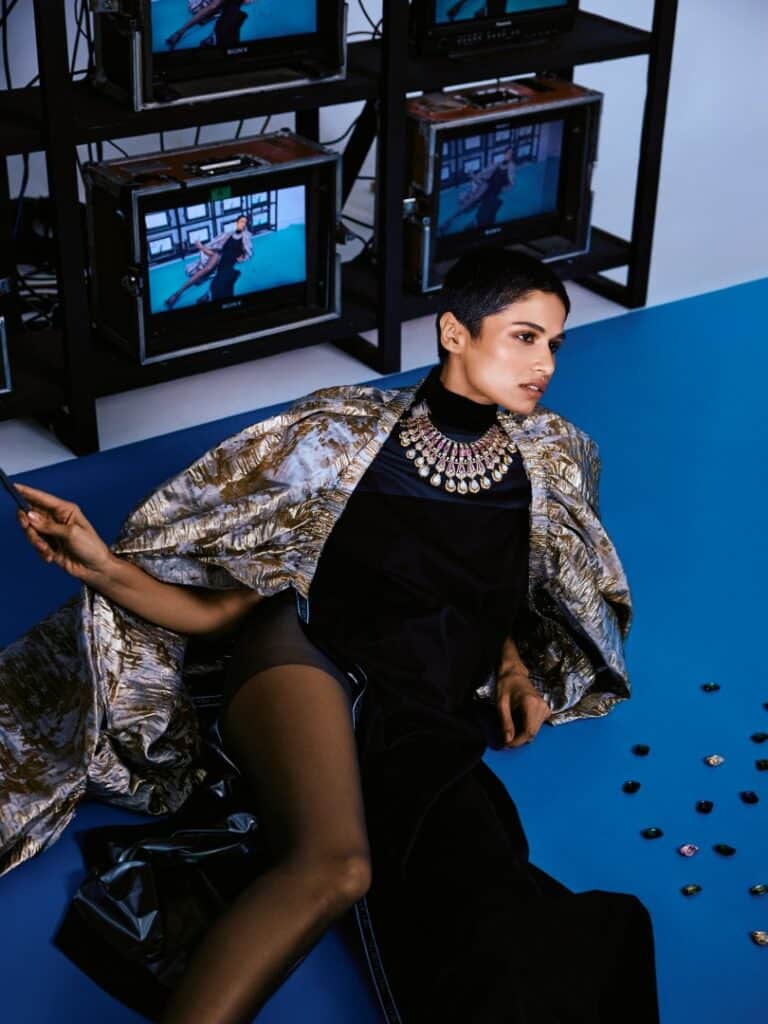
Photo Credit: Photo Credit: Ripudaman Singh, Dillusions Photography.
Papa Don’t Preach may be known for its colour, embellishment and visual exuberance, but Shubhika Sharma’s story reveals something deeper. Behind the maximalism is intention. Behind the fantasy is identity. Behind the clothes is a woman who has spent years building a brand that gives others permission to be seen more fully.
In many ways, the world she has created is not asking women to become someone else. It is asking them to stop shrinking the parts of themselves that were always there: the boldness, the softness, the contradiction, the ambition, the joy, the rebellion and the desire to belong without having to disappear.
For ANOKHI readers, Shubhika’s journey is a reminder that personal identity and professional creation are often deeply intertwined. Sometimes the brand we build becomes a mirror. Sometimes it becomes a home. And sometimes, when created with enough courage, it becomes a door other women can walk through too.
Papa Don’t Preach is not just a fashion label. It is a world, a mood, a declaration and a permission slip. And at the centre of it is Shubhika Sharma, still creating, still evolving and still refusing to be preached to.
Website: Papa Don’t Preach
Instagram: @papadontpreachbyshubhika
Youtube: Papa Don’t Preach By Shubhika
Fashion, Female Entrepreneur, Female Founder, PAPA DON'T PREACH, Raj Girn, Shubhika Sharma, South Asian Designers
Raj Girn
Author
Raj Girn is an award-winning media personality, confidence coach, consultant and mentor. Bio: Click here to know about founder, Read testimonial...
COMMENTS
YOU MAY ALSO LIKE
-
Cover Story: This Hour Has Darrell Faria, The Storyteller Behind Canada's Biggest Laughs
-
Cover Story: South Asian Heritage Month: The 10 Most Powerful South Asian Dynasties Shaping the Globe
-
Cover Story: Mumbai to Houston, How the Art of SNEHA MERCHANT Impacts Global Storytelling
-
Cover Story: International Women's Month Celebrates Megha Desai & 11 Million Female Lives Empowered To Date Through The Desai Foundation
-
Cover Story: Global Luxury Authority & Design Studio Founder Nina Magon Didn’t Follow The Rules of Composing Spaces, She Authored Them
-
Cover Story: She Didn't Just Create A Workout, SARINA JAIN Sparked A Cultural Awakening - Celebrating 25 Years Of Masala Bhangra®
-
Cover Story: Heritage Gets A Makeover: MEGHA RAO’s Modern Woman Manifesto With holiCHIC
-
Cover Story: Lights, Camera, Activism: Zohran Mamdani’s Cinematic Revolution In Politics
-

Cover Story: Advocacy Warrior Sheetal Sheth Shares Her F*ck Cancer Playbook
-
Cover Story: 11 Films Showcase South Asian Talent At TIFF 50
-
Cover Story: 8 South Asian Supermodels Who Have Dominated The World's Runways
-
Cover Story: From Sidelines To Spotlights - How South Asians Are Rewriting The North American Sports Narrative
-
Cover Story: Art & Identity With Vivek Shraya - “My Cultural Identity Continues To Shape My Art. Sometimes, It’s Loud, Sometimes Quiet, But It’s Always There, Evolving With Me.”
-
Cover Story: The Power of 8: South Asian Pioneers Leading A Global Mental Health Awakening
-
Cover Story: The Magnificent 7: South Asian PR Titans Shaping Global Narratives
-
Cover Story: The Durga Effect: 8 South Asian Women Who Fought For Change And Won!
-
Cover Story: 10 Eternal South Asian Love Stories That Have Stood The Test Of Time
-
Dr. Ruby Dhalla: The Story Of A Trailblazing Business Leader, Visionary Hotelier & Global Humanitarian
-
Cover Story: Founder & 2x Serial Entrepreneur Sonya Gill Shares How To Build A Global Brand & Disrupt An Entire Industry
-

Donald Trump: How Will His Presidency Impact The Entrepreneurial Footprint Of South Asians In America?
-

Breast Cancer Awareness Month: The South Asian Faces Of Survival, Resilience, And Advocacy
-

Spotlight On The 9 South Asian Films Premiering At TIFF 2024 - And Why You Should Watch Them!
-
From Vedas To Vanity: How Ayurveda Is Redefining Beauty
-
The Rise Of The South Asian Comedienne
-
Championing LGBTQIA+ Liberation: Honouring Fearless South Asian Activists And Icons
-
South Asian Heritage Month: How 5 South Asian Authors Are Challenging Societal Norms & Stereotypes
-
Raman Kapoor Wants Women To Empower Their Lives With A Strong Health IQ
-
In Honour Of International Women’s Day Our Founder Asked 12 Women: “What Woman In History Has Inspired Your True North!”