























































Cover Stories /
Cover Story: Lights, Camera, Activism: Zohran Mamdani’s Cinematic Revolution In Politics
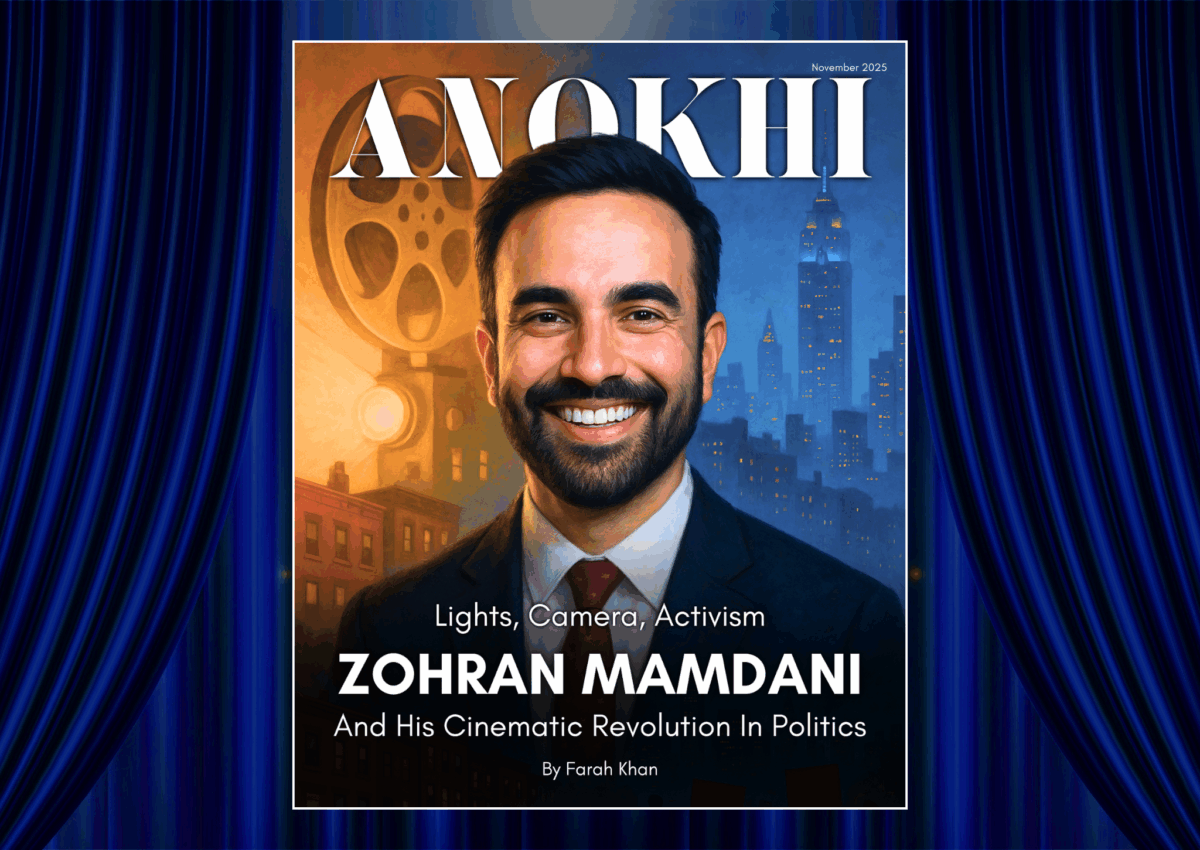
Cover Story: Lights, Camera, Activism: Zohran Mamdani’s Cinematic Revolution In Politics
Cover Stories Oct 31, 2025
As New York City heads into the final days of its 2025 mayoral race, early-voting numbers are already hinting at a political shift. Advanced polling places Zohran Kwame Mamdani – 34 years old, Assemblyman from Astoria, Queens – roughly ten points ahead of his closest challenger, former GovernorAndrew Cuomo(and 20 points ahead in some polls), with perennial conservative candidate Curtis Sliwa trailing behind.
Regardless of the final outcome, Mamdani’s rise marks a watershed moment in the city’s political and cultural evolution. In just a few years, he’s gone from organizing tenant-rights protests to redefining what public leadership can look like – part activist, part storyteller, and part internet phenomenon. This profile looks beyond the headlines and hashtags to explore how a first-generation Ugandan-Indian New Yorker became the unlikely face of a new political language: one that mixes grassroots policy with memes, dance reels, multilingual outreach, and deep community trust.

Culture As Campaign Canvas
Zohran Mamdani’s campaign doesn’t begin in polished studios or press rooms – it begins on the streets of New York. Whether he’s knocking on doors in Astoria, chatting with deli owners, or joining block-party fundraisers, his style of politics blurs the line between civic duty and community theatre. He uses every encounter as an opportunity to turn policy into conversation, making complex ideas about rent control, transit, or healthcare accessible – and often, unexpectedly fun.
On social media, that energy translates into humor and humanity. One moment, he’s explaining MTA reform in a reel; the next, he’s joking about the city’s obsession with bagel rankings. He credits his success to the power of canvassing, to the over 90,000 New Yorker volunteers in his team calling and knocking on the doors of other New Yorkers. “We’re talking to young people like we would talk to anyone, we’re not patronizing them” he recently stated on The Daily Show. ““Politics is not something that you have, it’s something that you do.”
Mamdani embodies a new archetype: the South Asian politician as organizer, cultural producer, and internet-savvy storyteller. But he’s also a mirror reflecting a larger question about New York politics: how much the city’s political imagination is changing, and how radically someone like Mamdani might reshape it.
Multilingual Moves
Mamdani’s campaign doesn’t just play out through reels and rallies – it speaks in many tongues. Literally. He has recorded campaign messages and canvassing videos in Spanish, Hindi-Urdu, Bengali, and even Mandarin, reflecting both his district’s linguistic diversity and his commitment to meeting New Yorkers where they are. One Spanish-language ad went viral on social media, with native speakers praising it as a rare moment of genuine outreach rather than token translation.
For many voters – especially first-generation immigrants and seniors – hearing a political candidate address them in their mother tongue is more than a gesture; it’s recognition. It signals that their experiences, accents, and neighborhoods belong in the city’s political conversation.
This multilingual approach also underscores how Mamdani’s politics differ from conventional campaigning. Where traditional strategies often rely on polished English messaging and broad slogans, his outreach builds intimacy through cultural fluency. It’s the difference between talking to voters and talking with them, a subtle but transformative shift that may well redefine how urban politics engages multilingual communities in the years ahead.
Between Kampala And Queens: The Son of Storytellers
Born in Uganda and raised between Kampala and Manhattan, Mamdani grew up at the intersection of art and intellect. His mother, Mira Nair, the Oscar-nominated filmmaker behind Monsoon Wedding, excels at finding the universal in the specific. His father, Mahmood Mamdani, is a political scholar renowned for dissecting power, history, and systemic inequity.
This upbringing, steeped in storytelling and scholarly critique, shaped a politician who approaches policy as narrative: housing policy isn’t just legislation, it’s a story about families, communities, and fairness.
After Bowdoin College, Mamdani didn’t follow the usual path to power. Instead, he dove into New York’s housing crisis as a tenants’ rights organizer with Community Action for Safe Apartments (CASA). “Life in the city does not have to be this hard” he says. “This campaign, is for every New Yorker who believes in the dignity of their neighbours. And the government’s job, is to actually make our lives better“. His ethos isn’t theory alone – it’s grounded in lived experience and the complicated realities of the communities he now represents.
Credit: IG @zohrankmamdani
The Organizer In The Room: Political Career & Platform
Elected in 2020 to represent New York’s 36th Assembly District, Mamdani arrived in Albany as part of a wave of Democratic Socialists of America-aligned candidates. His platform reads like a progressive wish list: housing justice (including his support for the Good Cause Eviction Law), MTA reform through the “End MTA Fares” campaign, immigrant rights, and universal healthcare.
A few months ago he secured a decisive win in the Democratic primary for the 2025 NYC mayoral race — with turnout surging in renter-heavy districts and his campaign credited with activating new tenant-voter blocs.
“The children of immigrants are rewriting the political playbook,” he has said. For Mamdani, the goal isn’t just a seat at the table – it’s questioning who built the table, who it serves, and who’s been left standing.
In a city where the next generation of leadership is being defined by a surge of progressive organizers and state-level reformers, Mamdani’s approach represents a cultural rather than hierarchical shift. His leadership style leans on grassroots energy, digital engagement, and policy transparency.
Credit: IG @zohrankmamdani
Politics Meets Pop Culture: Campaign Style
Traditional South Asian political campaigns often lean on stoicism and polished respectability. Mamdani? His campaign is a Bollywood dance number in the middle of a city council hearing.
One viral reel features him dressed as a Bollywood hero, complete with dramatic slow-motion and exaggerated hand gestures, explaining the “End MTA Fares” bill while lip-syncing to Tamma Tamma Loge. Another video shows him mock-arguing with a cardboard cutout of a lobbyist, waving a chai cup, captioned: “Policy debates, but make it spicy.”
During a local protest, he led a “flash mob eviction fight,” chanting: “Homes over greed! Rent control for all!” with a boombox blaring behind him. Even mundane moments, like sharing a snack with neighbours at a corner deli, become political theatre, reinforcing relatability and trust.
“Some people ask if politics should be fun,” he says in a TikTok. “I ask, why should it be deadly serious if your rent is due tomorrow?”
This playful tone signals a generational shift: politics as participatory, accessible, and culturally fluent.
Credit: IG @zohrankmamdani
The Mamdani Paradox: What He’s Up Against
Unsurprisingly, this approach makes him a lightning rod. Critics cast him as a paradox: a “woke leftist” for supporting trans rights and Palestinian solidarity, and a “Muslim extremist” allegedly enamored with Sharia law. The contradiction is irrelevant to detractors; the goal is to paint him as alien or dangerous.
While Mamdani proudly identifies as a Democratic Socialist, critics on the right have often blurred that line, branding him a “communist” and warning that his agenda could harm New York’s economy. His proposals to raise taxes on the ultra-wealthy and expand tenant protections have drawn pushback from business groups, who argue that such measures could discourage investment and push high earners, and their revenue, out of the city. Mamdani has defended his platform as one rooted in fairness, saying in interviews that policies must center working people, not corporate profit, and yet also firm on what this means for billionaires: “We believe that in the wealthiest city in the wealthiest nation in the history of the world, working people deserve a dignified life. And to the billionaires who think this movement is an existential threat to their corruption of our democracy: you’re right”
Then there’s the “barbarian rice” critique. A conservative commentator mocked him for eating rice with his hands. Mamdani leaned in: “Yes, I eat with my hands. It’s delicious, it’s cultural, and somehow, it’s a threat to your imagination of civility?” The clip went viral, becoming a cultural moment and teaching the city about heritage, humor, and humility simultaneously.
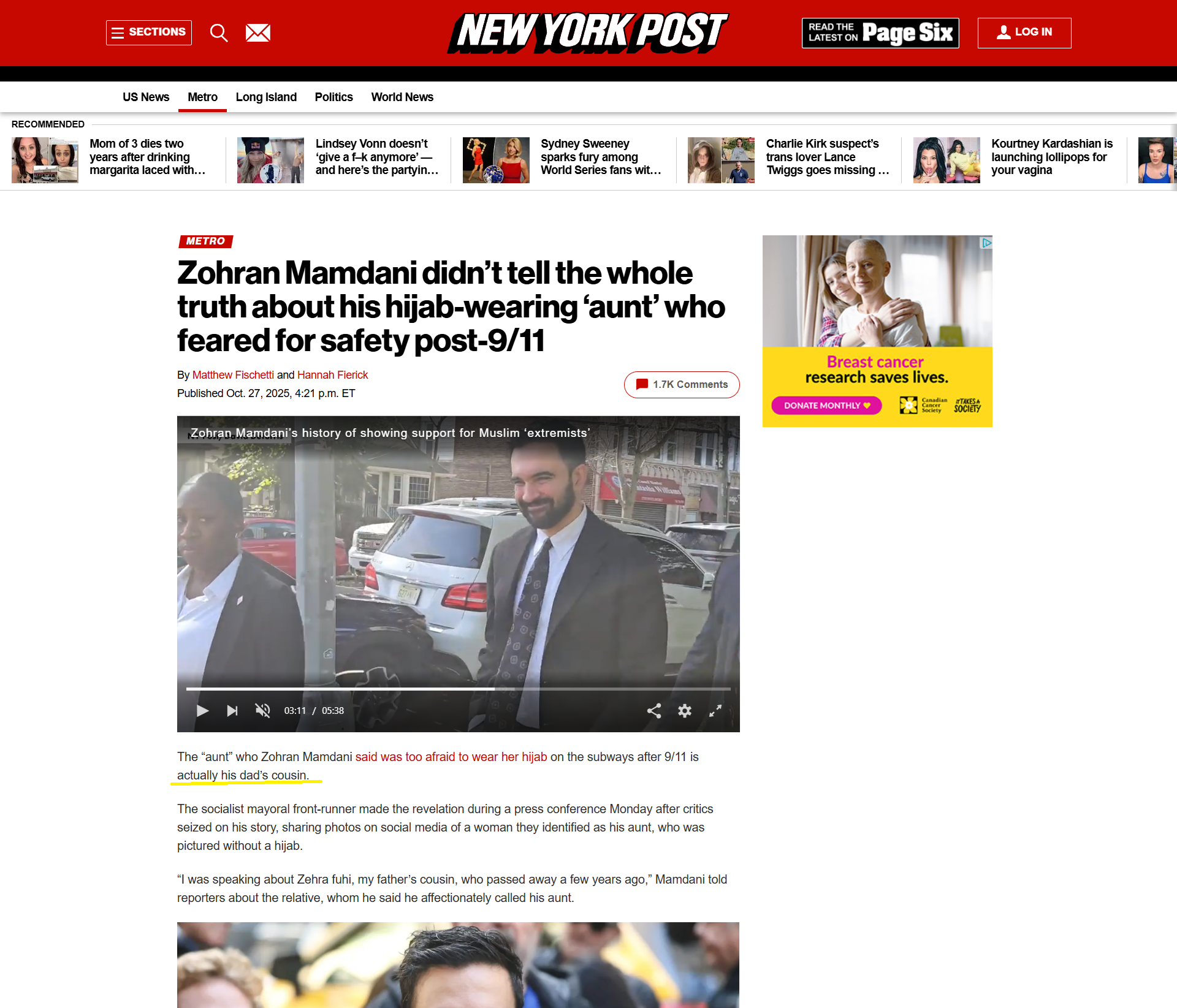
More recently, Mamdani drew attention when recounting how his “aunt” — a hijab-wearing Muslim woman — felt unsafe riding the subway after 9/11. Opponents accused him of misleading the public after reports clarified the woman was his father’s cousin, not a biological aunt (New York Post, Oct 27 2025). Supporters argued the uproar missed a key cultural nuance: in South Asian communities, “aunty” is a universal term of respect used for older women, not a literal familial claim. The debate highlighted both the scrutiny faced by visible minorities in public life and the gaps in cultural understanding that often accompany it.
Even within his own party, he faces scrutiny from moderates who question the viability of his policies in a complex urban system. Yet Mamdani continues to build through debate and visibility – favoring public discourse over political insulation.
Breaking The Mould
Compare Mamdani to other South Asian politicians – Ro Khanna, Pramila Jayapal, Jagmeet Singh – and the divergence is clear. Each carved their path through institutional routes that, while groundbreaking, still operated within traditional frameworks.
Ro Khanna, representing California’s Silicon Valley, built his reputation as a bridge between tech innovation and progressive economics. Pramila Jayapal rose through activism and founded OneAmerica before entering Congress, building coalitions through legislative pragmatism. Jagmeet Singh brought charisma and Sikh representation to Canada’s political mainstream while navigating the compromises of federal party leadership.
Mamdani, by contrast, didn’t climb elite networks or enter politics through national campaigns. He built from the ground up, rooted in community organizing and lived experience. His message focuses less on identity milestones and more on collective empowerment. Unlike others, he merges culture and politics, movement-building and legislation, humor and activism.

The Establishment Model
Sadiq Khan’s tenure as London’s first Muslim and South Asian mayor is often invoked in conversations about Mamdani – both as a comparison and a cautionary tale. Khan’s success represents the triumph of representation within the establishment: a human-rights lawyer who rose through the Labour Party’s ranks to lead one of the world’s most complex cities. His leadership emphasizes pragmatism, coalition-building, and incremental reform.
Yet Khan’s tenure has also drawn sharp criticism, much of it tinged with racial and religious undertones. Far-right commentators have frequently portrayed London’s evolution under his leadership as evidence of an “Islamic invasion” or the creeping influence of “Shariah law,” despite these claims being unfounded. In New York, similar rhetoric has been weaponized against Mamdani, with opponents warning that electing another Muslim leader could “turn the city into London.”
For many observers, these comparisons reveal more about the anxieties surrounding multicultural leadership than about either man’s actual record. For others, they underscore how both Khan and Mamdani symbolize a new kind of political visibility – one that forces cities to confront not just questions of policy, but of belonging. Both redefine what leadership can look like for the South Asian diaspora, though they do so from very different vantage points: one reforming within the system, the other challenging its foundations.
The Meme Is the Message: Cultural Layer
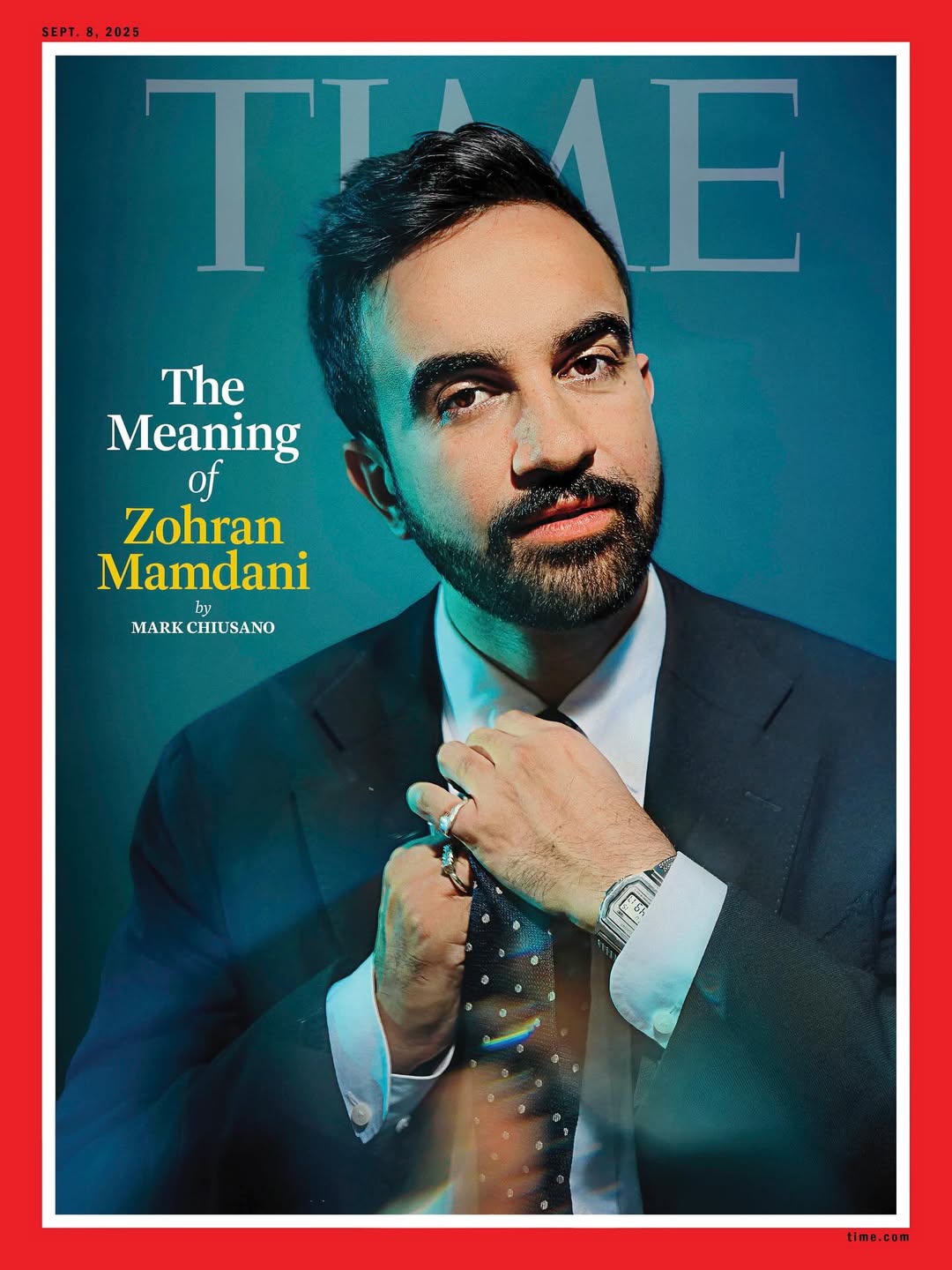
Mamdani’s campaign has become a cultural phenomenon. Memes of him lip-syncing to Bollywood songs while explaining legislation flood feeds. Young South Asians cheer him on as the “Bollywood Assemblyman,” while older constituents appreciate his ability to make complex policy discussions engaging and relatable.
Being Mira Nair’s son adds another layer. The filmmaker who explored diasporic identity now watches her son embody those themes: politics that is art, identity, and activism in motion.
Credit: IG @zohrankmamdani
The Bigger Picture: Implications for South Asian Politics
Zohran Mamdani’s rise signals a shift toward leadership that is culturally grounded, creative, and community-driven. Authenticity, humor, and connection have become political capital, not liabilities.
In the evolving landscape of New York politics, his model stands out for its participatory nature and transparency. What began as a neighborhood experiment in Astoria has already reshaped how local politics can feel: less like a transaction, more like a conversation.
The Movement Beyond The Man
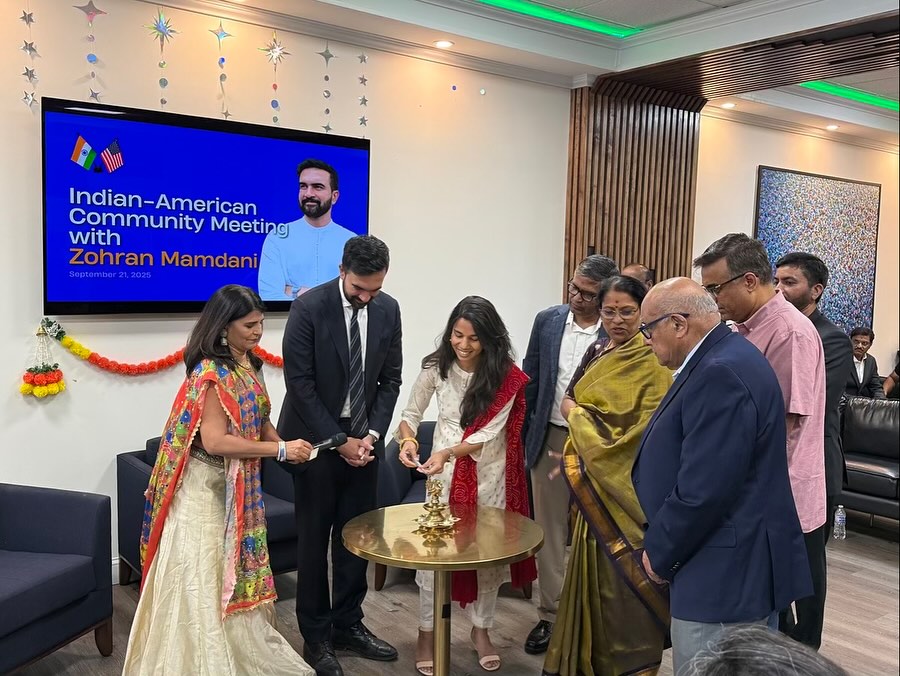
Which is he: woke leftist or dangerous extremist? The answer is both, neither, and ultimately irrelevant to his constituents. For Astoria, he is simply Zohran – the man who fights their evictions, makes them laugh, and makes them feel seen.
Even if one disagrees with his politics, Mamdani has demonstrated that authenticity and engagement can coexist with advocacy. In an age of curated inauthenticity, his blend of sincerity, culture, and connection offers a glimpse of where diaspora politics may be headed next.
He’s dancing to his own beat. And New Yorkers, and South Asians watching from afar are following.

Farah Khan | Editorial Director
Author
Farah Khan manages the editorial department at ANOKHI LIFE, overseeing content production, publishing, and the annual editorial calendar, while also supporting operations, projects, systems, events, and vendor coordination.
COMMENTS
YOU MAY ALSO LIKE
-
Cover Story: The Woman Shaping How The World Sees South Asian Cinema: Meenakshi Shedde
-

Cover Story: A Different Way To Heal: Dr. Shireen Fernandez On Combining Science, Sound & Ayurveda
-

Cover Story: Papa Don’t Preach’s Fashion Architect Shubhika Sharma On Creating Fearless Self-Expression & Dressing Without Permission
-

Cover Story: This Hour Has Darrell Faria, The Storyteller Behind Canada's Biggest Laughs
-
Cover Story: South Asian Heritage Month: The 10 Most Powerful South Asian Dynasties Shaping the Globe
-
Cover Story: Mumbai to Houston, How the Art of SNEHA MERCHANT Impacts Global Storytelling
-

Cover Story: International Women's Month Celebrates Megha Desai & 11 Million Female Lives Empowered To Date Through The Desai Foundation
-
Cover Story: Global Luxury Authority & Design Studio Founder Nina Magon Didn’t Follow The Rules of Composing Spaces, She Authored Them
-
Cover Story: She Didn't Just Create A Workout, SARINA JAIN Sparked A Cultural Awakening - Celebrating 25 Years Of Masala Bhangra®
-
Cover Story: Heritage Gets A Makeover: MEGHA RAO’s Modern Woman Manifesto With holiCHIC
-

Cover Story: Advocacy Warrior Sheetal Sheth Shares Her F*ck Cancer Playbook
-
Cover Story: 11 Films Showcase South Asian Talent At TIFF 50
-
Cover Story: 8 South Asian Supermodels Who Have Dominated The World's Runways
-
Cover Story: From Sidelines To Spotlights - How South Asians Are Rewriting The North American Sports Narrative
-
Cover Story: Art & Identity With Vivek Shraya - “My Cultural Identity Continues To Shape My Art. Sometimes, It’s Loud, Sometimes Quiet, But It’s Always There, Evolving With Me.”
-
Cover Story: The Power of 8: South Asian Pioneers Leading A Global Mental Health Awakening
-
Cover Story: The Magnificent 7: South Asian PR Titans Shaping Global Narratives
-

Cover Story: The Durga Effect: 8 South Asian Women Who Fought For Change And Won!
-
Cover Story: 10 Eternal South Asian Love Stories That Have Stood The Test Of Time
-

Dr. Ruby Dhalla: The Story Of A Trailblazing Business Leader, Visionary Hotelier & Global Humanitarian
-

Cover Story: Founder & 2x Serial Entrepreneur Sonya Gill Shares How To Build A Global Brand & Disrupt An Entire Industry
-
Donald Trump: How Will His Presidency Impact The Entrepreneurial Footprint Of South Asians In America?
-

Breast Cancer Awareness Month: The South Asian Faces Of Survival, Resilience, And Advocacy
-
Spotlight On The 9 South Asian Films Premiering At TIFF 2024 - And Why You Should Watch Them!
-
From Vedas To Vanity: How Ayurveda Is Redefining Beauty
-
The Rise Of The South Asian Comedienne
-
Championing LGBTQIA+ Liberation: Honouring Fearless South Asian Activists And Icons
-
South Asian Heritage Month: How 5 South Asian Authors Are Challenging Societal Norms & Stereotypes
-

Raman Kapoor Wants Women To Empower Their Lives With A Strong Health IQ
-
In Honour Of International Women’s Day Our Founder Asked 12 Women: “What Woman In History Has Inspired Your True North!”
-
Asad Mecci & Colin Mochrie Are Ready To Change The Game With Their Hypnosis-Improv Show "HYPROV"
-
BioAro Founder Dr. Anmol Kapoor Wants You To Be The CEO Of Your Health