

























































From her early years in Indian cinema to her humanitarian mission and recent filmmaking ventures, Somy Ali has remained rooted in courage, advocacy, and purposeful storytelling. Her work reflects a steadfast commitment to amplifying survivor voices and driving real change.
Catch my full conversation with Somy Ali:
Our Exclusive Chat With Somy Ali
Mehak Kapoor: You had a notable career in Bollywood, with films such as Anth, Aao Pyaar Karen, Andolan, Mafia, and Chup. Looking back, what were some of your most memorable experiences on set, and how did these roles shape you personally and professionally?
Somy Ali: I would have to answer this extensive question with the advent of Dharamji (Legendary Late Indian Actor, Dharmendra) entering my life within two months of my being in Mumbai. A model coordinator sent him my pictures from Far Productions Agency to be considered as a lead opposite Bobby in his debut film at the time, called Barsaat or Jaan. I can’t recall the exact title now. Dharam ji invited me over for lunch to his bungalow, and within a span of two hours, I gained the father I wish I had.
Despite my decision not to do the film, as I knew I could not do justice to Bobby nor to Dharamji as a launch pad for his son, he remained in my life as a father figure. Each time we bumped into each other at various film studios, I made it a point to go meet him and touch his feet. Being in his presence gave me immense peace. This is why his passing has impacted me so deeply. It was Dharam ji who said I had the most innocent face and the most beautiful smile, and that I reminded him of Parveen and Zeenat. Hearing those words from a legend, and a man with nothing but love to give, was an honour.
Then came my time working in an actual film with him titled Mafia. I played a police officer and was always on the side of the vigilante played by Dharamji. We had loads of fun, and throughout the year of making that movie, he shared an intense amount of life lessons and wisdom with me. I will always love and miss him. He was not just my father figure, but the most genuinely good human being in that entire industry.
Anth was all fun and games, but it was the pink sari song choreographed by Saroj ji that led to my signing ten more films. Suniel and I already knew each other from Mr Roshan Taneja’s acting school. What I loved most about that film was not being excluded from the action sequences during the climax, thanks to the wonderful producer Ashok Honda. Not too long ago, Suniel told me his son is going to be launched in Anth 2, and I was shaken by the realisation of how quickly time flies.

Andolan was extremely bittersweet because of Divya (Bharti). She and I became fast friends on an outdoor shoot, sharing deeply private experiences because we connected in a way that is difficult to put into words. To this day, I still can’t believe she’s gone. Andolan was also the very first time I filmed a song, and that too with Sanju (Sanjay Dutt), someone I grew up watching as a child in Rocky. Sanju is and always has been one of the kindest people one could ever work with. He literally calmed me into performing our favourite and famous song, “Dil Toh Khoya Hai Yahin Pe Kahin Pe.” I have the utmost respect for him and always will for his patience and kindness. If one wants to learn how to be one of the biggest stars with a complete absence of ego, one should observe or work with Sanju. He does not have a mean bone in his body.
Aao Pyar Karen was a cameo for Saif (Ali Khan), who became a friend immediately after we met, as he too was brought up abroad. We hit it off right away, and that is where I met the electrifying Shilpa (Shetty) and her unbelievably magical mother. Not many know this, but Shilpa’s mother could genuinely predict one’s future through palm reading and by looking into one’s eyes. During our outdoor shoot for “Chand Se Parda Keejiye,” she spoke to me at length and was astonishingly accurate about what my life would become after 1999.
That film also reminds me of working with Prem uncle, who doted on me as his daughter, in contrast to my childhood memories of him always playing a villain. Everything about that film was fun, from Saroj ji’s choreography of “Ooi Maa” to hanging out on set with Dingy and Saif. Not many know this, but Amrita Singh (Dingy) is one of the kindest actors there has ever been in the industry. She literally went up to her hotel room, brought down her own moisturiser, applied it to my face, and explained how to use it properly to avoid dry skin before makeup. Who does that? No legendary star walks up to their hotel room to teach a newcomer the basics of skincare. That film reminds me of Saif, Shilpa, and me, all too innocent about the perils of life. Again, bittersweet memories.
Chupp was an acting school workshop. Sharing the frame with Jeetu ji (Jeetendra) and Om Puri ji, not to mention Avinash Wadhvan, one of the most natural and severely underrated actors I have ever worked with, was an extreme honour. The irony is that Chupp and my last film, Agni Chakra, where I did another cameo with Chichi while catching a flight back to Miami the very next day, were the moments when I truly began to love acting.
Literally on my way out of the industry, I realised I wanted to act, thanks to Om Puri ji, who was an acting school in himself, and Jeetu ji. Working with Govinda, even in a cameo, was a bucket list item I completed before my permanent departure from Hindi cinema. In Chupp, I played a domestic violence victim married off to a man twenty-five years older than me, who abuses me from the beginning of the marriage. Throughout the shoot, Om ji was so worried about hurting me while playing my abuser that we would break into uncontrollable laughter during deeply serious and sadistic scenes. I believe that was my unconscious way of coping with trauma that was far too close to home.
I cannot omit Teesra Kaun, as it was the most fun I ever had on any set. Satish uncle made me laugh endlessly, especially since I was dealing with personal trauma at the time, which was evident to everyone on set. It was Chunks and Satish uncle who kept me laughing throughout. And of course, Mithunda playing himself in the film was unforgettable. The icing on the cake was meeting Amol Palekar ji. For a young girl with zero interest in acting, ending up in the Hindi film industry and sharing screen space with legends I had never dreamed of even meeting felt surreal.

Each film carries a suitcase filled with bittersweet memories, especially because many of the actors who cared for me as a person have since passed away. Still, it was a surreal chapter of my life that I can never forget. It made me who I am today and gave birth to my purpose of existence: No More Tears.
My Bollywood journey was a powerful contradiction, breathtakingly beautiful at times, deeply painful at others, and ultimately transformative
I entered the industry as a teenager, wide-eyed and idealistic, carrying childhood dreams of being surrounded by real talent. Some of my most unforgettable moments were the simplest ones: senior actors treating me with kindness, directors believing in me, and crews working tirelessly behind the scenes. Those experiences taught me humility, discipline, and the sacredness of teamwork.
But the industry also exposed me to the full human spectrum, from the kindest and most generous to the most broken, and sadly, a few who were truly dangerous and abusive, realities later reflected in court convictions and public records. I was also confronted with something uniquely South Asian: the collective idol worship of celebrities, even when they are legally convicted or implicated in wrongdoing. This blind devotion can be harmful. It silences victims, distorts narratives, and normalises criminality when wrapped in fame.
Those contradictions shaped who I am today. They strengthened my empathy, sharpened my instincts, and awakened my desire to fight for those whose voices are drowned out by power, fear, or public hysteria. Bollywood didn’t break me. It built the activist, psychologist, filmmaker, and humanitarian I am today.
Mehak Kapoor: From Pakistan to Bollywood to activism in the U.S., how have your early experiences shaped your mission today?
Somy Ali: My life has been a migration through cultures, languages, religions, and identities, and each chapter has added a layer to my mission.
Growing up between Karachi and Miami, entering Bollywood as a teenager, facing my own trauma, and then starting over in the United States all formed the foundation of my empathy. I have lived as the outsider and the insider, the privileged and the powerless, the admired and the silenced. These experiences taught me one enduring truth: pain is universal, and so is hope when someone shows up.
That understanding shaped No More Tears. I know what it feels like to be unheard, disbelieved, isolated, and dismissed. I made a conscious decision that no woman, man, or child should ever feel that way again if I could help prevent it.
Mehak Kapoor: You’ve survived sexual abuse and domestic violence. How did those experiences inspire you to create No More Tears?
Somy Ali: My lived experiences are the backbone of No More Tears. I know the loneliness, the shame, the fear, and the psychological manipulation victims endure. I know the suffocating silence. I also understand the power of a single person saying, “I believe you. Let me help.”

No More Tears was born not from charity, but from memory, empathy, and a promise I made to myself: that if I ever rebuilt my life, I would dedicate it to rebuilding others. My trauma was not my ending. It became my purpose.
Mehak Kapoor: You’ve also stepped into Hollywood with ‘Fight or Flight’. How did working on your understanding of global survivor narratives?
Somy Ali: Fight or Flight opened my eyes in unexpected ways. It revealed that while abuse manifests differently across cultures and geographies, its underlying patterns remain disturbingly consistent, and the suppression surrounding it is even more uniform. We repeatedly see how systems move to protect the powerful, from the cases of Prince Andrew and Epstein to media manipulation attempts involving the BBC, financial enablers who ignored clear red flags, the Hollywood machinery that concealed Weinstein for decades, and more recent revelations surrounding P. Diddy and the systemic enabling around him.
Witnessing how global institutions, agencies, and even banks shielded abusers while victims were shamed or silenced felt painfully familiar. It mirrored what I have seen alongside survivors and within my own journey: career sabotage, intimidation, media suppression, legal bullying, and retaliation. Fight or Flight made one truth impossible to ignore.
The playbook for silencing victims is global. Only the names change.
Mehak Kapoor: No More Tears has impacted over 50,000 lives. What have been the most challenging and rewarding moments in this journey?
Somy Ali: The most challenging part is navigating the aftermath of trauma. Healing does not begin the moment a victim leaves; it begins when they realise they deserve to live. The most rewarding moments come each time a survivor secures a job, moves into safe housing, returns to school, begins therapy, breaks the cycle, or simply smiles again. These moments may appear small, but they are monumental. The hardest reality will always be the lives we could not save in time, and those losses remain with me forever.

Mehak Kapoor: What gaps do you see in global support systems for survivors of human trafficking and domestic violence, and how does your organisation address them?
Somy Ali: The gaps we see across systems are consistent and deeply troubling, ranging from long waiting periods and limited shelter availability to language barriers, cultural shame, immigration-related threats, financial dependence on abusers, the absence of adequate LGBTQ+ protections, and a lack of sustained, long-term mental health support.
No More Tears addresses these failures by offering a one-stop, human safety net that includes legal support, therapy, shelter, relocation, job placement, education, and lifelong care, all delivered without bureaucracy. We do not give victims a file number; we give them a future. Where most global systems reduce abuse to a “case,” we recognise and protect a human life.
Mehak Kapoor: You’ve helped victims across the world, including LGBTQ+ individuals facing life-threatening situations. How do you approach these complex, cross-cultural rescue operations?
Somy Ali: With cultural sensitivity, unwavering confidentiality, and partnerships built on trust, we have supported individuals facing threats arising from honour-based violence, anti-LGBTQ+ laws, militarised regions, religious persecution, forced marriages, and transphobic attacks. Our approach is grounded in a simple principle: we do not judge identity, we protect it. Every human being deserves safety and dignity, regardless of where they were born, whom they love, or how they identify.

Mehak Kapoor: Congratulations, Somy, you’re preparing to launch The Uncomfortable Conversation. What topics do you plan to explore, and what do you hope audiences will take away from them?
Somy Ali: Thank you, Mehak. This series is deeply close to my heart, and it is driven by a need to confront subjects that many are still afraid to discuss openly. These include domestic violence within South Asian households, mental health stigma, LGBTQ+ rights, child abuse, misogyny within the entertainment industries, grooming and coercion, media corruption, survivor shaming, cultural taboos, and the psychology of power and silence.
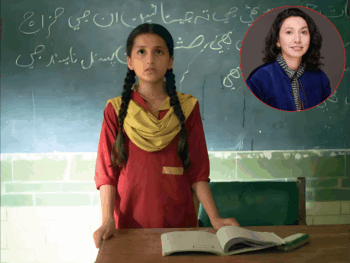
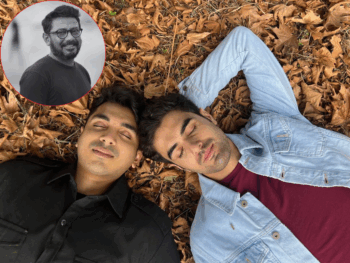
Mehak Kapoor: Your debut short films, Sparkle (English) and Chamak (Hindi), explore mental health and silent struggles like depression and suicidal thoughts. What makes storytelling such an effective way to raise awareness about these issues?
Somy Ali: Stories enter the heart before they enter the mind. When people see themselves in a character, they feel seen. They feel less alone. And loneliness is often where suicidal thoughts begin. Storytelling creates empathy without accusations. It opens dialogue without defensiveness. It saves lives without noise. Cinema lets us whisper truths people cannot yet scream.
Mehak Kapoor: What advice would you give to young South Asians who want to make an impact through art or social work?
Somy Ali: Three things are worth remembering: do not wait for permission; your voice matters, even when it has not yet been validated; and find your “why,” because a purpose rooted in authenticity will outlast every obstacle. Be prepared to stand alone. Real impact rarely arrives with applause; it arrives with resistance. When the mission is genuine, it has the power to change lives, beginning with your own.
Mehak Kapoor: ANOKHI LIFE is known for supporting and amplifying South Asian voices. How important is it for you to tell stories that reflect the experiences and challenges of the South Asian community?
Somy Ali: Representation is the bridge between isolation and empowerment. When South Asians see their struggles, victories, pain, and joy reflected honestly, we break generational silence. We normalise healing. We rewrite narratives built on shame. Our community deserves stories that are raw, nuanced, and human, not sanitised or stereotyped.
Mehak Kapoor: What are your next big goals, both with your production house and your NGO?
Somy Ali: For No More Tears, the focus is on expanding international rescue collaborations, building a mental health scholarship program, creating AI-based safety tools for survivors, and launching additional emergency shelters.
For Somy Ali Productions, the vision includes producing films rooted in truth and healing, collaborating with global creators who prioritise humanity, expanding The Uncomfortable Conversation into a worldwide platform, and developing socially conscious, high-impact documentaries.
My mission is simple: Turn my pain into purpose, and turn that purpose into global change
Mehak Kapoor: Thank you so much, Somy, for your insightful conversation with ANOKHI LIFE. It was a pleasure speaking with you and sharing your journey and perspectives with our readers.
Somy Ali: Thank you, Mehak and ANOKHI LIFE, for having me!
Suggested Reading:
My Journey As A Domestic Abuse Survivor
Cover Story: She Didn’t Just Create A Workout, SARINA JAIN Sparked A Cultural Awakening – Celebrating 25 Years Of Masala Bhangra®