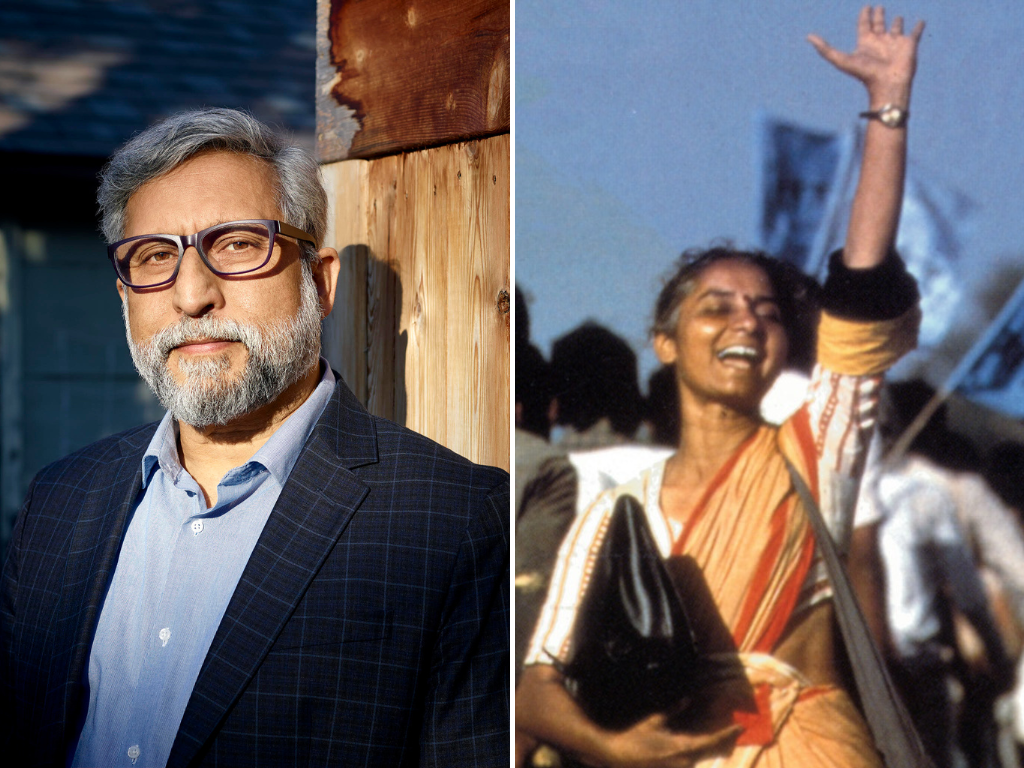
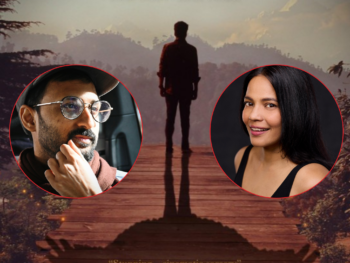
Acclaimed filmmaker Ali Kazimi, the director of the powerful documentary Narmada: A Valley Rises, brings his celebrated work back to the big screen at the 29th Toronto Reel Asian International Film Festival – screened on Saturday, November 8 at TIFF Lightbox Cinema 4 and online until November 23rd here.. Originally released in 1994, this award-winning Canadian documentary captures the inspiring journey of the Narmada Bachao Andolan movement in India and its peaceful resistance against the proposed Narmada Dam project.
Narmada: A Valley Rises chronicles a 200-kilometre protest march by over 6,000 people who followed Gandhi’s principles of non-violent resistance. The film premiered in the Perspectives Canada program at the 1994 Toronto International Film Festival. It later screened at the Hot Docs Canadian International Documentary Festival in 1995, where it won Best Political Documentary, and Kazimi received the award for Best Direction. It was also broadcast in 1995 on Vision TV and CBC’s The Passionate Eye. The documentary went on to receive a Genie Award nomination for Best Feature Length Documentary at the 16th Genie Awards in 1996.
Catch my full conversation with Ali Kazimi, and be sure not to miss Narmada: A Valley Rises at the Toronto Reel Asian International Film Festival.
Exclusive Chat: Ali Kazimi On ‘Narmada: A Valley Rises’ & Its Enduring Relevance | Ali Kazimi
Mehak Kapoor: Hi Ali, first of all, congratulations on the continued appreciation and recognition that Narmada: A Valley Rises has received over the years. How does it feel to see the film returning to the big screen at the 29th Toronto Reel Asian International Film Festival after three decades?
Ali Kazimi:Great question. I feel deeply honoured and immensely grateful that the film has continued to live on and resonate with audiences even after so many years. It’s incredibly rewarding as a filmmaker to see Narmada: A Valley Rises still being discussed and shown across Canada, especially in university programs. I often meet students who have watched the film and found inspiration in it. The themes it explores, democracy, dissent, and the questioning of large-scale models of development, remain as relevant and urgent today as they were when the film was first made.
Mehak Kapoor: That’s wonderful to hear. So you still meet students who’ve seen the film and discussed its significance. For those in our audience who may be discovering Narmada: A Valley Rises for the first time, could you share what the film is about and what initially drew you to this story?
Ali Kazimi: The film focuses on the Narmada Bachao Andolan, also known as the Save Narmada Movement – a powerful grassroots resistance that emerged against the massive displacement caused by the Sardar Sarovar Project. This project involved the construction of a large dam and an extensive network of canals designed to divert water to drought-prone regions of Gujarat.
What fascinated me was the central question the movement raised. Growing up in post-colonial India, my generation often heard that “someone must pay the price of progress,” a belief used to justify large-scale development projects, not just dams, but many others, that displaced marginalised communities. By the time I began working on this film, I had been living in Canada for about seven years, studying film at York University, where I now teach. During that period, I immersed myself in North American television to better understand the cultural context I was in.
What deeply disturbed me, however, was how people from the so-called “Third World” were portrayed, often through distorted, demeaning, or overly simplistic narratives. That really was the overall gist of the representation: that people from the Global South were portrayed as being overwhelmed by circumstances, powerless against all odds, and that the only way forward for them was for someone from the West to come and save them. There was this embedded “white saviour” narrative, or the idea that they were constantly looking for help from the West. I knew these notions were patently wrong, but I was also deeply interested in immersing myself in and understanding how democracy functioned in India at the time.
I had a close friend, Ashish Kothari, who was one of the founders of a group called Kalpavriksh, which continues to this day as a major environmental organisation. Kalpavriksh had undertaken the first 1,500-kilometre walk along the entire length of the Narmada River. What began as an exploration of the valley’s flora and fauna turned into a journey of discovery, revealing the immense, gigantic dams planned along the river, which, at that time, no one was talking about. Their report became the first public pushback and revelation, showing mainstream India what was actually happening.
I reached out to Ashish and said, “Can I come? I’d love to document this.” He agreed and introduced me to Medha Patkar, the leader of the movement, a remarkable woman. I remember she threw a challenge at me when we met in Delhi. She said, “I’m going back to the valley tonight. If you’re serious, come.” I literally had four hours to pull everything together. I jumped on the train in the unreserved section, squeezed in, and went on this incredible two-week journey with her as she crisscrossed the valley. I was deeply moved, inspired, and humbled by the democratic spirit of the people being displaced, the most marginalised: the so-called tribals, Dalits, and small farmers who were saying, “Enough is enough. We don’t want this dam.” And constitutionally, they had every right to say that within what was called the world’s largest democracy.
This was October 1990. During that time, I learned that the movement was planning a massive march from the middle of the submergence zones to the dam site. It was to be an entirely peaceful Gandhian march, truly modelled after Gandhi’s own, called the Sangharsh Yatra. I was a struggling filmmaker then, with just a few thousand dollars in savings. There wasn’t enough time to apply for grants or secure funding, so I used my savings to rent a camera and set out. They told me the march would last 10 days; it lasted five weeks. I stayed through the entire process. The film takes the audience on this journey with me, witnessing the day-to-day events as they unfold. The moments are both shocking and profoundly powerful.
What has stayed with Canadian audiences over the years is the strength, dignity, and resilience of the people. Viewers from various cultural backgrounds have told me how deeply inspired they were and how their perspectives shifted, realising the immense agency of the people themselves. The most marginalised, the most destitute, stood firm in their democratic rights.
I remember screening the film, while it was still being edited, for a visiting scholar from China. He said something that has stayed with me: “I’m astonished by how deeply embedded the democratic culture is in India. People talk about their rights, their constitutional rights, and their right to protest.”D ocumentaries often become time capsules of the moment they capture, and this film is no exception. Historically, it offers a window into a specific era, with all its drama and power, while also putting into sharp relief just how different India in 2025 is.
Mehak Kapoor: Very true. Ali, you mentioned that the movement lasted for five weeks, and you were there capturing every moment.
I know you’ve already spoken about it, but what was it truly like to witness and document the Narmada Bachao Andolan up close? If someone were to ask you in 2025 how you felt, what would you say? What was going through your mind as you walked alongside the people during the movement?
Ali Kazimi: So, a film like this is made in what, in documentary terms, is called a cinema verité style. It’s an approach where the camera acts as an observer, a witness to events as they unfold. I used that style to document everyday happenings, while also incorporating my own voiceover narration in the first person to provide context for people who might be unfamiliar. And really, it wasn’t just for a Western audience; I also recognised it was for an urban Indian audience, which often has very little understanding of what happens outside the cities in India.
I felt, as I mentioned, that my drive came from a fierce commitment to this documentation. The atmosphere was at once jubilant, defiant, and at times euphoric. But after a few days, the mood shifted when the government of Gujarat began amassing its police forces, turning the normally innocuous interstate boundary between Madhya Pradesh and Gujarat into a heavily militarised zone. There were several confrontations with the police. By then, I had gotten to know the people, and they had gotten to know me. It was such an intense atmosphere, yet there was also a profound sense of community.
Mehak Kapoor: Yes, I was just about to say that, in that sense, it was really about unity.
Ali Kazimi: Yes, there was a profound sense of unity, purpose, and a kind of contagious idealism, a very palpable sense of strength. There’s a saying that courage is contagious, and the level of courage I witnessed was truly extraordinary.
When the confrontations with the police began, it became a very challenging moment for me. Friends, activists who had become close to me, were sometimes beaten and hauled away right before my eyes. To be just a few feet away from them while documenting it was psychologically and emotionally intense. Yet I knew that this was the very purpose of the camera, the camera as a witness. It made me realise not just the power of witnessing, but also the responsibility of processing what one has seen and sharing it with a larger audience.
Mehak Kapoor: I can understand and feel what you must have gone through.
The protest you followed spanned around 150 to 200 kilometres and involved thousands of people. What were some of the biggest challenges you faced during production, both logistically and emotionally?
Ali Kazimi:Yes, it was intended to span 200 kilometres.
Logistically, it was fascinating and extremely challenging, both technologically and practically. At the time, I couldn’t afford to rent professional-grade video cameras; they were prohibitively expensive. A new format had just been released that sat between consumer and professional use, called Hi8. It had been used a little by news organisations, and although I had been trained to use 16mm film, which requires a very particular approach and discipline, I decided to take a risk and shoot the entire project on Hi8.
Exclusive Chat: Ali Kazimi On ‘Narmada: A Valley Rises’ & Its Enduring Relevance | Still from Narmada – A Valley Rises
The format itself brought challenges: the tape was fragile, needed protection from dust, and, of course, I was on a march, moving constantly with a very small crew and living alongside the people. Wherever the march camped, that’s where we slept. Battery power was another major challenge, and I rented a Jeep that became a lifeline, shuttling us to the nearest town to recharge and return.
Initially, despite having Medha and other top activists’ support, the people were wary of me as a media person. But over the days, they realised I wasn’t like the news crews who came for a few minutes or hours and left. I stayed with them. That trust allowed me to capture incredibly intimate material; viewers are placed right in the middle of decision-making meetings, strategy sessions, and reactions after people returned from detention. The immediacy of it is something that still resonates when I watch the footage today. My goal while constructing the film was to make the audience feel what each day of the march was like.
Once the march was stopped at the Gujarat border, an indefinite fast was announced, and initially, I didn’t fully grasp how emotionally taxing it was for the supporters. After ten days, one woman had to be hospitalised due to the physical strain, and it took 21 days for the fast to unfold completely. Witnessing this provided a profound understanding of Gandhian tactics. Fasting, or what is known in the West as a hunger strike, is part of a strategic, non-violent method. Gandhi understood how to create a visually theatrical event that could capture the public imagination.
In the film, I often draw comparisons to his Salt March, which, notably, took place before the era of radio or television. Gandhi anticipated the presence of photographers and newsreel cameramen. Once those images reached audiences, they morally shamed the oppressors, in this case, the British. Similarly, during the Narmada Bachao Andolan, the non-violent actions of the people required witnesses to maximise their moral impact. In a country where Doordarshan was the only TV channel and unlikely to show this, and where the press, though independent, worked on its own cycles, keeping the movement alive visually for weeks was an immense challenge. Non-violence, when witnessed, becomes a powerful tool of moral persuasion.
Mehak Kapoor: That’s true, that’s true, Ali. Looking back, Narmada: A Valley Rises remains incredibly relevant in today’s conversations around activism, climate justice, and indigenous rights. Why do you think its message continues to resonate so strongly?
I think it resonates because at its core, it’s about people, courage, and the struggle for justice, issues that remain timeless and universal.
Ali Kazimi: I think a lot of it has to do with one of the fundamental questions the movement asked: What is the price of development, who pays it, and why? Such simple questions, yet they have become even more urgent today. In India, the disparities have, as economists have noted, grown even worse than they were under British colonial rule. The gap between the haves and the have-nots is profound and expanding exponentially.
A film like this serves as a bridge, connecting people, especially those in India, to realities they might otherwise never encounter. For the younger generation, many of whom weren’t even born when I made the film, it often comes as a shock to see this level of organising, commitment, and courage. And the first question they ask is: Why don’t we know about this?
I recently met a young woman from India who said she vaguely remembered it; there had been a one-paragraph mention in her history book, but beyond that, it was largely unknown to her.
The Narmada movement undertook many political actions, but this particular Sangha Yatra was the most sustained and the largest mobilisation the movement had ever seen. That scale of mobilisation was never repeated in its history, making this film a unique document of the event. A few other filmmakers were present, but I was the only one who stayed and documented the entirety of the journey. That commitment, to witness and record everything, became a personal responsibility: I had to finish the film, no matter the obstacles. It ultimately took another four years to complete.
When you first made this film, did you ever imagine it would continue to be part of the public dialogue decades later?
Ali Kazimi: No, no, no. As a documentarian, you hope that your work can at least spark conversations and discussions. Very few of us actually see the fruition of that impact. Even though the film wasn’t initially screened in India, it won the Silver Conch at the Mumbai International Documentary and Short Film Festival, run by the Films Division. One of the stipulations of that award is that both Gold and Silver Conch winners are meant to be screened by Doordarshan; this is a consequence of the prize, so it’s supposed to happen.
But I remember talking to one of the Films Division bureaucrats. He handed me the cash award and signed for it, and I asked, “Okay, so where’s the contract for the broadcast?” He just shook his head and said, “You know how it is, sir.” I laughed and said, “Look, it even has a censor board certificate; it’s been cleared.” He replied, “No, sir, it’s not going to happen.”Why? Because the movement was disparaged. Medha Patkar and the activists were labelled anti-national, accused of being foreign-funded.
Mehak Kapoor: Yes
Ali Kazimi: They were also portrayed as people who were “retarding development.” In fact, at the award ceremony, which was broadcast on Doordarshan, after my usual thanks, I said, “I think all of India should look and understand what Baba Amte, Medha Patkar, and the other activists are saying about this struggle.” I was later told that the festival immediately received an official response from the Government of Gujarat condemning them for giving me even that small space to speak.
It’s interesting when you look at the Gujarati model of development, and even what happens in Gujarat another ten years later, you can see the signs in the film. You see the kind of rhetoric being used, the manipulations of government, and how dissenting voices are systematically dealt with. At the time, it was the Congress government in power, but they were already laying the groundwork for how social movements and dissent would be suppressed. Once the foundational aspects of a democracy begin to erode, it opens the door to more severe crackdowns and restrictions on dissent.
Mehak Kapoor: So, they never actually screened the film, then?
Ali Kazimi:They never screened the film. I had committed to taking it back myself, so I did. I went on a ten-day tour of the valley and screened the film in villages. With a generator, I remember one particularly spectacular screening, spectacular in the sense that there were thousands of people. We didn’t have a proper screen, so a local tailor stitched together four white bedsheets, and a frame was made out of bamboo poles. The projector was pushed beyond its limits, so the image was slightly dim, but over 3,000 people in an open field watched the film together.
Mehak Kapoor: But even that was a success.
Ali Kazimi: It is, but I would also look at the clear skies and see satellites tumbling overhead, and I would think, this is where the film should be, beaming down across the Doordarshan network. I did create a Hindi version of the film, and that version is available on YouTube, so you could perhaps link to it. Of course, during the course of the festival, the film was also made available online across the country.
Mehak Kapoor: You’ve built an incredible body of work since this film. In what ways do you see the spirit of Narmada: A Valley Rises reflected in your more recent projects?
Ali Kazimi: It’s interesting that you ask that, because I just finished my most recent film, Beyond Extinction: A Sinixt Resurgence. It’s about an Indigenous group in the interior of British Columbia, Canada, who were declared extinct under the Indian Act. Of course, they are very much alive as a people. They have been fighting to preserve one of their traditional village sites, which is 3,500 years old, along with a burial ground next to it, from demolition due to a planned highway. It’s a non-violent struggle, the longest-standing occupation of public land by an Indigenous protest movement in Canada, and it’s still ongoing.
When people saw that film, and those who had also seen Narmada, they told me, “This feels so much like the same spirit as Narmada.” You know, it raises the same questions, but within a very Canadian context. It lays bare the ongoing colonization of Indigenous peoples in Canada. I never refer to Canada as a post-colonial country, our relationship with Indigenous peoples remains profoundly colonial to this day, and the vast majority of Canadians are not aware of it.
From the very beginning, when I arrived here, I made a commitment to understand the Indigenous presence. I’ve now made two major films on this subject, and I’ve approached them specifically from my perspective, as an immigrant. This isn’t just a “Canadian” perspective, as some might assume. That’s why I always make it clear where I’m coming from, so people understand that it’s not from a Canadian-born viewpoint, but from an immigrant perspective rooted in a very specific part of the world.
Mehak Kapoor: That’s amazing to hear! I’d love to learn more about this film and the Indigenous group it focuses on.
Finally, what would you like to do with the new generation of viewers and many of whom are seeing this film for the first time to take away from it?
Ali Kazimi: Well, I would love for them to have conversations after seeing the film, because that, to me, is always a deeply gratifying process. I often find that young people are quite shocked, because it captures a spirit, whether of India or of its people, that is rarely seen. Many are inspired. I want the current generation to use the film as a starting point, to begin understanding their own relationship to ideas of development and progress.
Mehak Kapoor: That’s beautiful. Having documented such a significant grassroots movement, Ali, how has this experience shaped your perspective as a filmmaker and storyteller over the years?
Ali Kazimi: I often say that my experience in Canada, particularly around Indigenous issues, has helped me understand the position of India’s Adivasis. As Gandhi used to say, I’m paraphrasing; the state of the people at the margins tells us the most about the societies we live in.
So I’ve continued to work in what I call the witness-activist mode. The films I make are deeply personal, yet also highly independent. I’ve always worked in a way that gives me absolute control over what I say and what I include, it’s not shaped by funders, broadcasters, or any outside entity. I take full responsibility for everything I present.
The process of telling a complex story like this gave me the strength to tackle all my other work, which is equally layered and complex, offering insights into both history and how history informs the present. I don’t have children, but in a way, my films are my children, and this was my firstborn. Watching it with an audience is always an emotional experience, and it took me a long time to understand why I felt so deeply stirred.
You know, for five weeks, I was completely immersed in this incredible sense of community, all united by a single purpose, one in which divisions of class, caste, and religion, the margins and the center, seemed to dissolve. Religion wasn’t eliminated, but it became secondary, pushed to the background. It was such a powerful and beautiful expression of the multiplicity, diversity, and strength of the people in India, an experience I had never encountered before, and have not experienced since. I hope audiences can feel even a fraction of what I experienced, and I believe, to some extent, they do.
Mehak Kapoor: Thank you so much, Ali, for speaking with me and sharing your experiences, inspirations, and the story behind Narmada: A Valley Rises. I’m sure audiences are going to love it, and it’s easy to see why it has already received such recognition at various festivals. Congratulations!
Ali Kazimi: Thank you so much, Mehak. You’re a wonderful interviewer, and it was such a pleasure to respond to your well-researched and thoughtful questions.
Exclusive Chat: Ali Kazimi On ‘Narmada: A Valley Rises’ & Its Enduring Relevance | Still from Narmada – A Valley Rises
Mehak Kapoor (@makeba_93) is an entertainment and lifestyle journalist with over a decade of experience in anchoring and content creation for TV and digital platforms. Passionate about storytelling and factual reporting, she enjoys engaging with diverse audiences. Outside of work, she finds solace i...