























































Community Spotlight /
Review: Behind the Moon — A Powerful Story of Immigrant Life Inside a Canadian Mughlai Restaurant
Review: Behind the Moon — A Powerful Story of Immigrant Life Inside a Canadian Mughlai Restaurant
Community Spotlight Apr 06, 2026
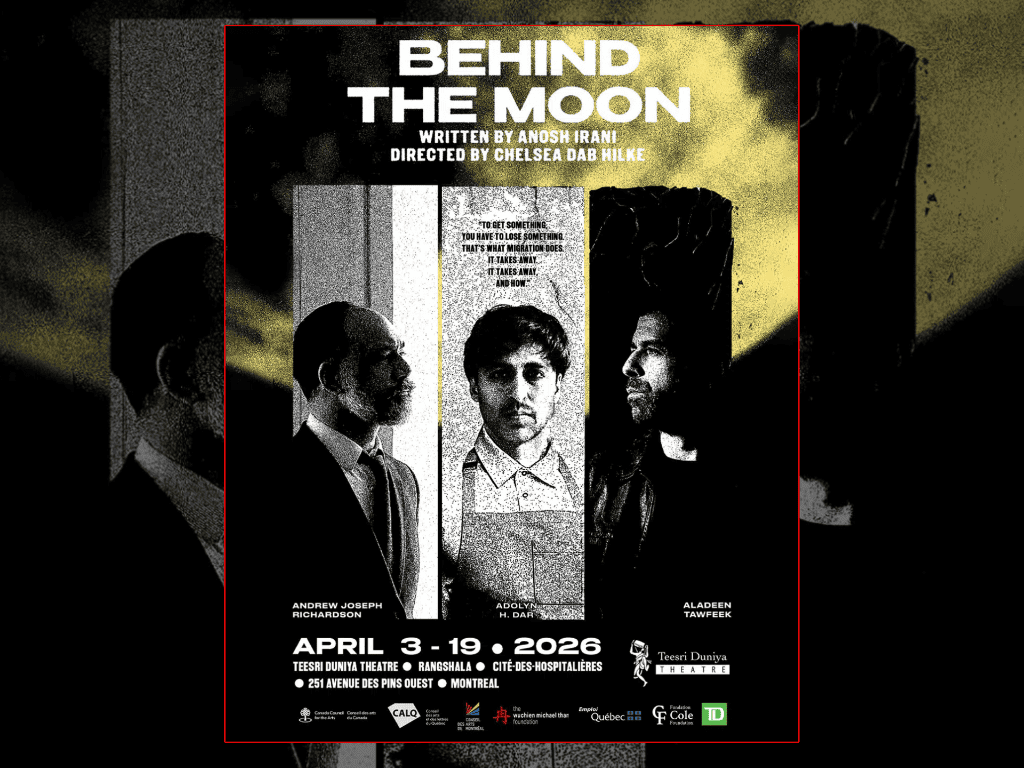
The play, written by Anosh Irani and directed by Chelsea Dab Hilke, recounts the harrowing impact of labour exploitation and mental illness as endured by Ayub (portrayed by Adolyn H. Dar) at the hands of Qadir Bhai (portrayed by Andrew Joseph Richardson), and witnessed by Jalal (portrayed by Aladeen Tawfeek).
The play runs until April 19, 2026, and I cannot emphasize enough how important it is to see this production—a 120-minute performance that passes in what feels like moments.
A Set That Immediately Transports the Audience
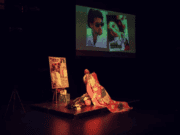
The moment I entered the theatre I was enchanted by the atmosphere, as the rows were full of attendees who were brimming with curiosity and excitement. My friend Mini and I landed front row seats, and we were impressed by the set design and props; we felt like we were in a real, authentic desi restaurant that are found in towns and cities around the world.
The sparse table and chairs, linoleum floor, the neon OPEN sign, the orange wall, minaret entranceway and mouth-watering food display, already set the tone even before the lights dimmed! The food display was so mouth-watering, that for a moment I thought that we would have a davat after the performance but Mini astutely pointed out that we did not smell any spices, so I put aside my desire for butter chicken.

The Complex Dynamics Between Ayub, Jalal, & Qadir Bhai in Behind The Moon
As showtime started, the lights dimmed to a moody blue and it helped me to enter Ayub’s lonely world as a worker from India who spends his days literally slaving away in a restaurant called Mughlai Moon. At the start of the play, Ayub does not even introduce himself to Jalal who arrives in a flurry, craving butter chicken, and his reticence was heartbreaking to witness, and begged the question, “Why is Ayub so closed off?”
In the next scenes, we are introduced to Qadir Bhai, who arrived from India many years ago and initially worked in construction, and through sheer grit and the blessing of the Almighty (according to him) became a successful restauranteur. Qadir Bhai is a level 10 annoying uncle who bathes himself in so much religious imagery that angels would develop an inferiority complex. It is quickly established that Qadir is a manipulative person who twists all of Ayub’s reasonable questions and comments, leaving Ayub crestfallen.
Jalal is a mysterious taxi driver who also hails from India and is inquisitive and insightful. Through his pointed questions about Ayub’s daily life, we come to understand that Ayub is being exploited by Qadir Bhai. His persistent friendliness and positive impact on Ayub remind us that not all angels have wings; some have two legs and make a difference just by showing up.
Each scene is an emotional journey, because Ayub starts off as a fully covered onion, and as we peel away the layers through Jalal’s questions and Qadir Bhai’s manipulations we understand how Ayub ended up in Canada being exploited.
Each actor is so riveting that by the time we reached the first intermission, Mini remarked that it felt like only 10 minutes had passed. During intermission, Mini and I debated what would happen next, and analysed if Jalal was a figment of Ayub’s imagination. The conversations that I overheard, indicated that we were not alone in our curiosity about the fate of the three characters.

A Riveting Second Half
The energy of the first half was matched by the second, and what marked the second half was witnessing Ayub’s emotional breakdown. His fear and tears coupled with the riveting use of lights made the play a fully immersive experience because I felt like I was inside of Ayub’s mind. Dar’s portrayal of such difficult moments was searing and shed insight into why people remain in exploitative situations.
Ayub was not alone in shedding tears, as Jalal revealed his own tragedies. Tawfeek’s ability to evoke sadness and regret, made me physically pull back. It was refreshing and compelling to watch South Asian male characters weep and expose the harshness of their respective truths.
Qadir Bhai’s calm, delusional demeanour contrasted sharply with the pain of Ayub and Jalal, but it was perfect. We often ask ourselves how people can allow cruelty to happen in their midst. Richardson’s portrayal answers the questions beautifully, and it reminded us to not trust people who wear cloaks of gold because they could just be strutting around in pyrite.
Behind the Moon–A Thought-Provoking Theatre Experience
This play is not a passive experience; the actors pull you into the heart journey of the plot and along the way you understand the harsh, daily Canadian issue of labour exploitation that touches everyone, including citizens. Each scene is tight, and every word serves a purpose. The spectacular performances, beautiful props and effective lighting, make for an enjoyable, educational evening that will leave you thinking about the issues long after the curtain drops.
Suggested Readings:
How Cultures Link is Empowering Immigrant Identity Through its Online Workshops & Programs
Why Indo-Caribbean Canadian Voices & Narratives Need Better Representation In Media

Meena Khan | Beauty Editor
Author
Meena (@meenalaregina) always loved the idea of exploring the non-conventional idea of beauty. Having grown up as a pimply chubby teenager, she wanted to see the change in the world that best reflected your uniqueness as well. Her well-received collection of blogs where she tries on various beauty p...
COMMENTS
YOU MAY ALSO LIKE
-
THE ULTIMATE BOLLYWOOD SUMMER WEEKEND: Neeraj Shridhar, DDLJ & 3 Days Of Non-Stop Entertainment In Mississauga
-
Ever Been Called A "Coconut"? See How Award-Winning Canadian Play ‘bol, brown boy, bol’ Addresses This
-
FROM CANNES TO TRIBECA: Box Office Guru Media Launches New Production Arm & Expands Programming
-

A MUMBAI STORY IN TORONTO: Our Exclusive Look Inside The Play 'Elephant Song'
-

The Best Runway Moments: Inside IFE's 18th Edition Runway Showcase
-

When Sufi Meets the Dancefloor: A Global South Asian Collaboration Reimagines “Mast Qalandar”
-

IFFLA 2026 Unveils Lineup Bringing The Best Of South Asian Cinema To Los Angeles
-

Exclusive Chat: Zaiba Baig On Her Return To Theatre With 'The Begging Brown Bitch Plays'
-

Exclusive Chat With Adi Arora: Cornell Student By Day, ‘The Voice’ Artist By Night
-
Groundbreaking Launch Of SASO Canada Aims To Elevate South Asian Voices In Film & TV
-

Ann Mukherjee Discusses Launch Of The First Indo-American Bengali Film 'Chheledhora', Starring Swastika Mukherjee
-

Exclusive: Sonya Singh On ‘The Fake Matchmaker’ & Writing South Asian Love Stories
-

Exclusive Chat: Ranbir Sidhu On His AGO Exhibition Debut, 'No Limits'
-
Indo Warehouse Makes History As The Only Indian-Origin Act At EDC Mexico 2026
-
Samay Raina Brings Indian Comedy To Infosys Theater At Madison Square Garden
-
“Art From the Eye of India” Debuts At Art Basel Miami Beach With Nina Magon, Rupi Kaur & Masaba Gupta
-

Heritage Meets Growth As Tanishq Jewellery Unveils New Stores Across The U.S.
-
Exclusive: Arshad Khan On MISAFF’s Legacy & Vinod Kapri On The Soul of ‘Pyre’
-

How Surviving Stage 4 Blood Cancer Inspired Me to Create 'Chai & Hope'
-

'At The End of Kaliyuga': Toronto's Mythical Adventure For Curious Kids
-
Where Chokecherries & Bharatanatyam Collide: 'Takwahiminana' Premieres In Toronto Today
-
Why The South Asian Film Festival of Montréal Is the Cultural Event You Can’t Miss
-

“What If A Mother Divorced Her Dead Husband?” - 'The Roof Is Leaking' Play Explores Why
-
Hindu & Muslim Women Trapped By Partition: Anusree Roy's 'Trident Moon' Brings A Gripping Tale To Toronto
-

Jewelry Brand Tanishq Sparkles In The U.S. With Grand Openings In Atlanta And Seattle
-
Montreal Natyanjali: Celebrating 10 Years of Indian Classical Dance & Artistic Excellence
-
'Little Owl Stories' Celebrates South Asian Culture & Identity Through Personalized Children's Books
-

South Asian Writer/Filmmaker Forges Her Own Path In America
-
Event Alert: “Pardafash”-- A Stunning New Exhibit Is Focused On Amplifying Sikh Voices
-

EatSpreadLove Creates Dreamy Charcuterie Boards
-

Clutcheeet Elevates The Handbag Game With Personalized Designs
-

Here's Why You Can't Miss The Vancouver International South Asian Film Festival
-

Event Alert: Here's Why You Must See 'Svāhā!' by Nova Bhattacharya An "Epic Pageant Of Dance, Chant, And Ritual"
-

Care Hangers Online Thrift Store Gives Back To The Community
-
Event Alert: The Voice Gavel Club Charity Event Set To Raise Money To Support Children In Need
-

How Mubarak Cards Used Social To Become The Global Greeting Card
-
DIVERSEcity Helps Newcomers Build The Life They Want In Canada
-

Our 2021 Roundup: Tired Of Swiping? Click Matchmaking Brings A Personal Approach To Finding Your Soulmate
-

Desai Foundation Brought Back Their Iconic Diwali On The Hudson Gala
-

Here's How Plan U Will Help You Achieve Optimal Nutritional Health
-
Sign Up For BollyCORE's Movathon Fundraiser To Educate India's Underserved Children Through AIM for Seva
-

Gold Medal Powerlifter Grounded Due To COVID Gives His Time To Help Frontline Workers In Vancouver
-
SAGA Foundation Creates A Platform To Increase Awareness Of The Global South Asian Art World
-

Shayde Beauty Tackles Hyperpigmentation & Acne Scars For South Asian Skintones
-

The Beauty Market Offers Personalized Online Shopping & Virtual Beauty Consults For Those Looking To Amp Up Their Skincare
-
South Asian Sexual And Mental Health Alliance Wants To Shed Light On Taboo Topics For South Asian Youth
-

The Woodsman Beard Launches Balms & Oils For The Perfect Beard
-

Love Reconnected Aims To Teach Ways To Overcome Our Differences And Accept LGBTQ2+
-

Canadian Author Delights The Young & Young At Heart With Her Latest Book "'Twas The Night Before Diwali"
-
2RaysHope Guides NGOs In India On Ways To Build A Brighter Future For Children
-

Spirit Warrior Nation Will Enhance Your Brightest & Best Self With Online Daily Meditations & More
-
Kaur Voices Launches #MeTooSikh To Create Awareness & Support For Sikh Women
-
Joy Of Sharing Foundation Provides Free Hot Meals & Groceries For The Underserved In Southern California
-

How I Am Using My Music & Activism To Tell People To Vote
-
Desai Foundation Invites You To "Lotus Festival" — Their Uplifting Virtual Concert For COVID Relief
-

South Asians In Sports Provides A Network & Resource Space For Those Working In The Sports Industry
-
How I Have Manifested All Of My Dreams Including Writing My First Book
-
Knackstor Connects Seniors With Unique Skills With Those Looking For Contract Hires
-
How I Ignored A Publisher's Advice And Turned Into A Best-Selling Author
-

LAILY Designs Chic Custom-Made Gowns For The Woman Who Wants To Look Like A Million Bucks