


























































Entertainment /
THE DARK SIDE OF THE IMMIGRANT DREAM: How Sriram Emani’s Award-Winning JAM BOY Questions America As The Land Of Opportunity
THE DARK SIDE OF THE IMMIGRANT DREAM: How Sriram Emani’s Award-Winning JAM BOY Questions America As The Land Of Opportunity
Entertainment Oct 22, 2026
Sriram Emani talks JAM BOY, immigration, identity, ambition, family and its international premiere at IFFSA Toronto 2026.
Actor, writer and director Sriram Emani’s journey has taken him from engineering and entrepreneurship to Indian classical arts, acting, and, most recently, filmmaking. An IIT Bombay graduate who went on to study at MIT, Sriram has always been drawn to new experiences and different ways of understanding people and culture. His journey has even included living with 50 different families across the United States, an experience that gave him a unique perspective on people, communities, and what it means to find a sense of home.
He is perhaps best known as the founder of IndianRaga, the international arts platform that has brought Indian music and culture to audiences around the world, generating more than 500 million views. But Emani’s creative journey also includes acting, with roles across television, film, and theatre, and his latest pursuit takes him into an entirely different medium: filmmaking.
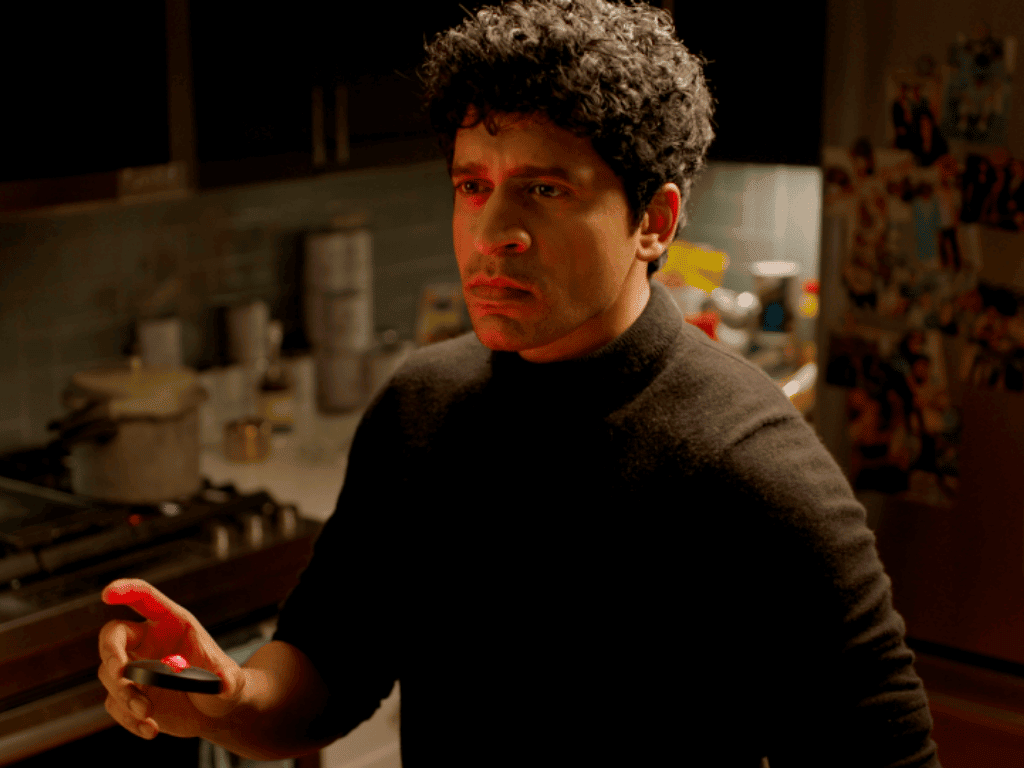
His first short film, Jam Boy, is a 22-minute dystopian science-fiction drama that places immigration, memory and cultural identity at the heart of its narrative. Emani wears several hats on the project, serving as its writer, director, co-producer and lead actor. The film recently received the Best Film award at the DC Independent Film Festival in Washington, DC, following its competitive premiere, and has continued to gather recognition on the festival circuit.
The story centres on an Indian software engineer who appears to embody the ideal immigrant employee. But when he brings his mother’s tamarind rice into his workplace, an ordinary connection to home becomes an act of rebellion. What follows is a disturbing glimpse into a future where immigrants may be welcomed for what they contribute while simultaneously being separated from the memories, traditions, and identities that shaped them.
For Emani, Jam Boy is more than a speculative story about the future. Food, family, and migration become vehicles through which he examines a question that has followed him across his own career: what happens to identity when people move between cultures, countries, and versions of themselves?
The personal element becomes even more striking with Emani sharing the screen with his real-life mother. Meanwhile, the short continues to evolve beyond its original format, with a feature-length adaptation being developed through Cine Qua Non Lab’s Storylines Lab and Stowe Story Labs’ Narrative Lab. The project has also advanced to the second round of the Sundance Institute Feature Film Program.
Canadian audiences had the opportunity to experience Jam Boy when it made its international premiere at IFFSA Toronto on October 13 at Cineplex Cinemas Courtney Park. The festival, a major platform for South Asian cinema in North America, celebrates and supports filmmakers and screen stories from the South Asian diaspora and beyond, with its programming culminating in the annual IFFSA Toronto Fortnight.
As Jam Boy arrives in Toronto, the film represents yet another evolution in Emani’s remarkably varied creative journey, from an engineer and entrepreneur to an actor and advocate for Indian arts and, now, a filmmaker using science fiction to examine questions of culture, migration and memory.
I recently caught up with Sriram Emani to talk about Jam Boy, the personal and cultural ideas behind the story, his decision to step behind and in front of the camera, working with his mother, the immigrant experience, and what he hopes audiences will carry with them after watching the film.
Our Exclusive Chat with Sriram Emani

Mehak Kapoor: You have an interesting journey from IIT Bombay and MIT to technology, entrepreneurship, IndianRaga, and now filmmaking. Before we get into JAM BOY, who is Sriram Emani today, and what was it about filmmaking that made you want to step into this world?
Sriram Emani: I’m an actor first. Writing, directing, and producing have become ways for me to create the characters and worlds I’m hungry to explore.
I might be something of a classical maverick. I grew up in Mumbai speaking English, Hindi, Telugu, and Marathi, trained in Carnatic music for fourteen years, and was raised on epics where gods are also lovers, tricksters, and warriors. My life has since taken me through MIT, startup boardrooms, and building IndianRaga, a media company whose work has reached more than 500 million views. I’ve pitched investors in the morning and sung a centuries-old Carnatic composition at night.
I bring all of those worlds with me into a character. I know what ambition feels like from the inside, what it costs to protect something you love, and what it feels like to carry something ancient into a room that doesn’t recognize it. I’m drawn to people with contradictions; the charm and the vanity, the tenderness and the capacity for trouble.
My work has taken me from CBS’s Matlock to playing a talent agent in Heather Graham’s Chosen Family, and to the stage as the first South Asian Bob Cratchit in A Christmas Carol, performing for more than 20,000 people.
With JAM BOY, I wanted a lead role where humor, restraint, and something darker could exist within the same person—a man whose ambition collides with his need to belong, and whose choices drive the entire story. So I wrote him. Filmmaking became a way to give that character a world.
JAM BOY is your debut as a writer, director, co-producer, and lead actor — a lot of responsibility for a first film. What made you want to tell this particular story, and when did you realise you needed to be both behind and in front of the camera?
The story came from dinner tables. While building IndianRaga, I stayed with 50 families across North America. I kept meeting people whose lives were organized around a moving finish line: after this promotion, after this visa milestone, then I’ll go home. One person’s experience stayed with me. By the time they could finally return, the home they had been working toward was no longer there.
That became the question behind JAM BOY: What happens when you do everything you’re supposed to do to earn your freedom, but the reward keeps moving? Science fiction gave me a way to make that bargain visible, while also finding the humor in how absurd it can become.
I was fascinated by the distance between this man’s polished exterior and what’s happening inside him. He’s trying so hard to be the perfect employee, while his private thoughts are funny, vain, angry, and sometimes even villainous. That’s delicious material for an actor.
Mark Duplass’s talk about the cavalry not coming helped push me toward making my own work. At some point, you have to turn the ambition into a shoot date.
The film premiered at the DC Independent Film Festival and went on to receive the Best Film award in the Web Series category. What did that recognition mean to you personally, especially knowing this was your first film and such a personal project?
Some of my favorite cousins and closest friends live in the DC area, so I was really hoping we’d have a wonderful screening there. I couldn’t have imagined a better one.
Deirdre Evans-Pritchard, the Executive Director of DCIFF, called me personally to tell me about our selection, and the way she described the film immediately made me feel that it had found the right home. I still remember her commenting on the warmth with which the film was made. She understood both the story and what lay underneath it.
We screened to a packed audience, followed by more than fifteen minutes of Q&A, with Deirdre bringing some of the most thoughtful and insightful questions. Discussing JAM BOY just blocks from the institutions that shape the very policies its characters live under gave the conversation an added charge.
And then we won Best Film at our very first public screening. When you’ve spent so long carrying a story in your head, that kind of response gives you the confidence to trust your instincts and the permission to make the next thing even more ambitious.
But my most memorable interrogation came from my four nephews, ages four to twelve. They wanted to know everything about the film and why I’d made particular choices. They were so excited, and absolutely nothing was going to escape their scrutiny. My four-year-old nephew looked at me, wide-eyed, and delivered his verdict: You acted good!
You have spoken about living with 50 families across America and how those experiences shaped your understanding of immigration, belonging, and home. How did that journey influence your personal connection to themes of cultural erasure, assimilation, and the fear of losing where you come from, and how much of that found its way into JAM BOY?
What stayed with me were the small negotiations. What people packed for lunch. Which language they spoke with their children. Whether they felt comfortable celebrating an Indian festival publicly. A name shortened to make introductions easier. Each accommodation could seem perfectly reasonable on its own. Together, they raised a question: how much of yourself have you erased to make it easier for everyone else?
But those homes were also full of invention and joy. People were finding ways to give their children a connection to something they themselves had grown up taking for granted. That’s a creative act. It made me want to show culture as something people actively make room for in their lives.
That tension found its way into JAM BOY. My character has become very good at being the person his workplace rewards, which means erasing his ethnic markers. But he also knows he needs his mother’s recipes to feel alive. As an actor, I loved that collision.
I wanted the film to carry the warmth and humor of those homes, too: the food, the music, the overwhelming affection. You have to feel the pleasure of belonging to understand what losing it would cost. Those families helped me understand how much life could fit inside that lunchbox.
Food becomes such an emotional part of JAM BOY, particularly the connection between your character and his mother’s tamarind rice. Why did you choose food as the thing that reconnects him with his identity, rather than something more obvious like language, religion, or family traditions?
Food reaches us at our most instinctive, and then becomes one of our most generous impulses: we taste something wonderful and immediately want someone else to try it. It connects hunger to pleasure, memory to belonging. That made it the ideal language for JAM BOY.
You don’t have to speak Telugu or know what pulihora is to understand someone longing for their mother’s cooking. And sharing that food lets another person into your world. A family recipe can carry generations of memory and still make room for a stranger at the table.
During COVID, learning my mother’s recipes over video calls made that idea very personal. I was trying to recreate the feeling of being home.
So, in a world designed to turn people into obedient, isolated workers, cooking and sharing a meal becomes a small act with enormous consequences. I loved giving a powerful corporation an adversary it never saw coming: a mother’s recipe.

You cast your real-life mother, Manga, opposite you, making JAM BOY both your acting debut and hers. What was it like bringing such a personal mother-son relationship into a fictional story, and did working together change your understanding of each other?
I wanted a South Asian mother who was a badass: vivacious, mischievous, and completely capable of taking charge. After auditioning several actresses, I thought, why am I searching when the original inspiration is right there? Go to the OG!
My mother was my first music teacher when I was five, so directing her decades later was quite the role reversal. She brought this wonderful combination of curiosity and discipline. She was fascinated by all the equipment on set, and she worked incredibly hard on the role. I got to see someone I’d known my whole life discover an entirely new playground.
The bigger adjustment for her was probably me. In real life, I’m usually an eternal optimist, and suddenly her son was playing someone guarded, conflicted, and compliant. That was jarring for her. Meanwhile, she’s every bit as vivacious, badass, and fun as the woman you see in the film.
Having our scenes in Telugu made it especially satisfying. That’s the language of our relationship, with all its teasing and tenderness. I loved Bong Joon Ho’s invitation to get past the “one-inch barrier” of subtitles in his acceptance speech at the Golden Globes. I wanted audiences to enter our world and hear us as we actually sound.
Was there a moment on set with your mother that felt especially real or emotional and ended up influencing the final film?
The spice scene comes to mind. I’d originally written it as dialogue, but it was starting to sound like a Spice 101 lecture. So I turned it into a Telugu rap. Suddenly, the scene had rhythm, humor, and a mother who could deliver a cooking lesson with considerable swagger.
There was something very personal about performing that together. She’d taught me music as a child, and here we were using music to tell a story about what a mother passes down to her son. That history was already between us. I even wrote down the spice rap using Carnatic music’s Adi Thalam (8-beat cycle) notation so it would be easier for her to learn!
It also captured something I love about her character: she makes remembering your roots look enjoyable. There’s mischief in it, pleasure, and a little pride. I wanted audiences to fall in love with that energy. Sometimes the most powerful way to show what someone stands to lose is to let them have fun with it first.
JAM BOY began as a futuristic story set in 2060, then moved closer to the present before you removed the specific year altogether. What changed in the world around you that made this fictional future start feeling less fictional?
Reality turned out to be a rather aggressive script consultant. I initially set the story in 2060, then moved it to 2040, and eventually removed the year altogether.
I kept hearing about people hesitating to travel home because they weren’t sure they could return to the lives they’d built. Weddings and funerals missed. Time with parents postponed until the next approval, the next milestone. The technology in our film might be imagined, but the emotional bargain was already familiar.
That’s what unsettles me: you can be successful, valued by your employer, doing everything right, and still have very little control over something as basic as when you get to see your mother.
There’s a calendar in JAM BOY with no year on it. I wanted audiences to decide how far away this world feels. Increasingly, the question seems to be whose present we’re calling the future.
Your work with IndianRaga has introduced Indian music and arts to a massive global audience, with more than 500 million views. How has that experience of bringing Indian culture to international audiences influenced the way you approach storytelling in film?
IndianRaga taught me to trust an audience’s curiosity. Working with thousands of artists, I’ve watched something deeply specific to a tradition reach people who knew nothing about it. They might arrive for a familiar song and stay for a raga they’ve never heard before. You have to give them a compelling way in.
That gave me the confidence to put a Telugu rap about spices inside a science fiction film. I wanted audiences to enjoy discovering this family’s world. The humor, the tension, and the relationships give them plenty to connect with.
IndianRaga also gave me years of practice bringing artists together and helping an idea become something we could actually make. That experience mattered enormously when I stepped onto a film set as a director.
The ambition carries through: I want South Asian culture to help shape what comes next. We have extraordinary traditions of rhythm, spectacle, moral complexity, and imagination. I want to see what happens when we bring all of that into the worlds we’re building on screen.
You have described your ambition as telling stories with Indian characters that can connect with audiences beyond the Indian community. When you think about JAM BOY, what do you hope someone with no personal experience of immigration takes away from the film?
I hope they recognize something they’ve been postponing. Time with someone they love. A creative ambition. The version of themselves they’ll finally allow to exist once they’ve earned enough security.
JAM BOY has two clocks: one measuring a man’s progress at work, and one measuring his mother’s life passing in time he can never earn back. You don’t need a visa or an immigration experience to recognize that second clock.
Immigration gives the story its particular pressures, but the temptation to keep putting life on hold is familiar to so many of us. I’d love someone to leave the film wondering whether the thing they’re working toward is actually bringing them closer to the life they want.
And then I hope they call someone they love. If it’s for a recipe, I strongly recommend writing down the quantities. “A pinch” turns out to be a very advanced unit of measurement.
As someone who has moved between engineering, entrepreneurship, the arts, and now filmmaking, have you ever felt that you were expected to choose one identity or one career path? Did that tension influence the protagonist of JAM BOY?
For a long time, acting was the dream I kept making myself more qualified to postpone. There was always another degree, another venture, another impressive thing to accomplish first. Eventually, I had to admit that being good at something wasn’t a sufficient reason to keep putting off what I most wanted.
That absolutely shaped my protagonist. He’s been rewarded for being reliable for so long that wanting something different feels almost like misconduct. I understand the seduction of that approval. Success can make a very persuasive argument for staying exactly where you are.
But I’m glad I’ve lived those other lives. Music gave me rhythm and an ear for emotion. Business taught me about ambition, persuasion, and the stories people tell themselves about power. Those are wonderful things to bring into a role.
Now I’m hungry to play with all of it: romance, mischief, danger, men whose judgment you really shouldn’t trust. The hardest and most freeing part of reinvention is becoming a beginner again while people are still congratulating you on the last chapter.
You’re now developing JAM BOY as a feature through Cine Qua Non Lab’s Storylines Lab and Stowe Story Labs. What are you discovering about the story now that you’re expanding it beyond the 22-minute short?
I’m discovering how seductive this world can be. In the short, we meet a man already caught in the bargain. The feature lets us experience why he wants it so badly: the pleasure, the status, the feeling of finally being chosen. I want the audience to want it with him. Then, when the cost becomes clear, we’re all implicated.
The question I keep returning to is: what happens when you mistake access for belonging? You can get into the room, learn every rule, become indispensable, and still discover that your place is conditional. That gives the feature room for humor, seduction, and some much darker turns.
As an actor, I’m excited by how much further I can take the lead character. Charm can open doors. It can also help a man avoid confronting himself. I want to explore what happens when that stops working.
Developing the project through Stowe Story Labs and Cine Qua Non has helped me push those questions further. I’ve also just been selected as one of nine writers for the Rickshaw Film Foundation’s Writers’ Room. It’s an exciting moment to be ambitious about this story while also being rigorous about earning that ambition on the page.

As a first-time filmmaker who has already taken a deeply personal story from an idea to an award-winning film, what has JAM BOY taught you about yourself that you didn’t know before you made it?
That I can prepare obsessively and still love the moment when the plan disappears.
My character’s instincts are often completely counterintuitive to mine. I developed a sequence of preparation that helped me step into his state of mind, and discovered I could make that switch on set even while carrying the responsibilities of directing. There’s a thrill in becoming someone whose reflexes are so different from your own.
But the real discovery was how much I enjoyed surrendering that preparation to the scene. Your scene partner brings a look, a pause, an unexpected energy, and suddenly there’s something between you that you couldn’t have rehearsed alone. I want to be available for that. Prepare until you feel dangerous, then let the other actor surprise you.
The mirror scene brought those ideas into focus. It’s about internal gaslighting: how we learn to talk ourselves out of our own desires before anyone else has to. The voice knows exactly where to press because it belongs to him. What we permit ourselves to believe inside shapes what becomes possible outside.
Playing that made me more alert to my own limits, especially the ones I’d mistaken for facts.
JAM BOY is in Toronto for its international premiere at IFFSA Toronto on October 13. What does it mean to bring this deeply personal story to a South Asian audience in Mississauga, and what are you hoping audiences take away from seeing it on a Canadian screen?
For me, Toronto has a very personal connection. My friends Pooja and Kaustubh are there, and we’ve spent hours talking about the questions at the heart of JAM BOY: ambition, belonging, what we hold on to when we move countries, and what we gradually let go. Watching the film with them will be special. Conversations we’ve had privately will suddenly be playing out on a cinema screen, with a whole audience bringing their own experiences to them.
And Toronto is a particularly meaningful place for that conversation. The region is home to an enormous South Asian community, with different generations negotiating what it means to build a Canadian life while remaining connected to family and culture elsewhere. The immigration systems differ, but I think many people will recognize the emotional arithmetic: How much security is enough? When can I visit home? And what am I missing while I wait?
I’m excited to hear where Canadian audiences recognize themselves and where their experiences challenge mine. That’s part of what makes an international premiere valuable: the film gets to discover meanings beyond the place where it was made.
I’d love this to be the beginning of a deeper creative relationship with Canada, including opportunities to work here as an actor. But personally, I’m also looking forward to turning to Pooja and Kaustubh afterward and saying, Well? We have a lot more to talk about now.
I’ve loved this conversation, Sriram. Now, let’s switch gears and have some fun with a little rapid-fire!
One Indian dish you could never live without?
Chai. I’m taking liberties with “dish,” but I carry my little tea strainer wherever I go. Some things are non-negotiable.
A film that made you want to become a filmmaker?
Inception. A dazzling, intricate world built around something so simple: a man wanting to get home to his children. That combination of scale and intimacy stayed with me.
If you could bring one Indian tradition into the future world of JAM BOY, what would it be?
Eating steaming hot food on a banana leaf with your hands.
One word that best describes your mother, Manga, as an actress?
Champion
Technology or filmmaking, if you had to choose one for a day?
Filmmaking. I’ve spent enough time in meetings. Give me a scene.
What is one thing about India you think you will always carry with you, no matter where life takes you?
Mumbai’s energy. The ambition, the humor, the ability to make a little room for yourself in an impossibly crowded place and dream something enormous.
Director: Sriram Emani
Cast: Sriram Emani, Kris Sidberry, Zeus Taylor

Mehak Kapoor | Entertainment Editor
Author
Mehak Kapoor (@makeba_93) is an entertainment and lifestyle journalist with over a decade of experience in anchoring and content creation for TV and digital platforms. Passionate about storytelling and factual reporting, she enjoys engaging with diverse audiences. Outside of work, she finds solace i...
COMMENTS
YOU MAY ALSO LIKE
-
TIFF2026 EXCLUSIVE: How Theja Rio & Nancy Beso Brought ANGH, An Indigenous Nagaland Story To Toronto As A Major TIFF Premiere
-

Your Ultimate Guide To South Asian Films, Filmmakers & Talent At TIFF 2026
-

CANADA, IT’S TIME TO STREAM DESI: JioHotstar Officially Launches In Canada With Bigg Boss, Blockbusters & More
-

NOT YOUR TYPICAL BILLO: How Simar Is Giving Punjabi Music A Powerful New Female Voice
-
THE ULTIMATE SUMMER BINGE GUIDE: From Comfort Classics To Brand New Must-Watch Releases
-
PRIDE MONTH SPECIAL: Why Queer South Asian Theatre Deserves The Spotlight
-

Mom-And-Me Movie Guide: The Ultimate Mother's Day Bollywood Watchlist
-
Are You A True-Crime Junkie? Then We Have 10 Docs That Will Keep You Up At Night!
-
The Biggest South Asian Moments At The 2026 Oscars
-
International Women’s Month: Celebrating The Women Behind The Camera Who Are Shaping Hindi Cinema
-

Editor’s Picks: Indian Whodunits To Binge This Weekend
-
Exclusive Chat: Grammy-Nominated Siddhant Bhatia On ‘Sounds of Kumbha’
-
Exclusive Chat With Somy Ali: Her Journey From Bollywood Actor To Global Humanitarian
-

A Winter Staycation Guide To The Year’s Must-Watch South Asian Films & Shows
-
Exclusive Chat: Ali Kazimi On ‘Narmada: A Valley Rises’ & Its Enduring Relevance
-

Rhythms Beyond Borders: South Asian Artists Shine In The 2026 Grammy Nominations
-
SatRang Theatre Brings India’s Acclaimed Play ‘Siachen’ To Canada Nov 15-16
-

Priyanka Chopra Jonas’ Desi Spin On ‘Last Christmas’ In Gurinder Chadha’s 'Christmas Karma'
-

Canadian South Asians Win Big At The Oscar®-Qualifying Tasveer South Asian Film Festival
-
Reviving Judi Singh: Baljit Sangra’s Tribute To A Forgotten Jazz Icon
-

From Laksa To Tandoori Nachos: Inside CBC’s ‘Locals Welcome’ Premiere With Suresh Doss
-
Exclusive: Director Seemab Gul On ‘Ghost School’ - A Pakistani Tale Of Childhood & Corruption
-
Exclusive Chat With Director Onir On “We Are Faheem & Karun”: A Queer Kashmir Love Story
-
Inside 'American Warrior': Exclusive Chat With Vishy Ayyar & Omi Vaidya
-
AI In South Asian Films: Innovation Or Artistic Intrusion?
-

Exclusive Interview: SkyMed's Praneet Akilla Is the Brown Romeo Canada Didn’t Know It Needed
-
South Asian Horror Makes A Comeback: Films & Shows To Watch!
-

How Canadian Studio 'Cult Following Pictures' Is Changing Queer, Genre, & South Asian Storytelling
-
Pride In Frame: 10 Queer South Asian Stories To Watch This June
-
13 South Asian Music Maestros Who Revolutionized The Music Scene Forever
-
Exclusive Interview With Priyanka Bose & Raam Reddy On Magical Realism In 'The Fable'
-
From AI Ethics To Queer Love: IFFLA 2025 Honours Groundbreaking Winners
-
South Asian Cinema Takes Over L.A. – Check Out The Must-See Films At IFFLA 2025!
-
Stress Awareness Month: This Is What I Watch When I Am Tired Of Adulting (And It Works Every Time)
-
Sneaking Samosas In The Theatre To Watch 'A Nice Indian Boy' With Zarna Garg & Sunita Mani
-
Reimagining 'Mahabharata': An Exclusive Interview With The Visionaries Behind Toronto’s Theatrical Spectacle - Miriam Fernandes & Ravi Jain
-

Experience The Epic Mahabharata Like Never Before – Now On Stage in Toronto!
-
Exploring The Renaissance Of Female Characters In Bollywood, Hollywood & Beyond!
-
South Asian Stars Light Up Hollywood At Glamorous Pre-Oscar Celebration!
-

The South Asian Takeover: 2025’s Most Anticipated Hollywood Film & TV Releases
-
Bollywood 2025: The Ultimate Movie Lineup You Can’t Afford to Miss!
-

Mindy Kaling Becomes The Second South Asian Woman To Receive A Star On The Hollywood Walk Of Fame
-
8 Must-Watch Patriotic Films To Celebrate India's Republic Day
-

Up Close & Personal with Sandhya Suri on Her Oscar-Bound Film 'Santosh'
-
Bollywood 2024 Recap: The Good, the Bad, and the 'Who Asked for This?'
-
Must-Watch or Pass? Your Definitive Guide to the Upcoming Bollywood Films This Winter
-
How PBS Series 'Renegades' Celebrates American History's Most Badass Disabled Changemakers
-

14 Bollywood Remakes Vs. Their Hollywood Originals - Who Did It Better?
-

Catch Pakistan's 1st Ever Hand-Drawn Animated Film 'The Glassworker' & Other South Asian Films At Reel Asian Festival
-
World Mental Health Day: How Bollywood Has Used Its Power Of Storytelling To Address Mental Health Stigmas
-
Highlights Of Archie Panjabi, Neeru Bajwa & Iman Vellani At iSAFF2024
-

3x Emmy-Nominated Television Host & Producer Rasha Goel Launches New Podcast "Beyond the Glam" - Premiering Today!
-
Does Bollywood Accurately Portray Financial Struggles of India's Working Class?
-
Canada’s International South Asian Film Festival (iSAFF) Triumphantly Unveils Its Thrilling 2024 Lineup!
-
TIFF 2024: Our Chat With Writer-Director-Star Srinivas Krishna On The 4K Restoration Of His Hidden Canadian Classic ‘Masala’
-
TIFF 2024: First-Time Filmmaker Lakshmipriya Devi Dishes On ‘Boong,’ Her Funny & Profound Modern-Day Folk Tale Told From A Child's Point Of View
-
Nepotism Or Repetitive Content - What's Causing Bollywood's Slump Versus Punjabi & South Indian Cinema's Surge
-
Must-Watch Patriotic Films From India & Pakistan For Your Independence Day Celebrations
-
Villainous Vixens: How Bollywood's Leading Ladies Are Redefining Cinema's Most Memorable Antagonists
-
'Girls Will Be Girls' Wins Big At The 2024 Indian Film Festival Of Los Angeles (IFFLA)